


You can watch this on YouTube or read it below.
***
We live in a world that loves to tell us who to be. We’re expected to optimise, level up, build our brand and… looksmaxx, whatever the hell that is. There’s always a metric to focus on, or perhaps exploit, in order to be better.
But wait. Better for what, exactly? Better for… whom? And at what point does the pursuit of the optimal version of self start to cost us the actual version?
Thankfully, there are *genuinely* better ways to work out who you are, what matters to you, and how to live an authentic, successful life than just trying to climb the various leaderboards presented to you.
In this article, I’m exploring these better ways via Matt Dinniman’s LitRPG series Dungeon Crawler Carl — a story about a man who’s dropped into the most horrific situation imaginable, and has to figure out how to survive without losing himself in the process.
Matt Dinniman’s Dungeon Crawler Carl
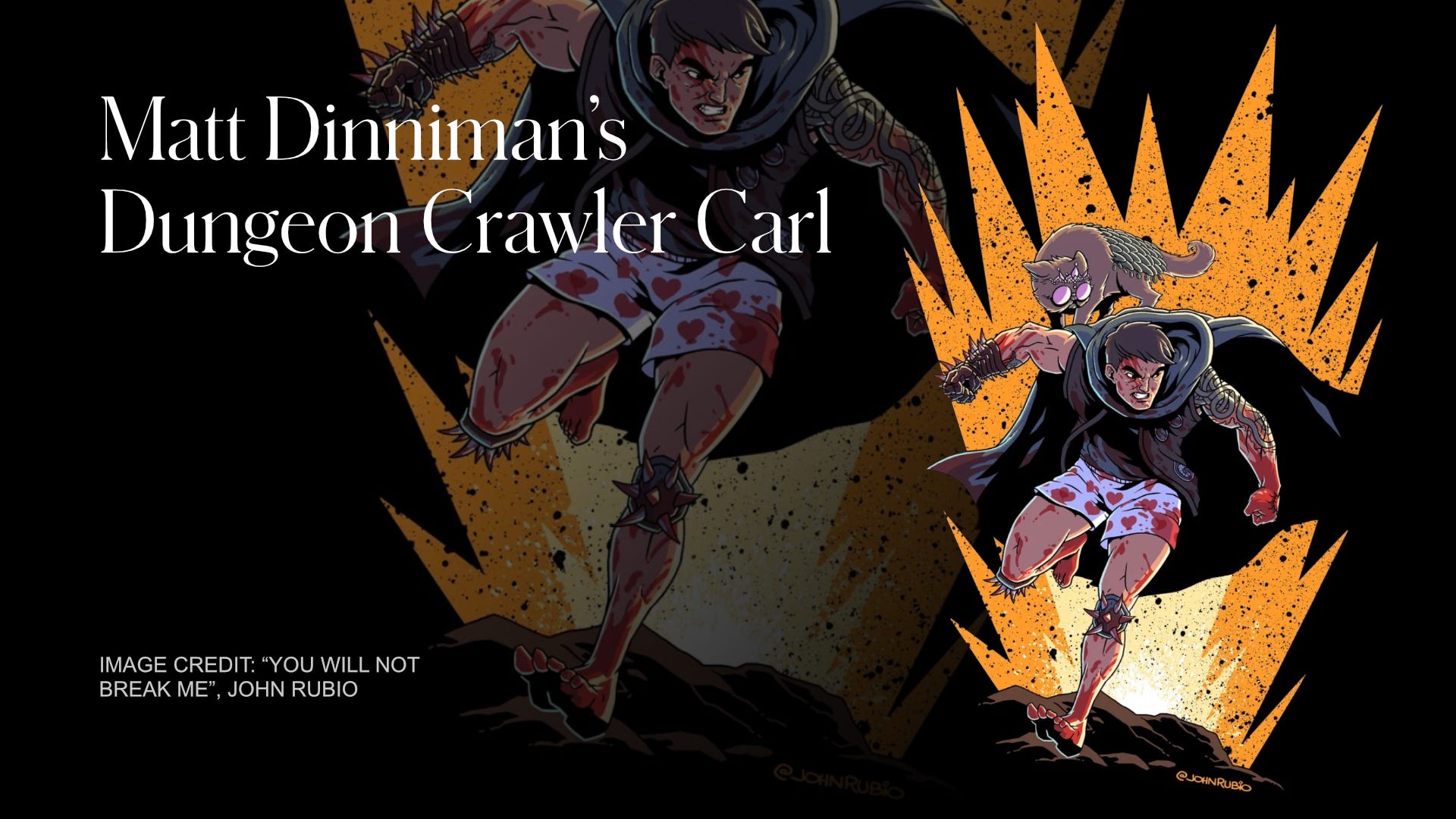
Quick spoiler warning: this article includes moderate spoilers for books 1 and 2 of Dungeon Crawler Carl. Honestly, I’m not doing that much more than discussing the premise or things you’ve probably already seen on t-shirts, but if you haven’t read the series and don’t want me to reveal a thing about it, then bookmark this video and come back later.
With that said, hold onto your hats. We’re going under.
Enter the dungeon
When life as we know it is unexpectedly destroyed by a collective of alien races, the surviving humans are given a choice: tough it out on the now resource-barren surface of the planet, or descend one of the mysterious new staircases that lead down into the earth.
Those who choose the latter find themselves in a global, multi-levelled dungeon, which is the set of a gladiatorial death-game broadcast as entertainment across the universe. Players fight to get to the next floor, defeating familiar mobs like goblins, rats and orcs, along with less-familiar foes such as mutant lava-spitting, drug-dealing llamas and the Krakaren, a monstrous octopus-like creature who presumably asks to speak to the manager.
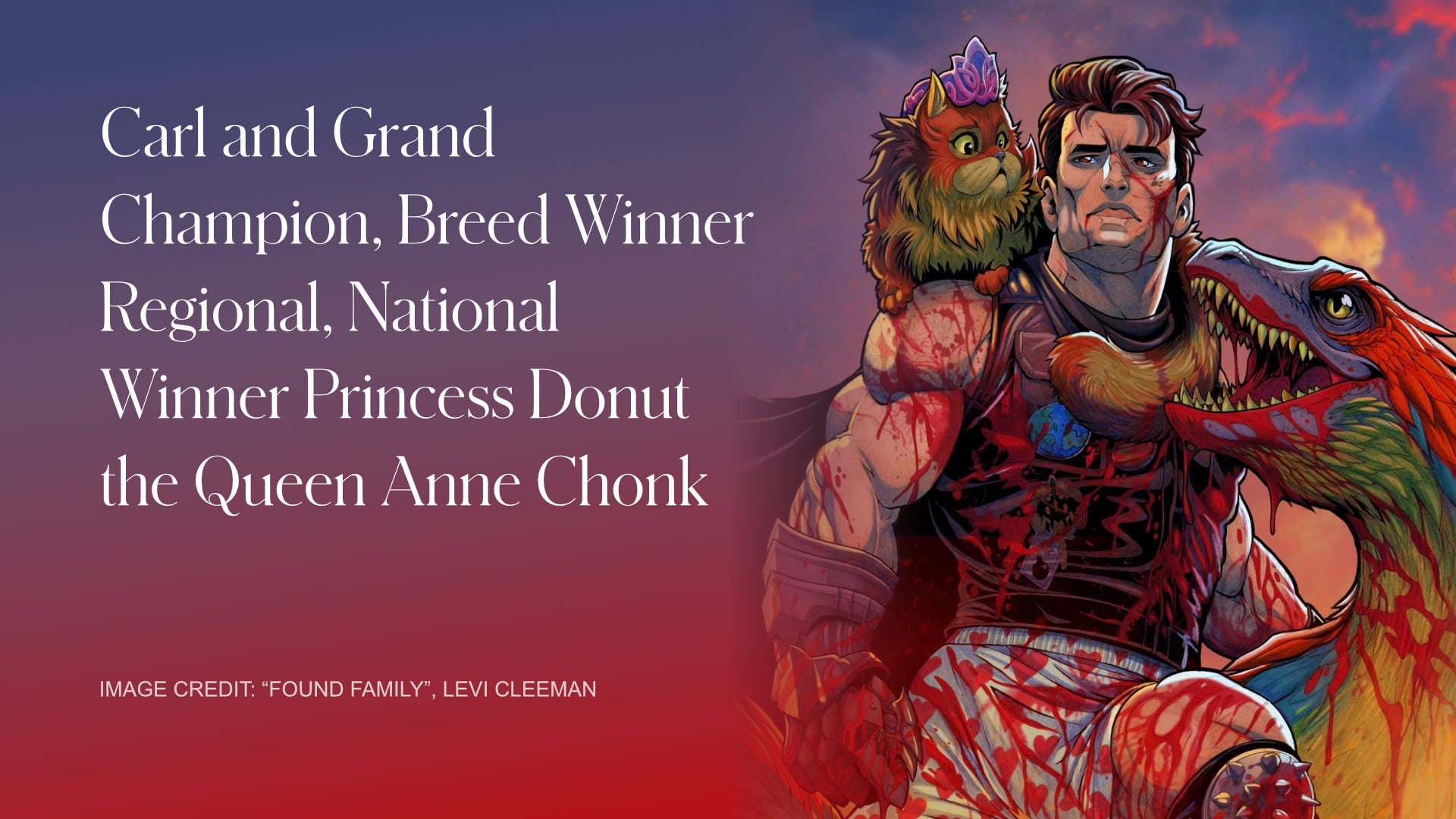
Our protagonist is Carl, an ordinary guy in the wake of a relationship breakup, who is dragged into this nightmare alongside his ex-girlfriend’s cat, Princess Donut the Queen Anne Chonk — or Donut for short — who turns out to be the somewhat superficial, surprisingly cutthroat yin to his yang. More on this later.
Like many others, I have found myself to be almost feral about this series, and not least because of the psychological questions it presents to its reader:
Who are we when everything that held our identity in place has been taken away?
When the life we’ve been taking for granted is under threat, what do we protect at all costs?
And how can we stay connected to our authentic selves when forced to live within the rules of a game we never chose to play?
Because, as far as that last question is concerned, at least, we are all in that situation anyway, are we not?
An ordeal is rarely voluntary
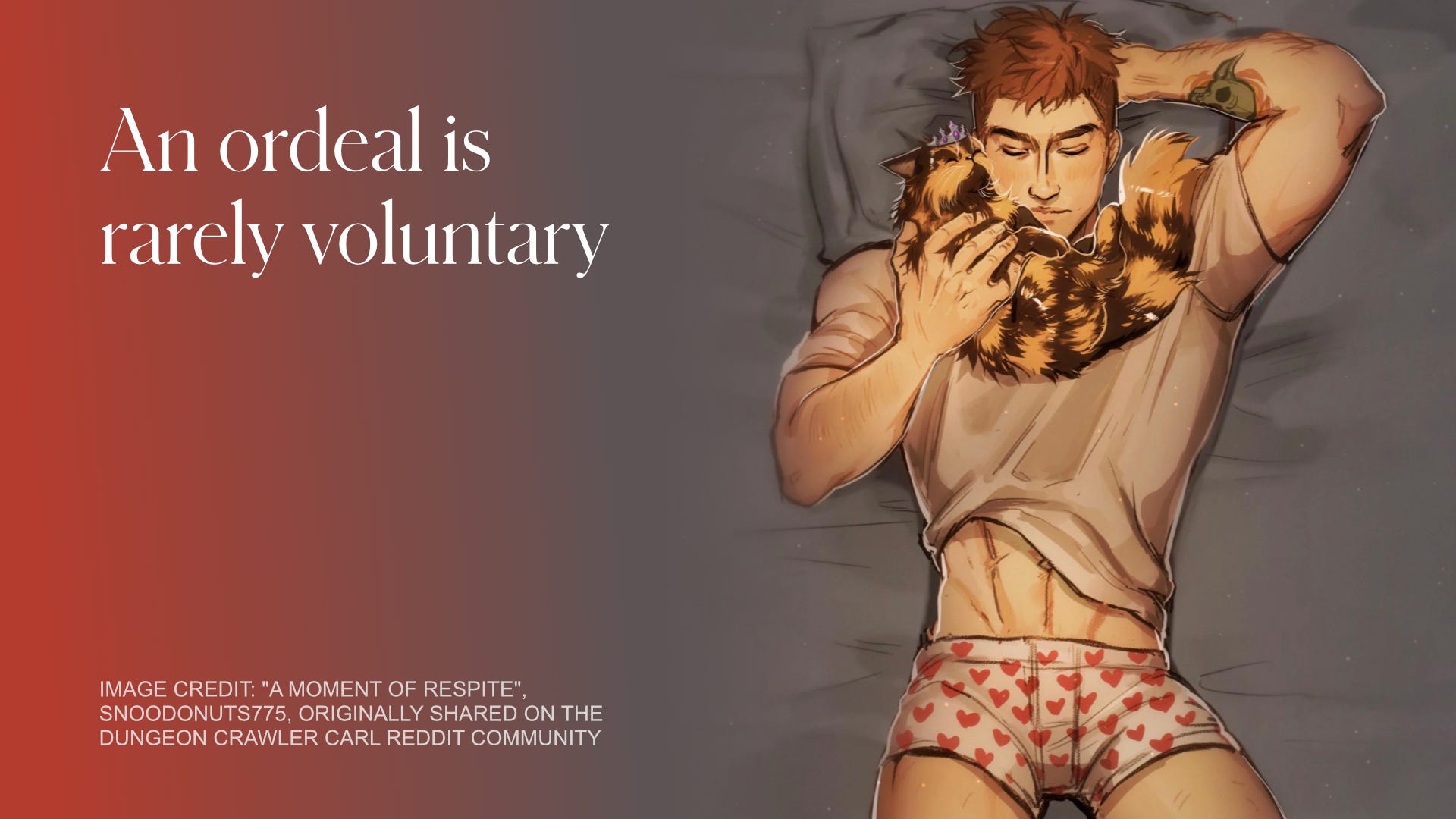
Having followed Princess Donut out of their apartment in the middle of the night just before the collapse of the world, Carl starts the game wearing only a pair of heart-patterned boxer shorts and a leather jacket. In other words, he’s vulnerable and unarmed. Furthermore, as someone who isn’t naturally performative, he’s clearly not made for this particular game, which demands that you accrue followers, favourites and sponsors in order to survive.
Of course, the dungeon doesn’t care how he feels. The system AI — the program running the crawl and speaking into the minds of all players whenever they make an achievement — decides early on to fetishise Carl’s bare feet, which is both hilariously random-feeling and also perfect as a motif to remind us repeatedly just how powerless, objectified and exploited Carl and his fellow crawlers have become.
From the very beginning, then, our protagonist is fighting a two-front war: he’s battling the dungeon and monsters therein, and also the version of himself the dungeon wants him to become — namely, a brutal, selfish, somewhat sexualised murderer.
“You will not break me”
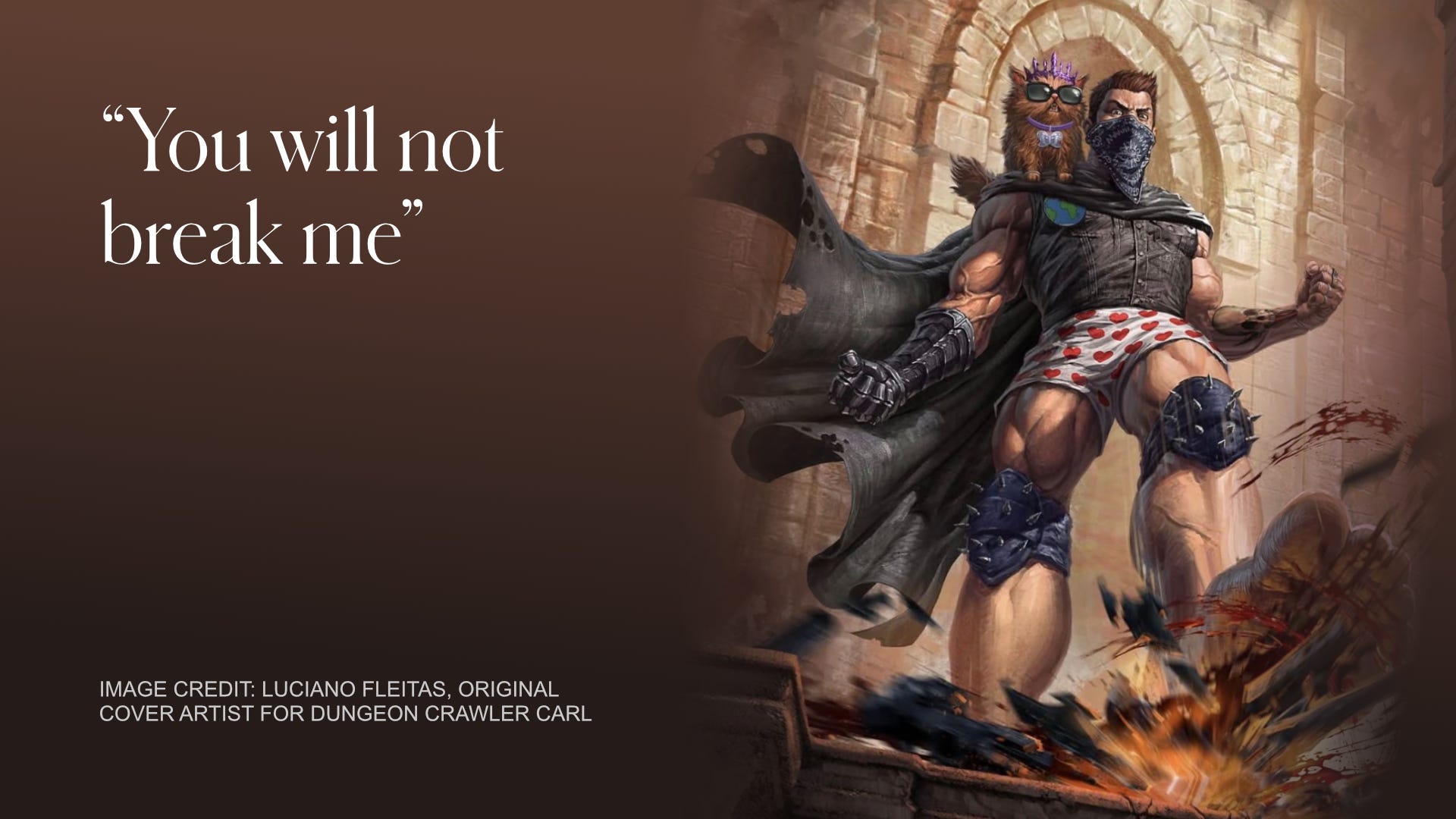
There are many moments where the strategically optimal thing for Carl to do would require him to become someone he doesn’t recognise, but we breathe sigh after sigh of relief as he consistently chooses not to bend to the dungeon’s wishes. He finds that he won’t do a certain category of thing, and won’t hurt a certain category of being, even when his life is at stake. “You will not break me,” he growls, over and over, as the game tries and fails to strip his humanity away.
As we read, we get to process the somewhat inconvenient truth that authentic self-connection is a *practice* rather than a feeling you either have or don’t. It’s a repeated and effortful act of staying true to ourselves, our beliefs and our values when under pressure, rather than only when life is easy.
This gamified world
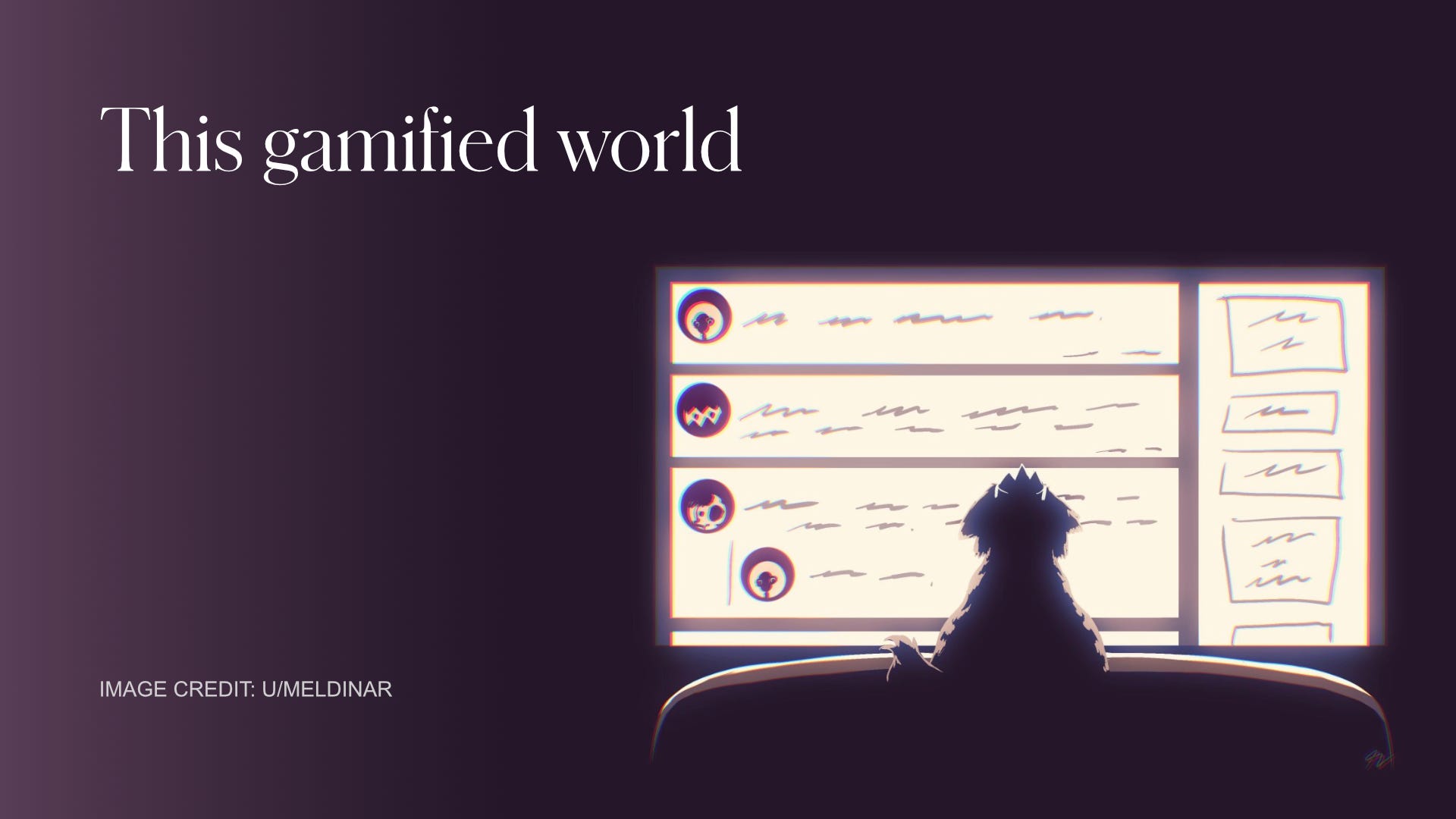
We, too, live in a gamified world. We often profit or even rely on status, popularity, followers, or our place in some hierarchy, and the systems within which we find ourselves place constant pressure on us to do things that go against our values in order to survive and “thrive”. Workplaces run on KPIs, performance reviews and quarterly targets. Dating apps reduce your compatibility with another human being to a swipe-worthy profile picture and pithy bio. Even the act of ticking something off a to-do list is, neurologically speaking, a small dopamine event that feels a little like a stat boost that can be exploited to keep us productive.
So, while we may not get points for killing brindle grubs, we are playing the game in one way or another, and Dinniman’s series all but forces us to face the reality that self-connection is built and kept (or not) depending on our everyday choices, behaviours and *boundaries*, which is the true psychological through-line of Carl’s story.
Boundaries: the misconception
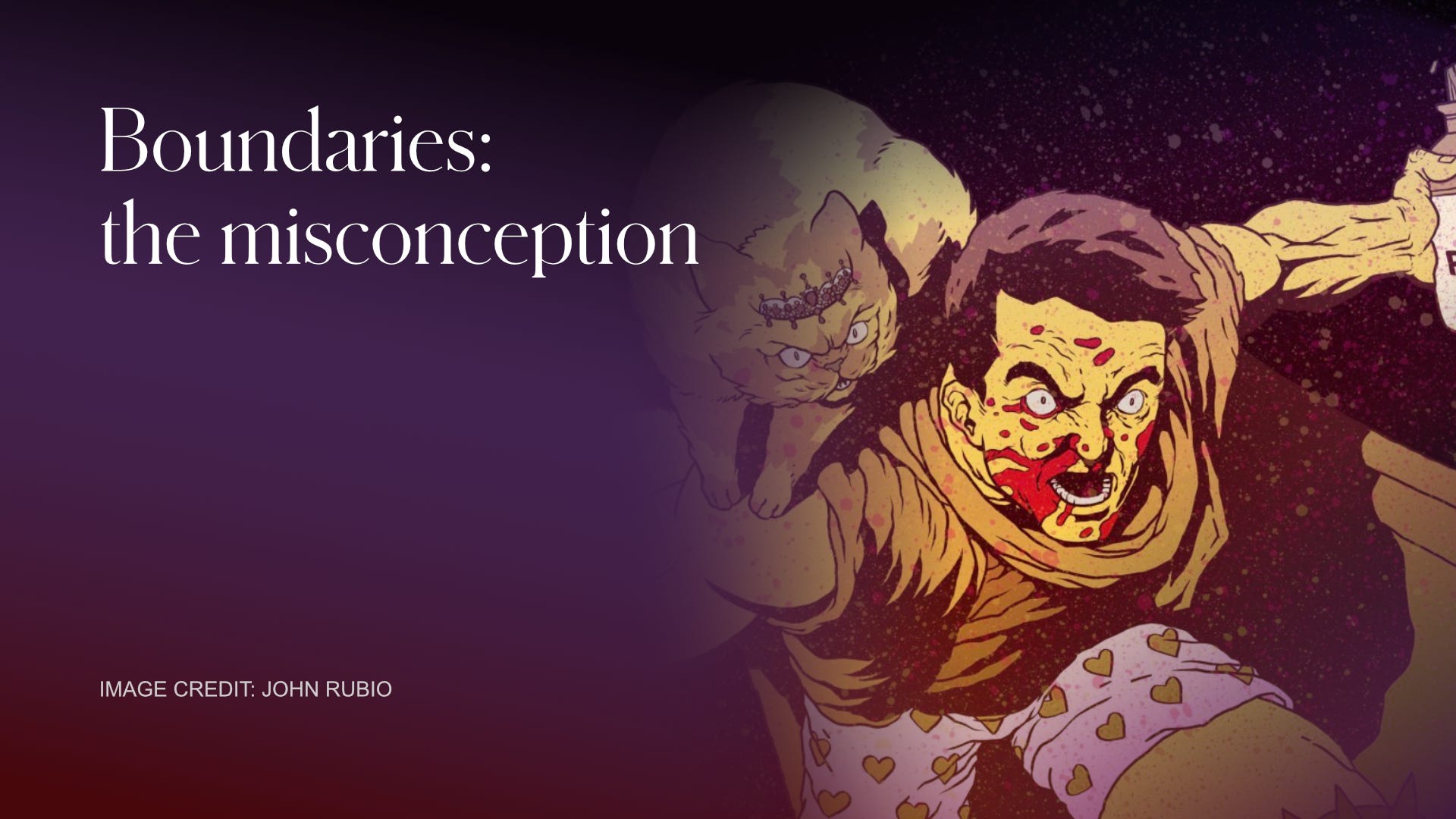
The word “boundaries” has been through a lot in the last decade. It’s one of those words (like narcissist, for example) that has made a leap from specialised psychological conversations into popular vernacular, and in doing so has lost touch with its true meaning.
When people talk about setting a boundary, they usually think of it as a line drawn for others: This is my boundary; you’re not allowed to cross it.
Obviously, this is appealing. We love to believe that there’s some magical formula for unbreakable boundaries — if I just use the right combination of “I” statements and assertiveness, then people won’t challenge me.
If we think about this at all, though, it’s clearly unrealistic. Humans aren’t well-trained dogs; they won’t always stop doing something they think they need to do because you’ve told them where the line is. We simply can’t control other people’s behaviour, at least not ethically. We can ask, and we can communicate well, but we can’t *enforce* a boundary that depends on another person’s compliance, because that person is not ours to command.
A true, healthy and effective boundary is not about what other people will or won’t do at all. It’s about what *you* will or won’t do, and what *you* will or won’t put up with. “Here’s the line; don’t overstep” becomes “If this boundary is breached, I will… whatever”.
If this continues, I’ll leave.
If you speak to me that way again, I’ll end the conversation.
If this situation requires me to do something I don’t believe in, I won’t do it, and I’ll accept the consequences.
These statements are much less comfortable, definitely, because now the onus is on us. But that’s the entire point. Responsibility is power, and real power never comes easily.
Carl’s situation is the perfect example of this. He can’t control the dungeon, the monsters or the aliens. He can’t make the game fair or just. He can’t even control Donut. The only thing he can control is himself. Which is, of course, the only thing any of us can control.
Carl’s self-connection
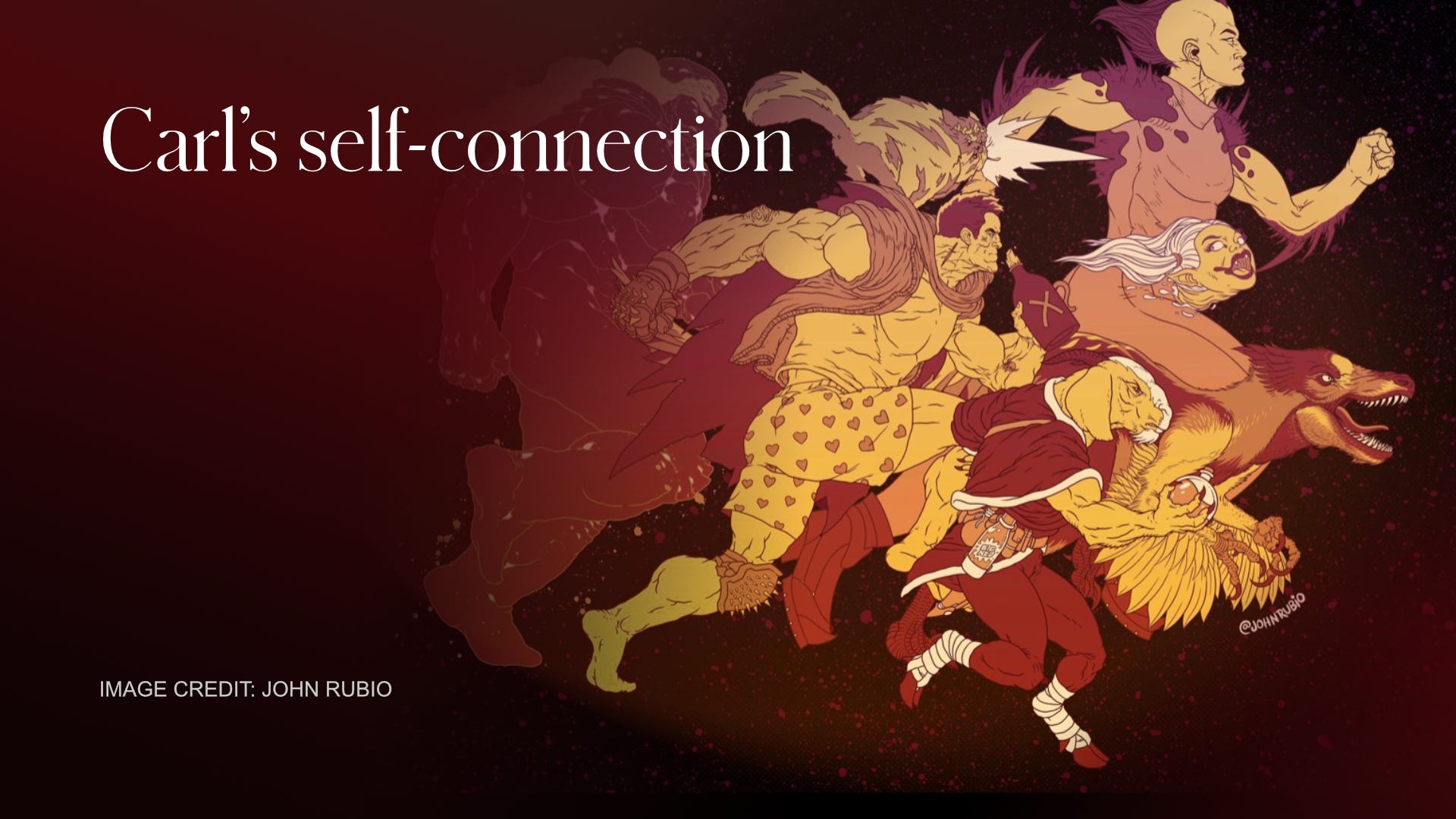
To view this through the lens of depth psychology, what Carl is battling to stay connected to is the Self with a capital S. So, not just the ego or persona, and not just the survival-focused parts of self, either, but the deep, organising centre of who he actually, truly, really is when everything else is stripped away. This is something we surely all desire, but it’s not easy. How do we get to meet the version of self that is *beyond* what we’ve been conditioned to think, feel and do?
True to reality, for Carl, this is not a linear journey, and his true self does not look the way he imagines when he first enters the dungeon. Carl has some growing to do, and Donut — who turns out to be the chaotic and fabulous foil to Carl’s grim reluctance — will be playing the lead role in this particular side-quest.
Donut and the disowned appetite
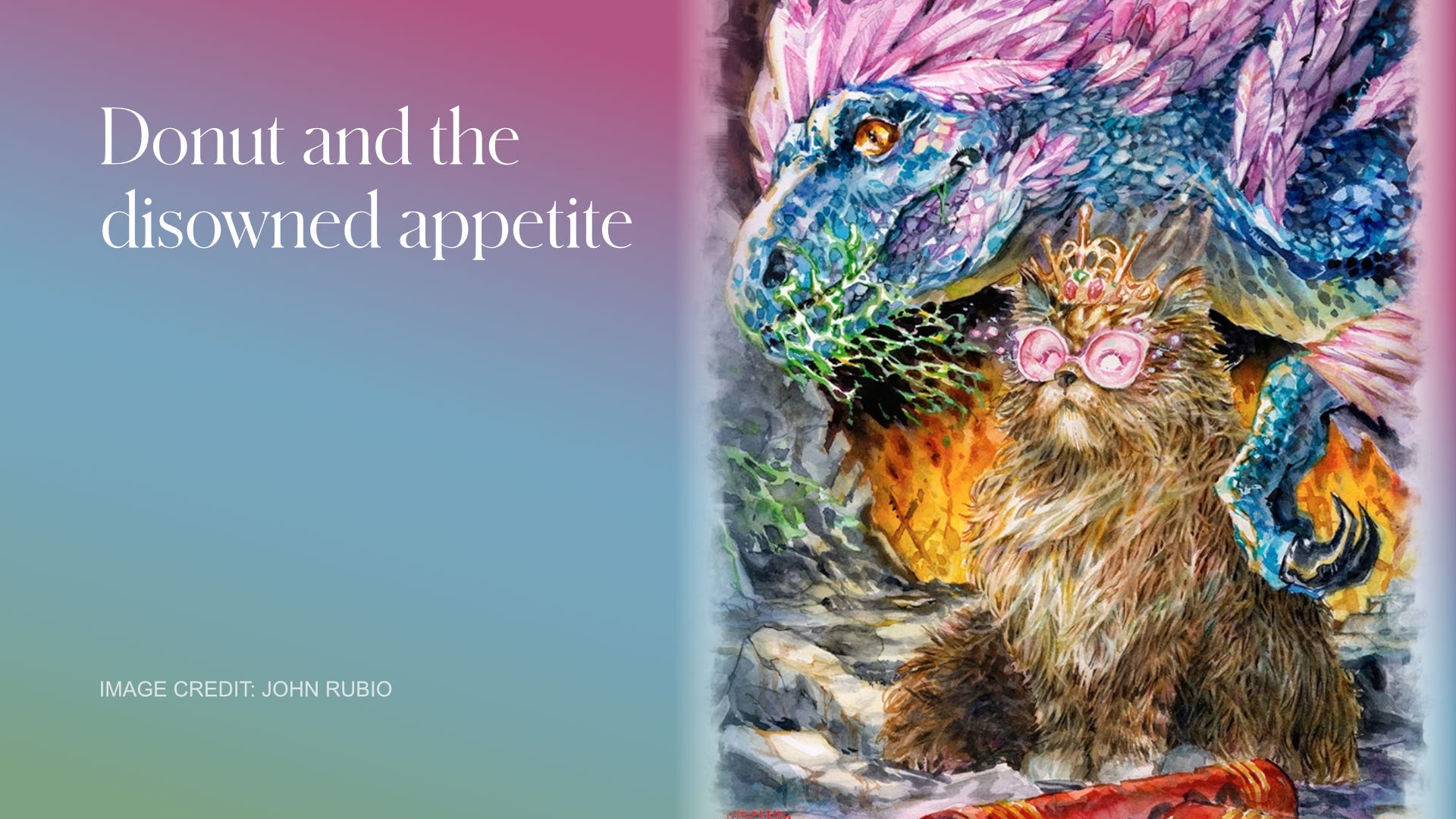
Princess Donut is a gift. She’s a former show cat, thoroughly accustomed to being adored, and deeply invested in her appearance, status, follower count, and personal brand.
She obsesses over pretty tiaras and bracelets gifted to her by the viewers, and rides her pet velociraptor, Mongo, around the dungeon, firing magic missiles from her eyes. She types in ALL CAPS in the chat, just to be obnoxious, and she paints a perfect picture of someone who resists vulnerability and emotion at all costs, expressing all her feelings through Mongo, rather than having to own them herself: “This is unacceptable, Carl. Mongo is appalled.”
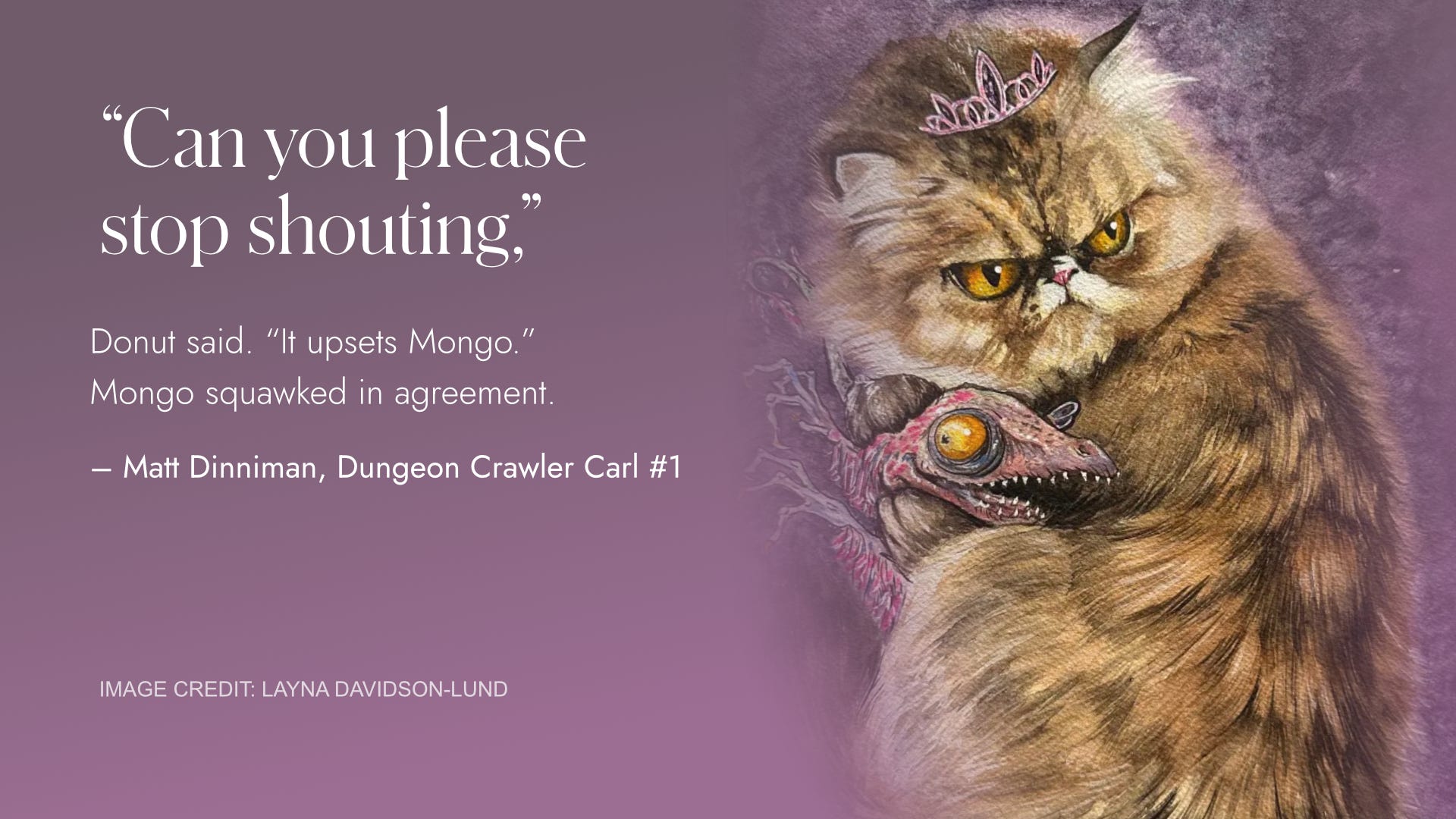
Unlike Carl, when it comes to the game, Donut quickly grows to love it because performance is her bag — she gives the crowd exactly what they want, and she does it with full, unashamed commitment. In other words, Donut is the embodiment of everything Carl rejects in himself, *and* needs to survive. She is his shadow personified (and vice versa).
Integration in progress
Admit it or not, Carl does want recognition — he wants to matter, and for his actions to mean something. Carl has decided that he’s a survivor, not a player, but in order to achieve what he truly desires, which is to put an end to the cruelty and save as many people as possible, he does need to engage. Which is to say, he needs Donut.
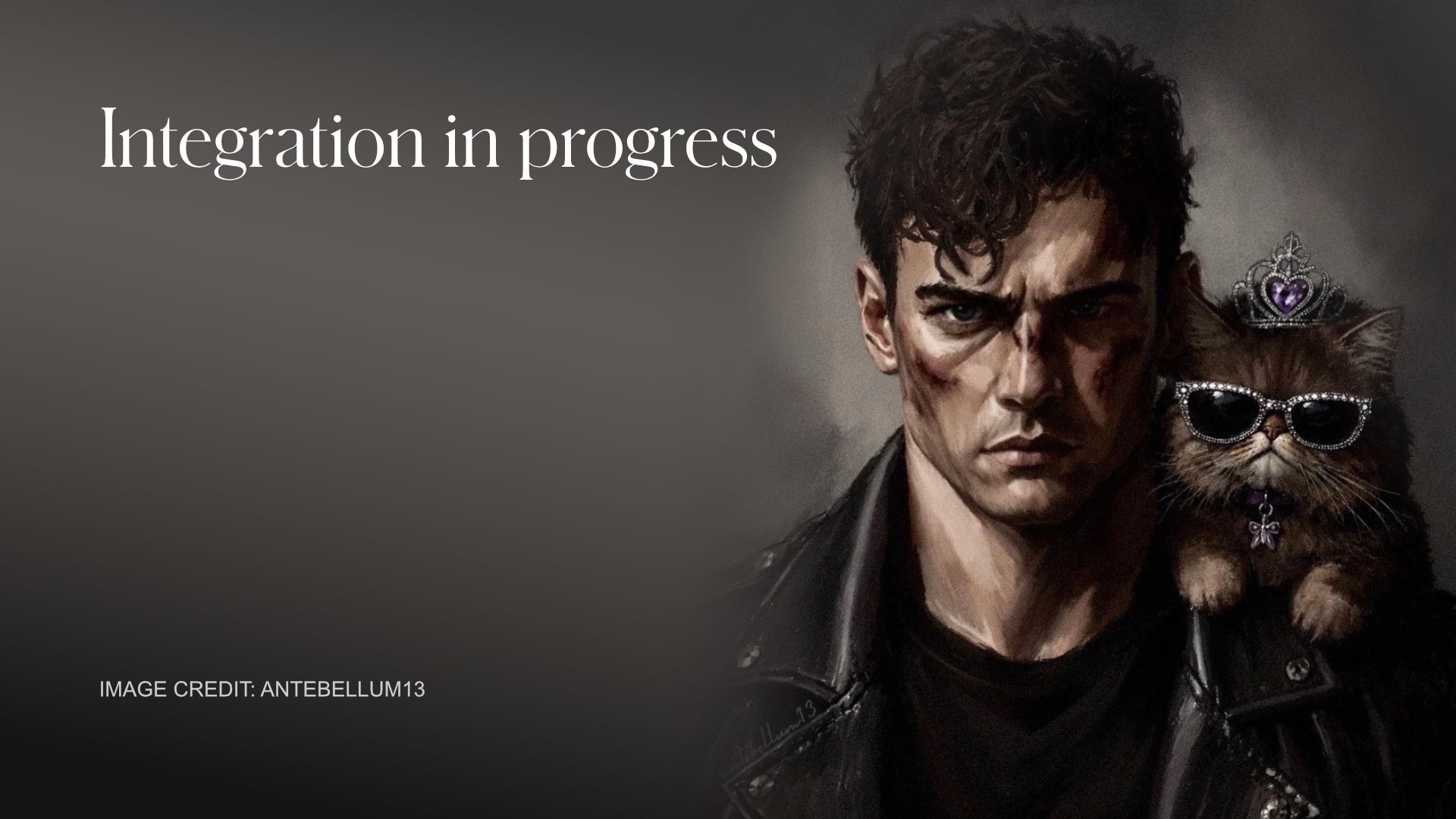
Psychological integration and individuation require that we not only strengthen the things we like about ourselves, but also accept the things we don’t, and this is what the cat makes possible for Carl. To start with, he’s overprotective of her — he doesn’t trust her to look after herself, which is exactly how we all feel about the parts we haven’t yet dared to let out into the world. That’s why they’re in the shadow; we don’t see them as safe.
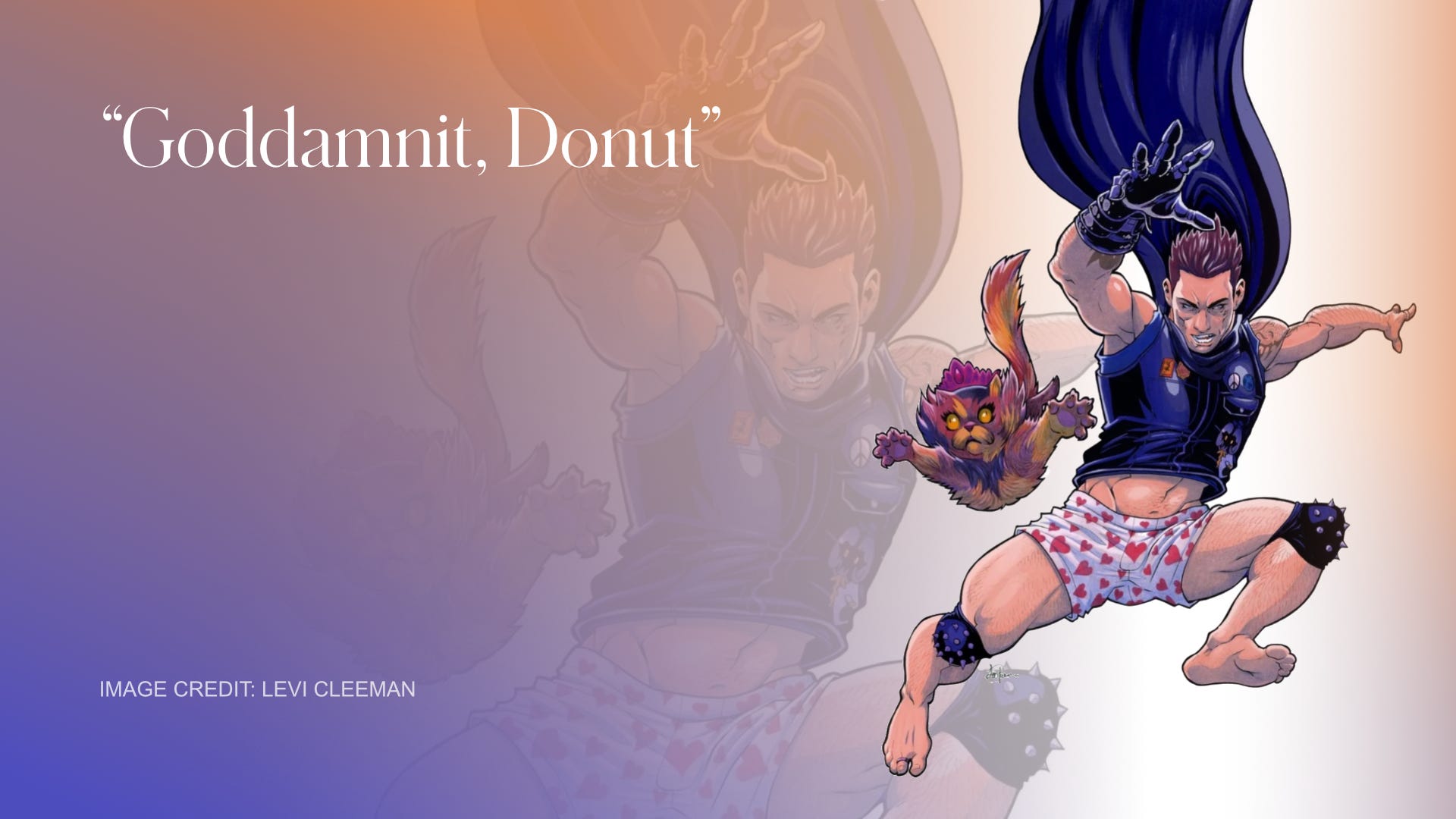
But while Carl both worries about Donut’s obsession with followers and rolls his eyes at her superficiality, he also loves her for these things, and that love is the most important vehicle for his personal growth.
By brazenly flaunting what he rejects in himself, Donut puts Carl in situation after situation where he has to decide and justify what he will and won’t do. Will he let her play to the crowd in ways that make him uncomfortable? Will he protect her even when she’s made choices he’d never make? Will he use the followers she’s built and benefit from the platform she’s created, while still maintaining his own refusal to perform? Each of these is a negotiation that teaches him something about where his lines actually sit, as opposed to where he thought they were before they were tested. Thus, through Donut, he gets to finally meet — and love — himself.
In mythological terms, Donut is Carl’s lost princess, and their affectionate, connected union is the Holy Grail.
Who is your Donut?
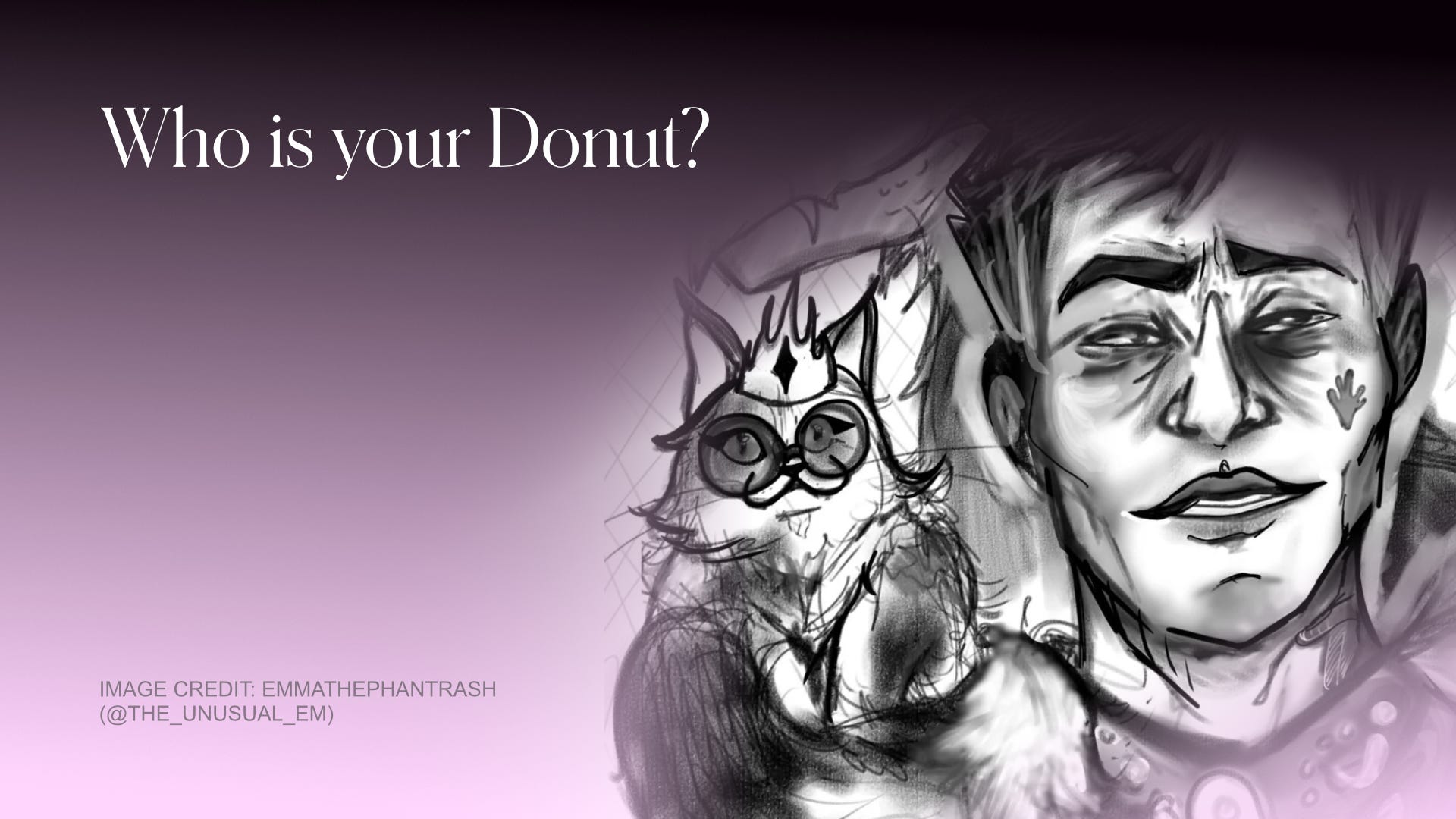
Now, this opposites-attract, growth-through-relationship process doesn’t only take place in stories. Most of us have people in our lives who embody what we’ve been unable to integrate in ourselves: someone who is openly ambitious when we’ve decided we don’t care about success; openly needy when we see ourselves as fiercely independent; openly joyful or silly when we like to think of ourselves as quite serious. These relationships can be really challenging and often infuriating, but they’re also the most rewarding. First, and most beautifully, our love for these people represents a vital spark of projected self-love that we get to gradually reclaim as the relationship goes on. Second, these connections are how we learn about our true selves and the lines we need to draw.
We tend to think of self-knowledge as a solitary endeavour, and self-awareness as something we arrive at through quiet reflection, journalling, or therapy. Obviously, all of these things can be immensely helpful, but the only real way to get clear on our boundaries is by taking what we glean from our quiet reflection and applying it to real life. That is, through the friction of living, loving, failing and relating to other messy, unpredictable human beings (or cats).
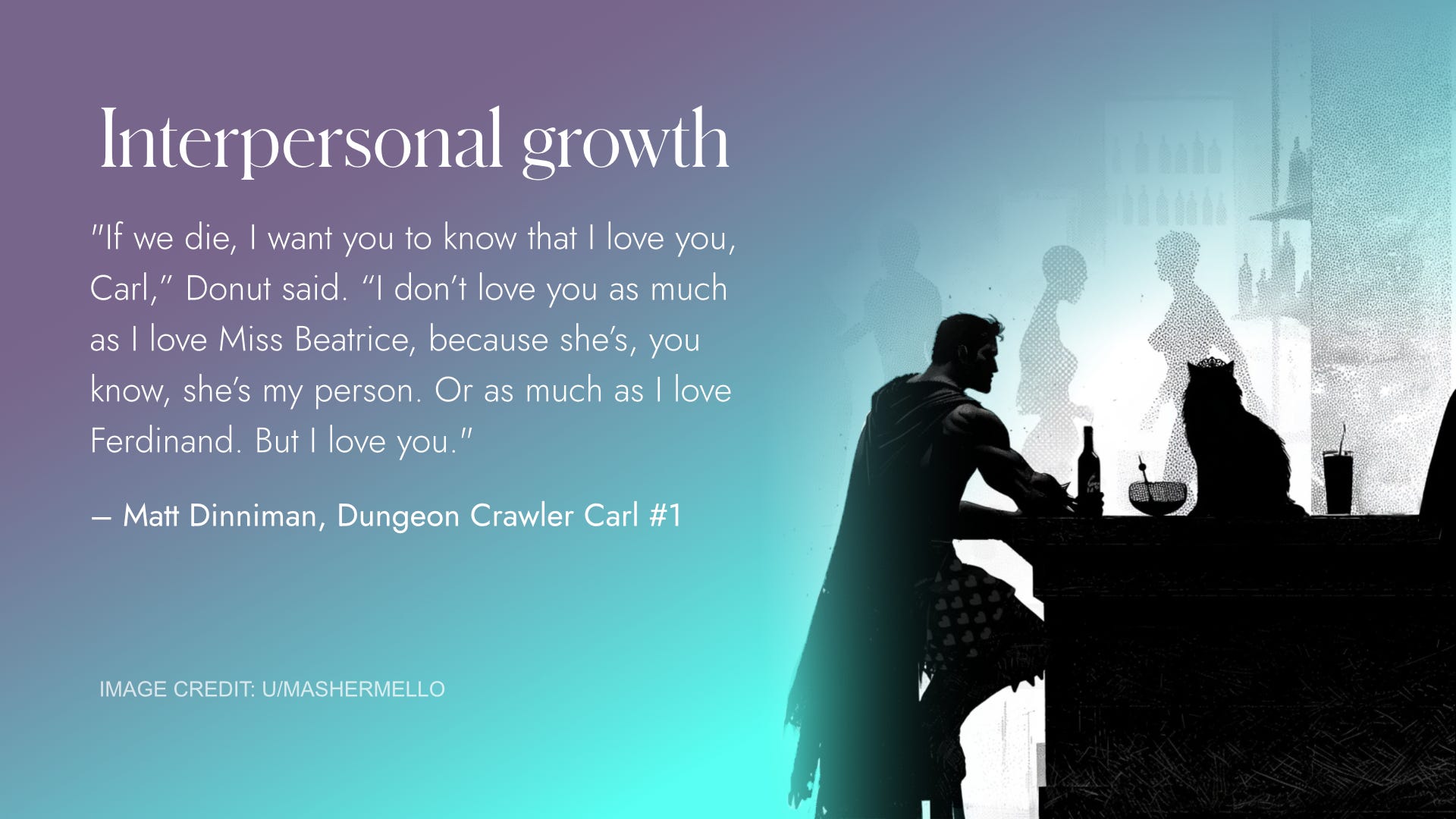
People are mirrors. We never really know what we value or believe in until someone we love is doing something we’d never do, and we have to figure out whether to leave them, join them, or simply love them anyway.
So, my closing questions for you are these:
First, who is your Princess Donut, and what does that person teach you about yourself?
Second, if you were to allow yourself to think, feel or behave in the ways that make that person different to you as you are now, what would you possibly gain?
This spoke to me exactly when and where I needed it to. I love this so much.