


What are you pretending not to know? What reality have you been avoiding, what conversation have you been postponing, what choice have you been delaying because you’re “not ready yet”? And what if your avoided ordeal were actually the start of something inconceivably magical?
The girl who had to face a witch
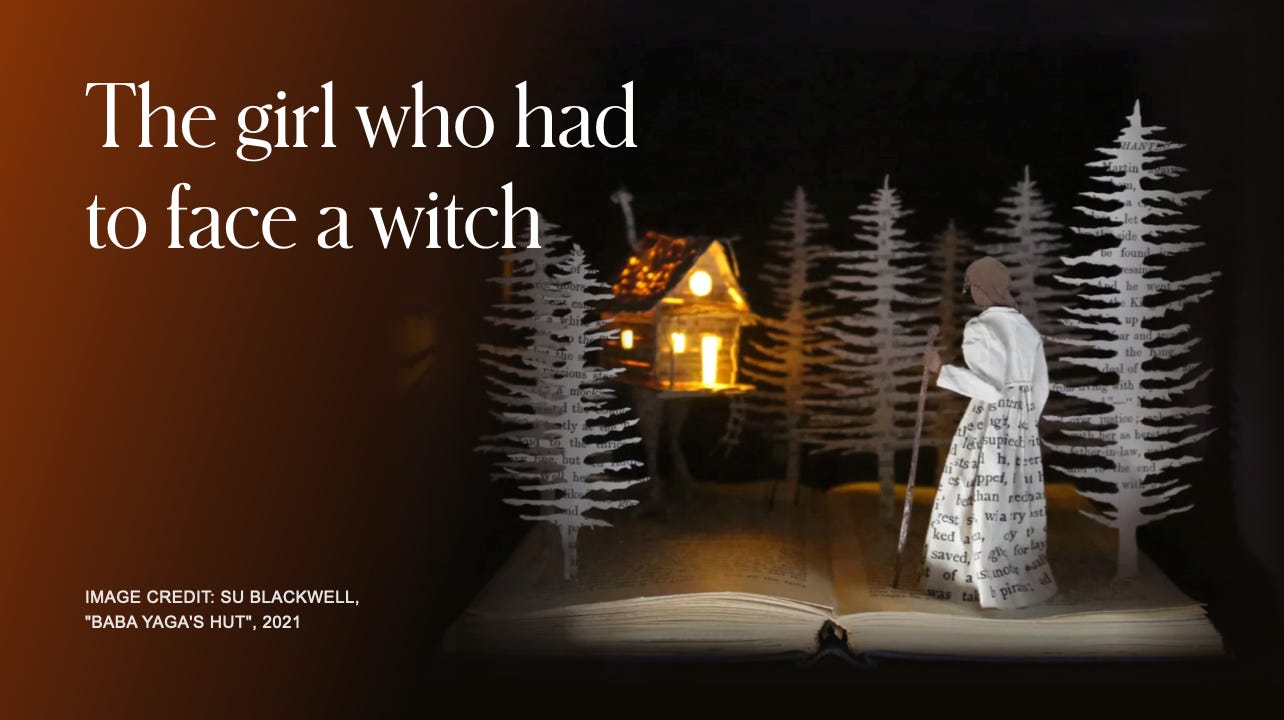
There’s an old Russian fairy tale about a young girl named Vasilisa, whose beloved mother dies, leaving her with a tiny doll and a final instruction: “Feed the doll, listen to what it tells you, and you will be safe.”
When her father remarries, Vasilisa’s new stepmother and stepsisters make her life hell. They work her to exhaustion, mock her, plot ways to get rid of her, and give her the bare minimum to eat. But each day, no matter how hungry, little Vasilisa always gives the best bits of her own meagre portions to the doll, who thus comes alive to offer much-needed comfort and guidance.
One night, when her father is far away in a distant place, the stepmother and sisters blow out all the lights in the house and send Vasilisa into the forest to fetch fire from the only place it can be found: the home of Baba Yaga – a fearsome witch who lives in a hut that stands on chicken legs, surrounded by a fence made from long bones topped with skulls.
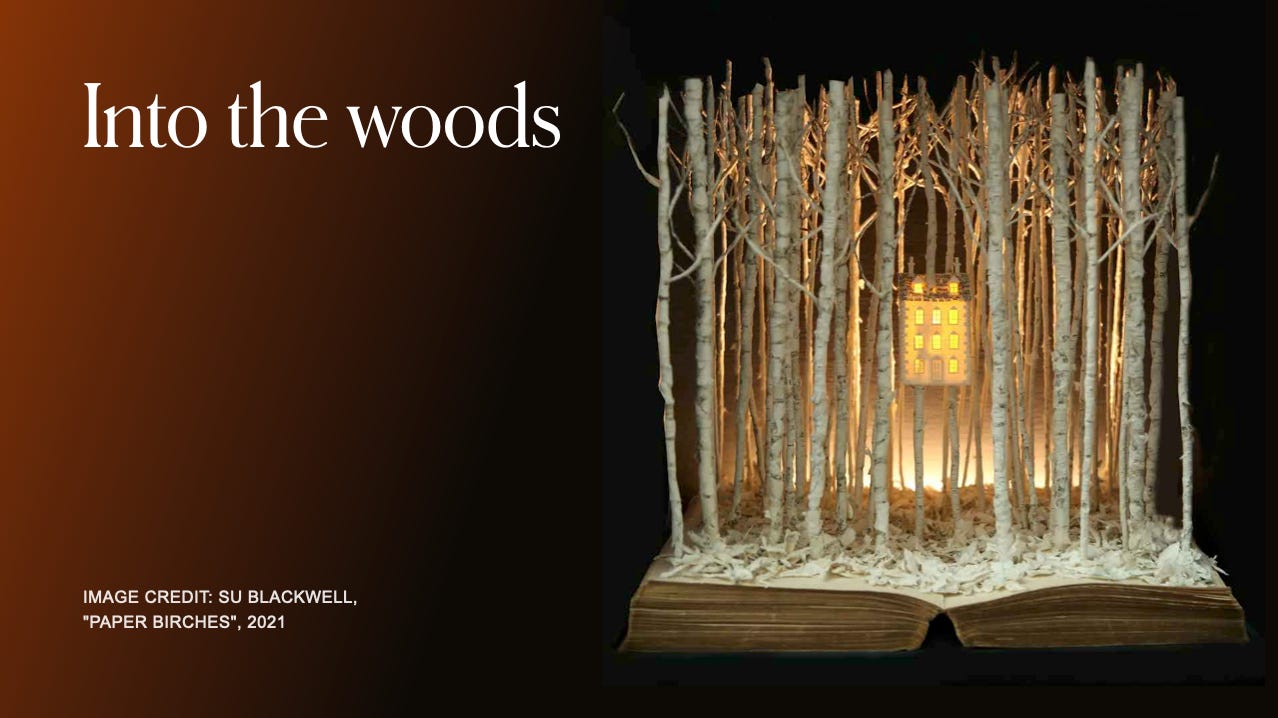
Vasilisa doesn’t want to go. Of course she doesn’t – Baba Yaga eats people, everyone knows this. But the house is cold and dark, and her stepfamily is watching, waiting for her to fail. So she takes her doll, walks into the forest, and weaves her way between the gloomy trees. At the first hint of daybreak, she sees a rider dressed all in white sitting atop a white horse. Later, as the sun rises in the sky, she’s passed by a red rider on a red horse, and at dusk, a black rider on a black horse. Eventually, she approaches the hut that teeters and creaks on its grotesque legs.
“Little hut, little hut, turn your back to the forest and your front to me,” Vasilisa says, as all who encounter Baba Yaga’s strange home must do. The hut obeys, spinning round with an ear-splitting screech. Then, the witch appears, flying through the forest in a giant mortar, using the pestle as a rudder to steer. Already scowling as she lands, she climbs out and looks Vasilisa up and down.
“Leave,” she orders. Vasilisa wavers, but her doll urges her to stay – to be polite and explain why she needs the fire. Baba Yaga listens, and then agrees. “Work for me, and you may earn your fire. Fail, and I will eat you for breakfast.”
With this, Baba Yaga makes her way towards the hut, signalling for Vasilisa to follow, but then pauses before entering to half-turn and say, “While you’re here, do not worry your head with too many questions. Some things are dangerous to know.”
During her stay, Baba Yaga gives Vasilisa task after task: she must clean the house and yard, wash the blood-stained laundry, prepare supper, and separate rotten corn from good corn.
When these tasks are complete, the witch eats her supper at the table, served by mysterious, invisible hands. After her final mouthful, Baba Yaga tells Vasilisa that she may ask a question. Hesitant, but ultimately curious, Vasilisa chooses to ask about the three riders. With a half-smile, the old woman replies, “Those are my Bright Dawn, my Red Sun, and my Dark Midnight.” Then, after a lingering look, “Would you like to ask about anything else?” Vasilisa desperately wants to know about those invisible hands but, remembering the warning not to ask too many questions, she simply shakes her head.
The following day, the tasks get harder. On top of her domestic duties, Vasilisa is asked to separate tiny, dark poppy seeds from a towering mound of soil, and to fill the water tank using a broken bucket. She doesn’t have to complete these tasks alone, however, because she still has her mother’s doll, safely hidden from sight. So, she tackles the easy chores herself, while the doll takes care of the impossible.
Baba Yaga is suspicious when she realises that the tasks have been finished. She casts around the yard, taking in the perfect piles of seeds and soil, the brimming tank. Eyes narrowed, she asks Vasilisa, “How did you do this?” But, unwilling to expose her precious doll – after all, some things are dangerous to know – Vasilisa simply replies, “By my mother’s blessing”.
Upon hearing the word “blessing”, Baba Yaga flies into a fit of fury and forces Vasilisa out of her bizarre home. But this witch, as frightening as she may be, is nothing if not honest. So, staying true to the bargain, Baba Yaga gives Vasilisa the requested fire on her way out – a skull lantern filled with magical, burning coals for light.
This item is a paradox: a reward for Vasilisa, yes, but ultimately a tool of destruction, too, for when the girl returns home to the shocked faces of her wicked stepfamily, the light from the skull burns every one of them away, leaving only ash.
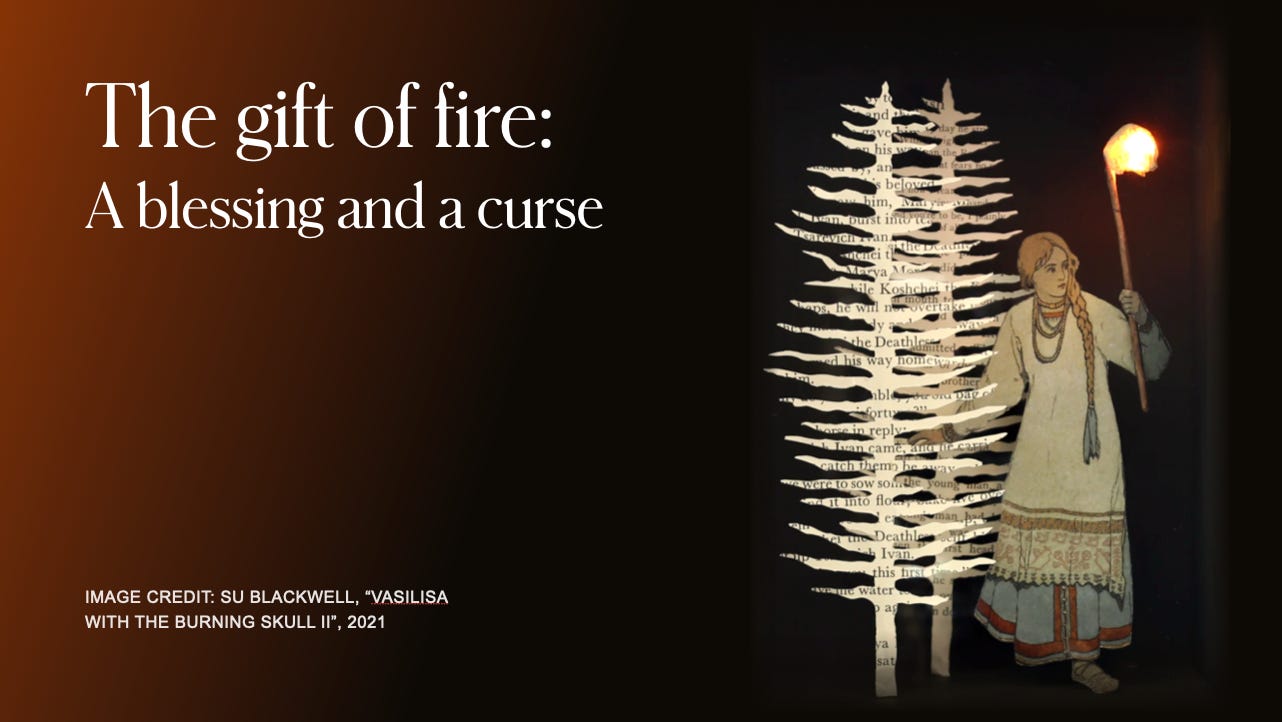
Vasilisa’s is a story about a girl walking directly into the ordeal that will transform her, armed only with her own intuition, which is represented by her mother’s doll. It’s for anyone who knows, deep down, that there’s something difficult they need to face – a conversation, a choice, a reality – but they keep finding reasons to avoid it.
It’s time to face the witch
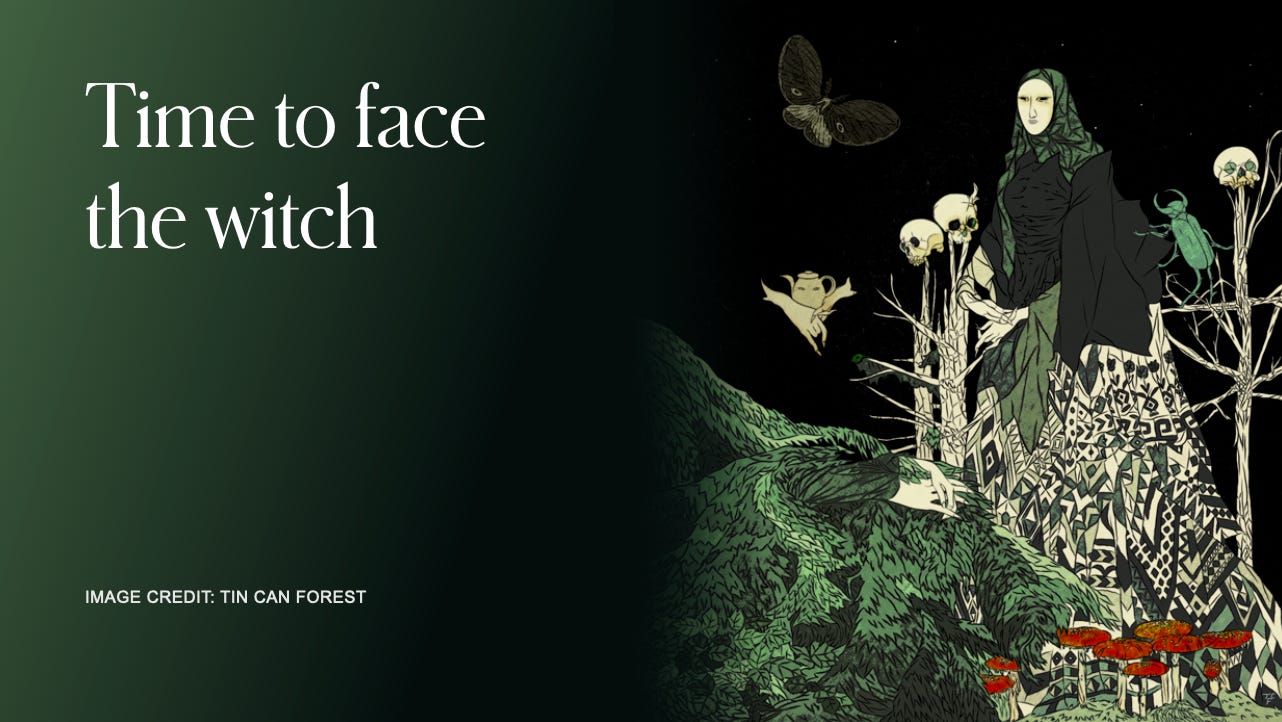
Baba Yaga is the archetype of earned wisdom. She is the ordeal itself, the initiatory trial, and the fierce teacher who will not coddle or care when you struggle. She represents everything we’d rather run from: difficulty, discomfort, uncertainty, and the death of who we used to be, and as such we need her. Archetypally, she’s a combination of the Witch and the Dragon – a gatekeeper for transformation, and the guardian of psychological gold. You cannot become who you’re meant to be without confronting her. And the longer you wait, the colder and darker your house becomes.
Baba Yaga in myth and mind
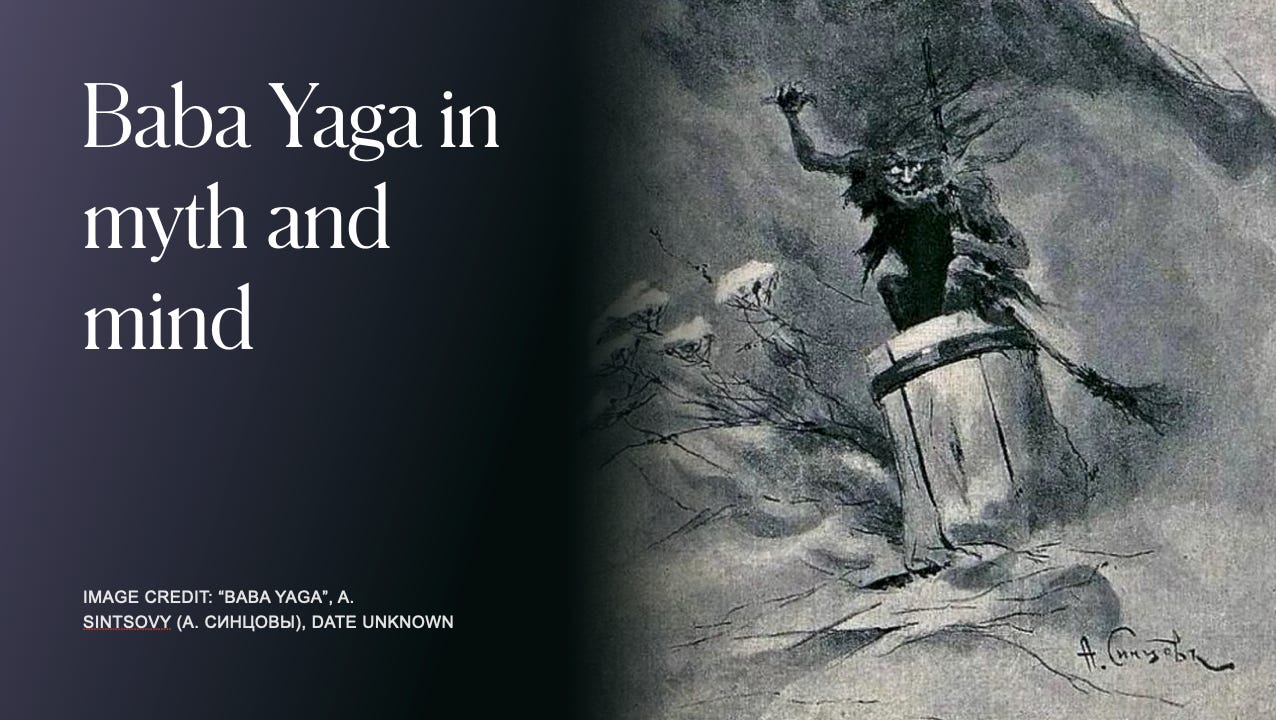
In Slavic folklore, Baba Yaga is an ambiguous figure. Sometimes she helps, sometimes she hinders, sometimes she devours. She lives at the edge of the known world in a hut that moves around the forest on those bizarre chicken legs. Associated with death, wild nature, and the boundary between the land of the living and the realm of the dead, she is uncanny, unpredictable and unwilling to be found by just anyone. Just like Vasilisa the Beautiful – also known as Vasilisa the Brave – we must earn our encounters with Baba Yaga, and we do so by showing courage.
As with all the best “monsters”, Baba Yaga is terrifying but not simply evil. She only eats people who deserve it. Those who pass her tests will be set free.
In Women Who Run with the Wolves, Jungian analyst Clarissa Pinkola Estés explores the Vasilisa story as an initiation into psychic development and deep intuition. Estés describes Baba Yaga as the Wild Mother archetype – fierce, testing, and ultimately life-giving to those who approach her with authenticity and pluck. Baba Yaga represents the deep feminine instinct that knows what work must be done and refuses to accept half-measures or false performances.
Baba Yaga can smell dishonesty. She will devour those who come to her with flattery, entitlement, or deceit. But those who come with genuine need, who are willing to work, and who respect her power? She gives those people exactly what they need – which is rarely what they want, but always what will transform them.
What Baba Yaga Demands
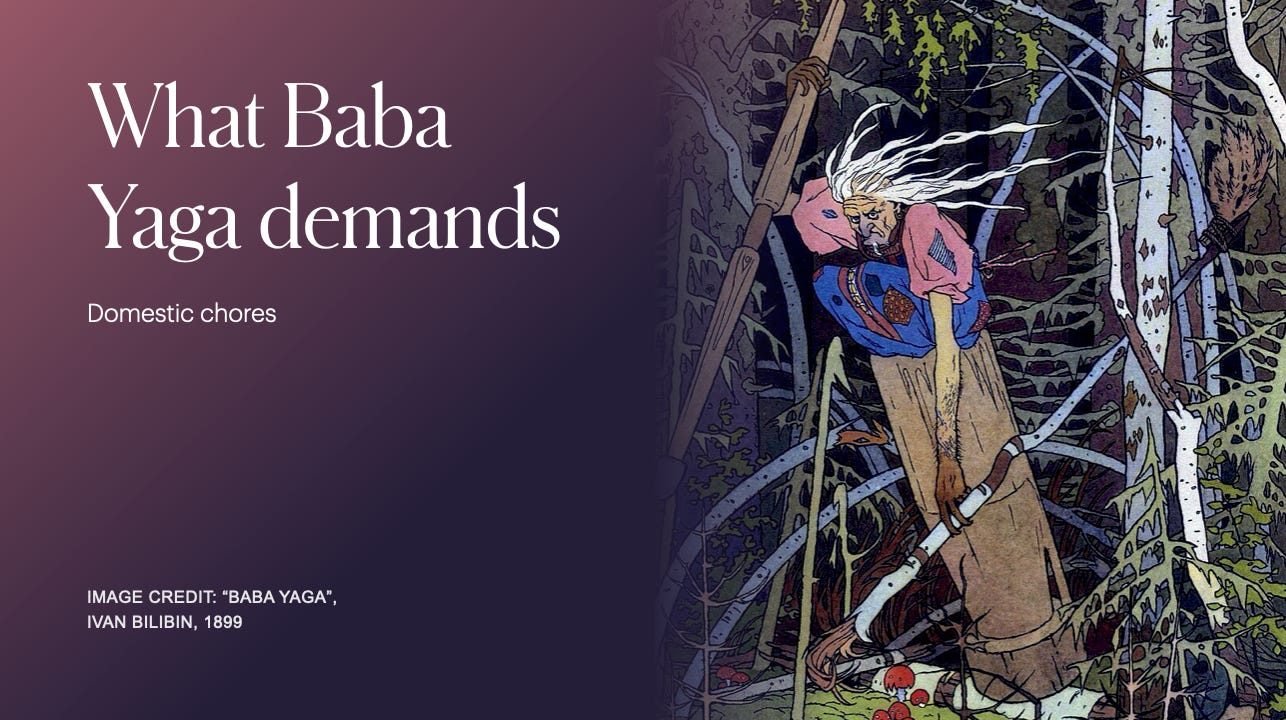
As with the elements of all good mythic stories, the tasks Baba Yaga sets for Vasilisa have symbolic meaning. The domestic chores represent the inner work of psychological cleansing and ordering – putting your inner house in order; dealing with psychological clutter and debris.
To wash blood-stained laundry is to cleanse trauma and psychological wounds, purifying what’s been stained by violence, brutality or any other kind of harm.
The preparation of supper is the nourishment of the psyche, achieved by integrating new, powerful truths.
The separation of rotten from good corn symbolises the skill of discernment – to know the difference between what nourishes the self and soul, and what poisons.
Similarly, separating the tiny poppy seeds from the soil is an exercise in meticulously distinguishing the vital, beautiful aspects of life from the barren or dead elements – something you need a strong connection to your intuition to achieve, hence the doll’s involvement.
The doll is also needed for Vasilisa to fill the water tank with the broken pail. Some containers – old beliefs, patterns, approaches – won’t hold what you’re trying to carry. And to integrate new beliefs – to adopt an updated world view – requires a leap of faith and deep, deep self-trust.
The most important of all Vasilisa’s successes – the one the old witch begrudgingly respects the most – is her restraint in not asking too many questions. She is allowed to know about the riders; that is, the passage of time and the cycles of life. But when Baba Yaga is served by invisible hands in the hut, the girl wisely keeps her mouth shut.
Not everything can or should be known. Perhaps the hands represent forces beyond our comprehension, or work that must be done without understanding why. In Estés’ version of this story, Baba Yaga warns that too many questions will age a young mind, and interprets this as a warning about the challenges and limitations created by overintellectualisation and the arrogance of assuming one can know it all.
Ultimately, none of these tasks is glamorous, and while some may be simple, not one of them is easy. More to the point, none of them can be faked – Baba Yaga doesn’t care about your intelligence or cunning, your intentions or your excuses. She cares only about whether you can actually do the work of getting through your ordeal.
The ordeal as initiation
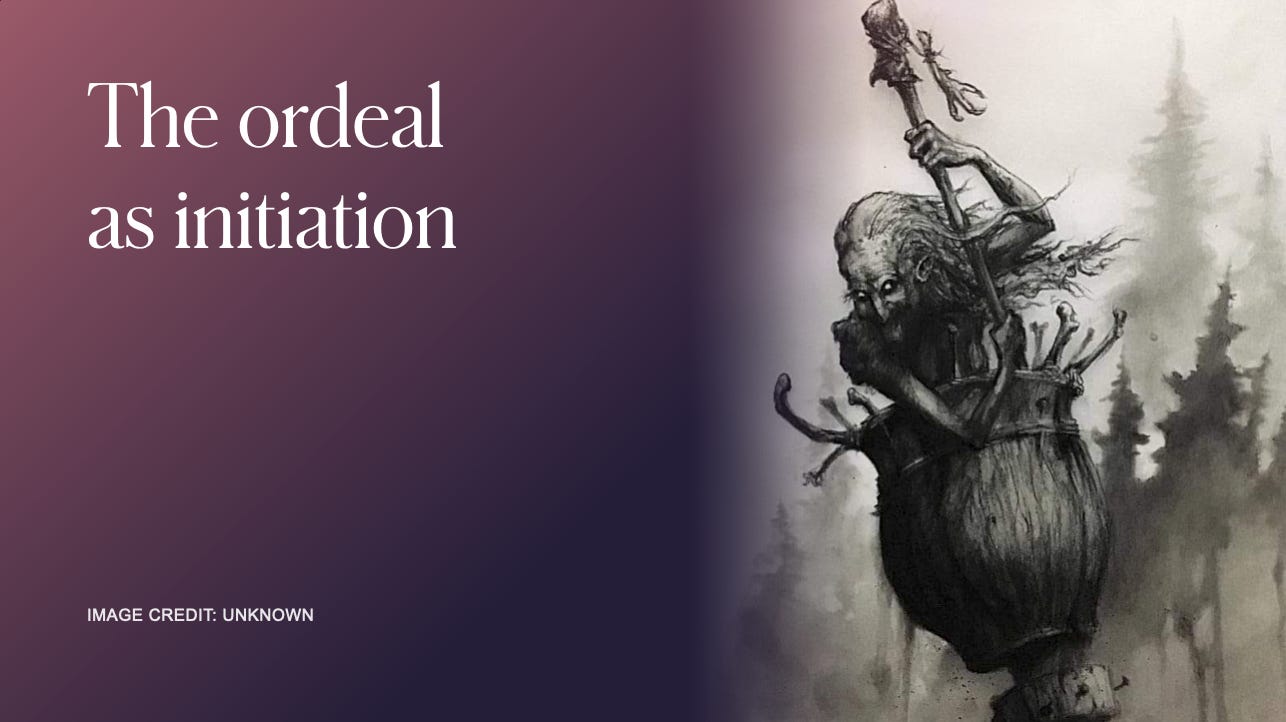
What we try so hard to forget in our comfort-loving culture is that transformation requires ordeal. And don’t get me wrong, it is mighty tempting to choose the path of least resistance, but that’s not how growth works.
Baba Yaga knows this. She lives at the threshold between the known and the unknown because crossing that threshold requires you to face what you’ve been avoiding. You may hear her cackle when you think of the difficult conversation you’ve been putting off, the boundary you’re too scared to set, the creative work you’re keeping to yourself because you’re afraid to show it to the world. You may feel her gaze upon you when you swallow the grief or anger or ambition you’ve been trying not to admit. She is the embodiment of the difficult thing that will transform you if you find the courage to engage with it directly.
Beware the lure of the threshold dwelling
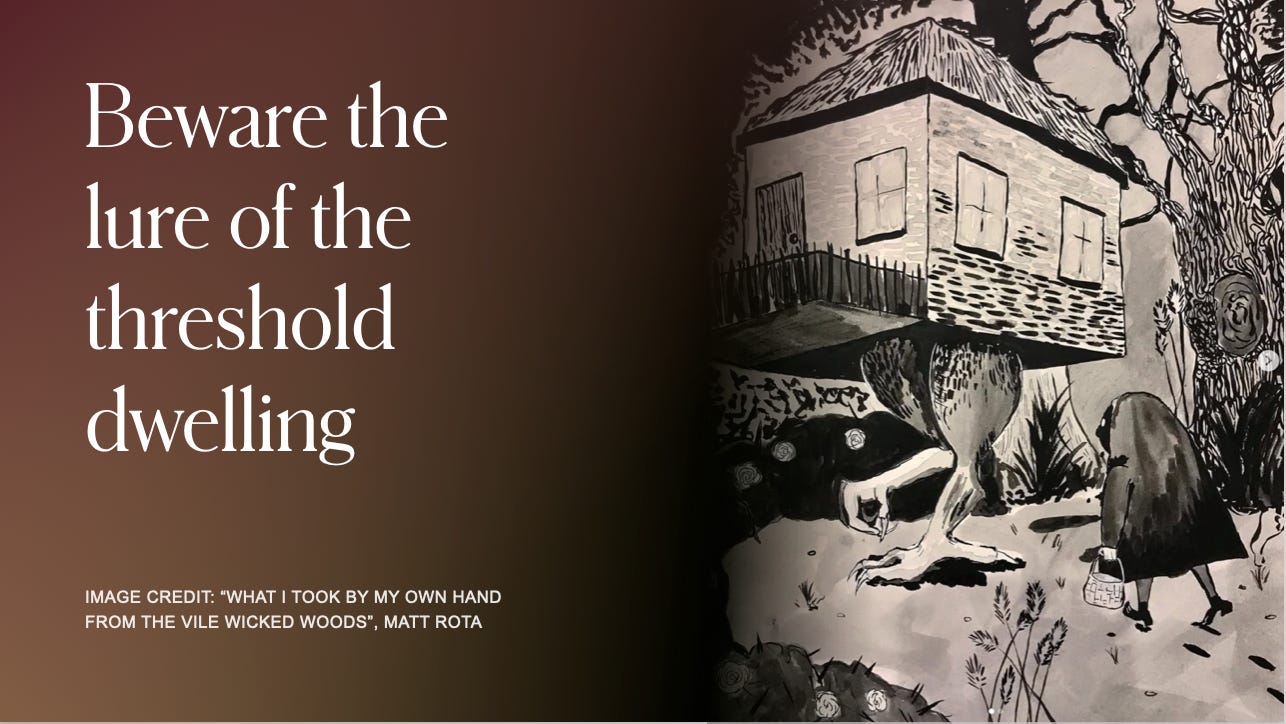
When something difficult looms, we love to convince ourselves that we’re almost ready and we just need to wait for that one last piece of the puzzle to click into place, then we’ll do the thing. But of course, that final piece never arrives. Or, if it does, we quickly decide it wasn’t the actual last one, after all.
When it comes to difficult, self-changing challenges, preparation may be vital, but absolute readiness is a myth. We get fully ready by getting started, not before we begin.
Remember, Vasilisa didn’t want to go into the forest, but staying in the cold, dark house meant staying small, abused, and diminished. The ordeal was terrifying, but the alternative was far, far worse.
For Vasilisa, the strange witch was scary because she’s known to eat people who visit her hut. Now, I don’t want to drop a huge spoiler or anything, but it’s unlikely you’ll be eaten when you do the thing. What might happen, though, when you finally look Baba Yaga in the eyes, is this: she will devour your excuses, your self-deceptions, and your comfortable narratives about why you’re better off in the cold, dark house. She’ll devour the old version of you that’s been clinging to safety.
What she won’t devour is your essential self. The part of you that had the courage to knock on her door in the first place – the version of you that’s actually on the path you need to take – that’s what she’s been guarding all along.
The Doll – your deep intuition

Just don’t forget to take your doll.
Estés describes Vasiilisa’s doll as representing deep intuition – the inner knowing that guides you through impossible situations. The doll tells Vasilisa what to do, helps her complete the tasks, and keeps her alive in Baba Yaga’s realm.
We all have a doll like this. It’s that quiet voice underneath all the noise – the one that knows what you really need to do, even when you don’t want to hear it. Whether or not your doll is well-fed? Well, that’s a different question. Shall we see?
Into the forest you go
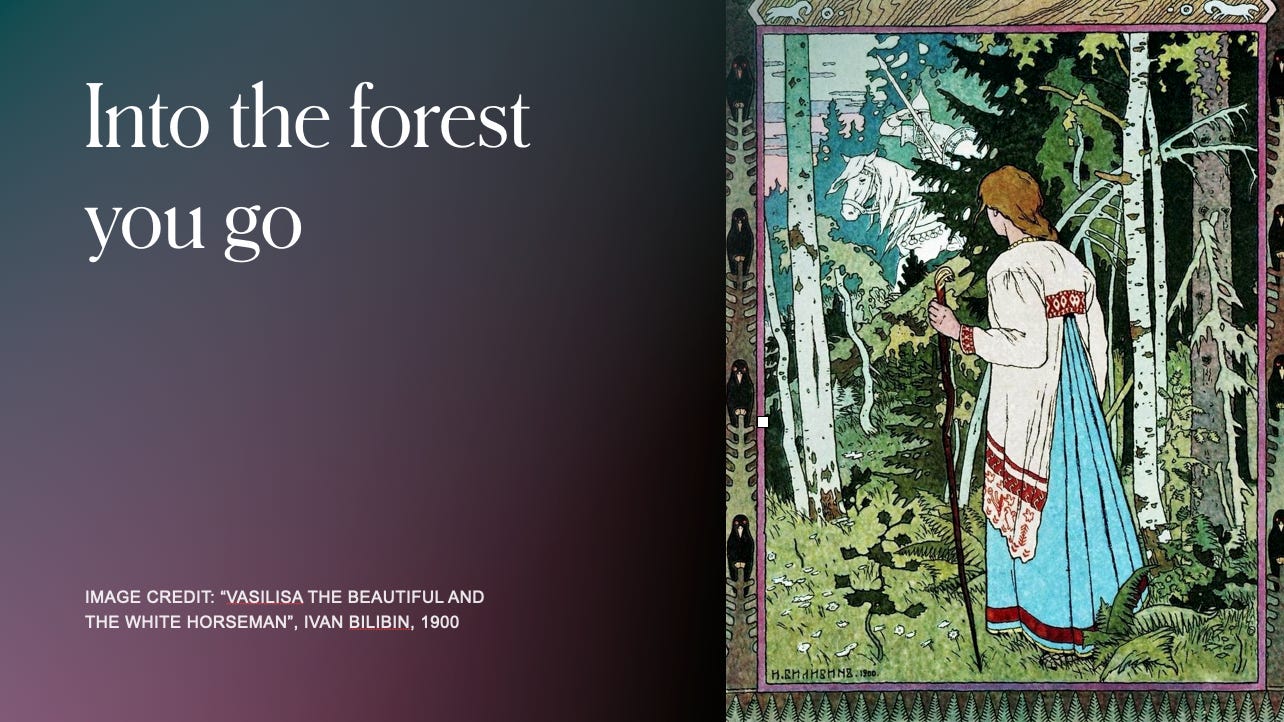
You’re standing at the edge of a dark forest, before a riot of ancient trees with twisted roots. Immediately, you’re hit with the intoxicating smell of earth and decay and something alive underneath. You’ve been standing here for a long time watching, preparing, and waiting for a sign that you’re ready. It hasn’t come, but tonight you will venture into the woods regardless.
The path is narrow and overgrown. Branches catch your clothes as you walk, and you stumble over roots you can’t see. It’s cold and dark, but you keep moving.
Ahead, three riders pass in quick succession. A white rider on a white horse – dawn breaking. A red rider on a red horse – day blazing. A black rider on a black horse – night falling, again.
Time moves strangely here. Or perhaps you’ve been on this path longer than you thought. You keep walking.
Eventually, you see it – the hut, perched on chicken legs, spinning slowly. Bones form the fence, skulls with glowing eyes line the posts. The door faces away from you when you encounter it, into the forest beyond.
Without realising you were going to, you find yourself speaking the words:
Little hut, little hut, turn your back to the forest and your front to me.
The hut turns, the door opens. And then she arrives.
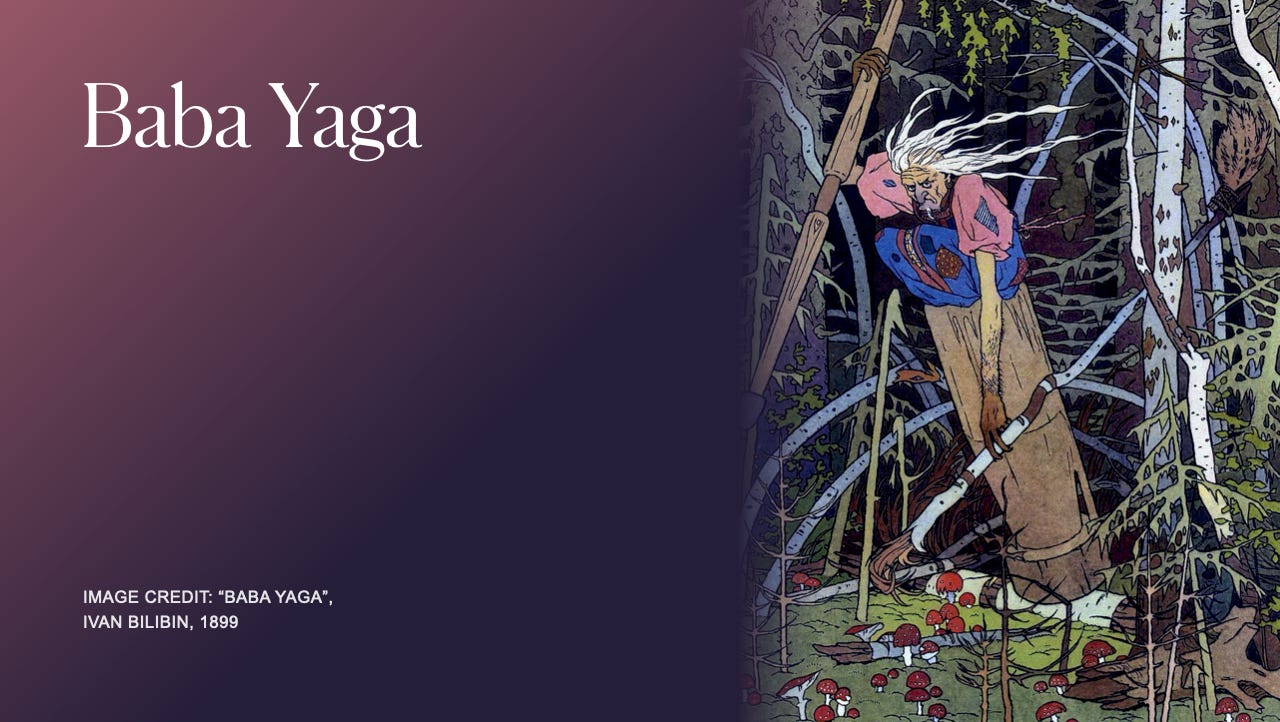
Careening through the trees in her mortar, Baba Yaga explodes into the yard. She’s as tall as a giant, with a skeletal, bony frame. Her white hair is matted, her fingernails as sharp as claws. Her teeth are made of iron.
She looks you up and down once, slowly assessing. Then, she meets your gaze. “What is it you’re pretending not to know?” Her question lands like a blow.
The corner of Baba Yaga’s mouth quirks up as she sees you react. “I know you know,” she rumbles. “And you know that I know, too. You’ve been pretending that you’re not ready.”
Baba Yaga watches you with steady eyes. You sense that she can see through your skin and into your soul. This being can taste fear, lies, refusal. Cowardice. So you stand straight, and hold your nerve, staring right back, refusing to flinch.
Baba Yaga licks her lips, but simply says, “You were ready long before you came here, were you not.”
It isn’t a question.
The Fire
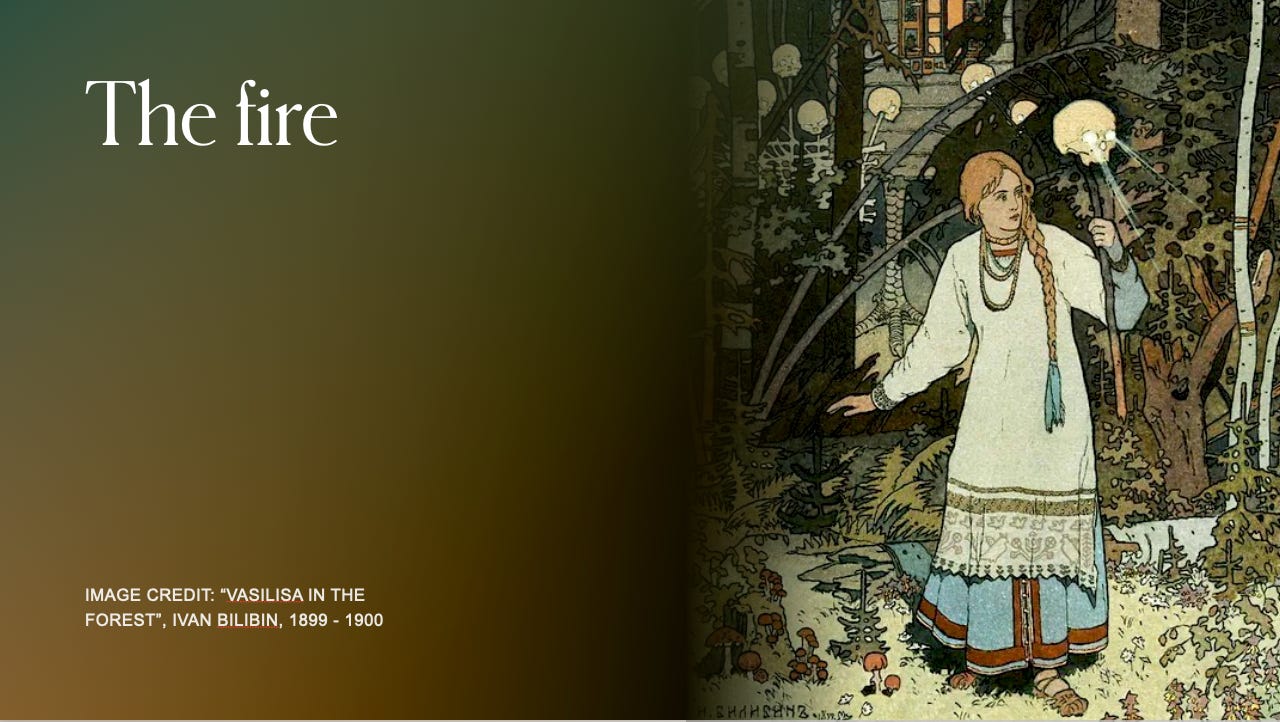
With that, the witch points one crooked finger at the skull lantern to your right, then turns and walks away. She folds herself into the hut. The door closes behind her.
You have a choice to make – you can take Baba Yaga’s fire, or you can leave without it and follow the dark path back to where you came from. The lantern will light the way if you dare pluck it from its perch, but it will also burn away everything false – that lie you’ve been telling yourself, that friendship or relationship that isn’t really right, the path you’ve been walking that doesn’t belong to you. This fire will burn it all.
A little distance away, the hut is standing up on those nobbly yellow legs, preparing to wander off someplace else. But before it can leave, you see Baba Yaga through the kitchen window, bent over the stove. You catch her eye. Her gaze is steely, chilling.
So, what’s it going to be?
You reach for the lantern and find the metal warm but not too hot to hold. The fire inside flickers, waiting. This is your ordeal. This is your initiation. And you were ready the moment you stepped into the forest. Were you not.
REFERENCES:
Clarissa Pinkola Estés, Women Who Run with the Wolves: Myths and Stories of the Wild Woman Archetype (1992)
Russian folk tale, Vasilisa the Beautiful
Carl Jung, Archetypes and the Collective Unconscious (1959)
Marie-Louise von Franz, The Interpretation of Fairy Tales (1970)
Thank you. Reading this was a praxic experience: the form, content, and length are, to me, a challenging incarnation of what you’re saying. I said ‘experience’ because it wasn’t just my mind that read it.
I often feel hope and deep resonance reading your pieces. This one felt uncomfortable to me. Reading I realised that I carry some smugness from previous interactions with Baba Yaga. And I don't know where the I'm discomfort came from. But it revealed that there must be deep things that I'm avoiding...