


You can listen to this piece on YouTube or read it below
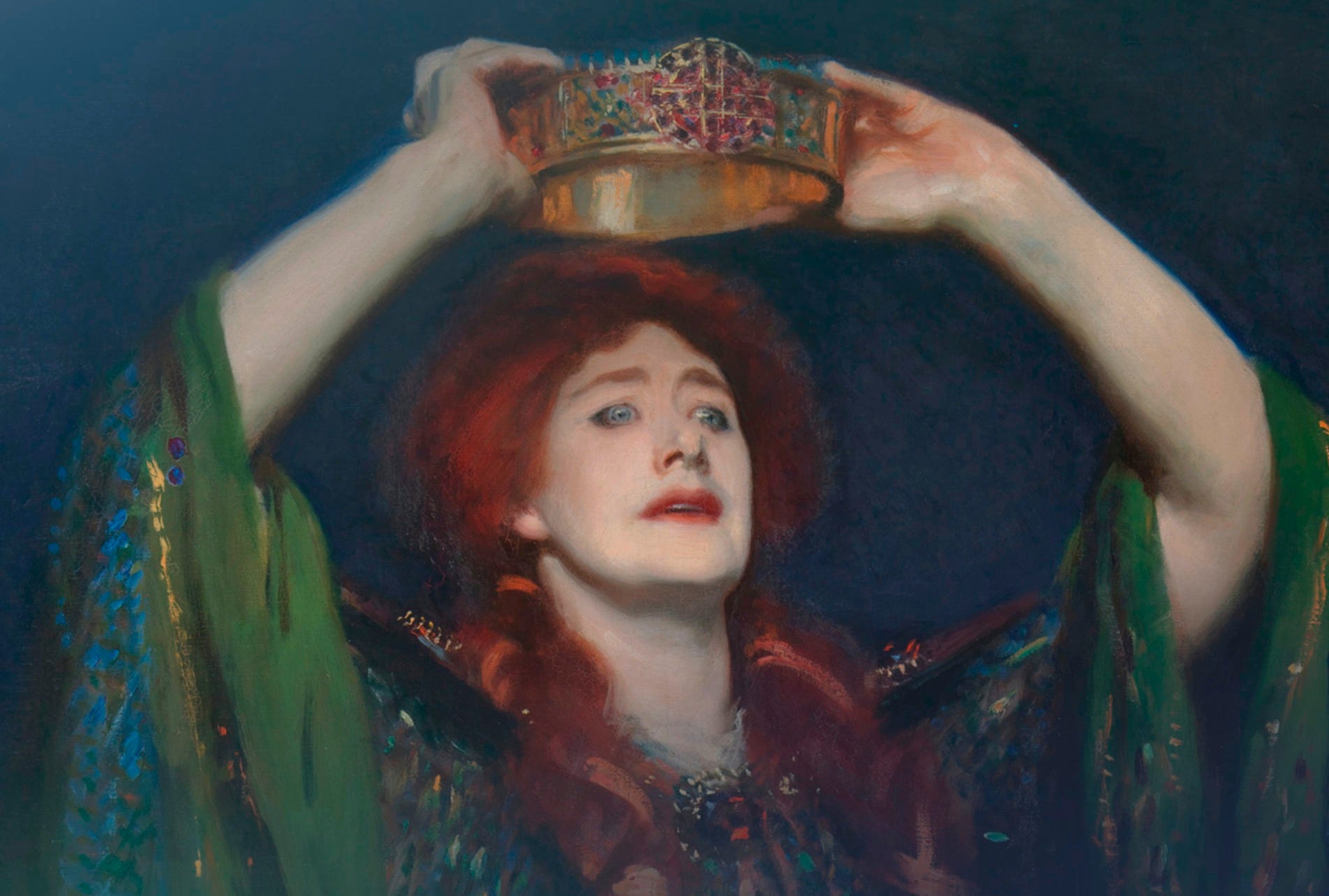
At some point in your life, you have been told that a certain kind of power, strength or skill just wasn’t for you; that you’re not the right kind of person, not clever or good enough; or that you just don’t have the right.
And you may have believed that story, too. But what if you didn’t have to?
My name is Hazel Gale. I’m a therapist, author, and co-creator of the fantasy mental health app Betwixt. And this is the second article in a series on witches, the witch archetype in psychology, and the magic that lives inside of you.
The Witch Archetype
The witch, as a psychological archetype, is the force within that wields a wild and boundless kind of power that the ordered world has tried for millennia to regulate or destroy. Thankfully, it has failed.
This episode is about a goddess who came to Earth specifically to find those who’d been told power didn’t belong to them. Her name is Aradia, and what she gives you, once you’re ready to receive it, cannot be taken away again.
Aradia, Daughter of Diana
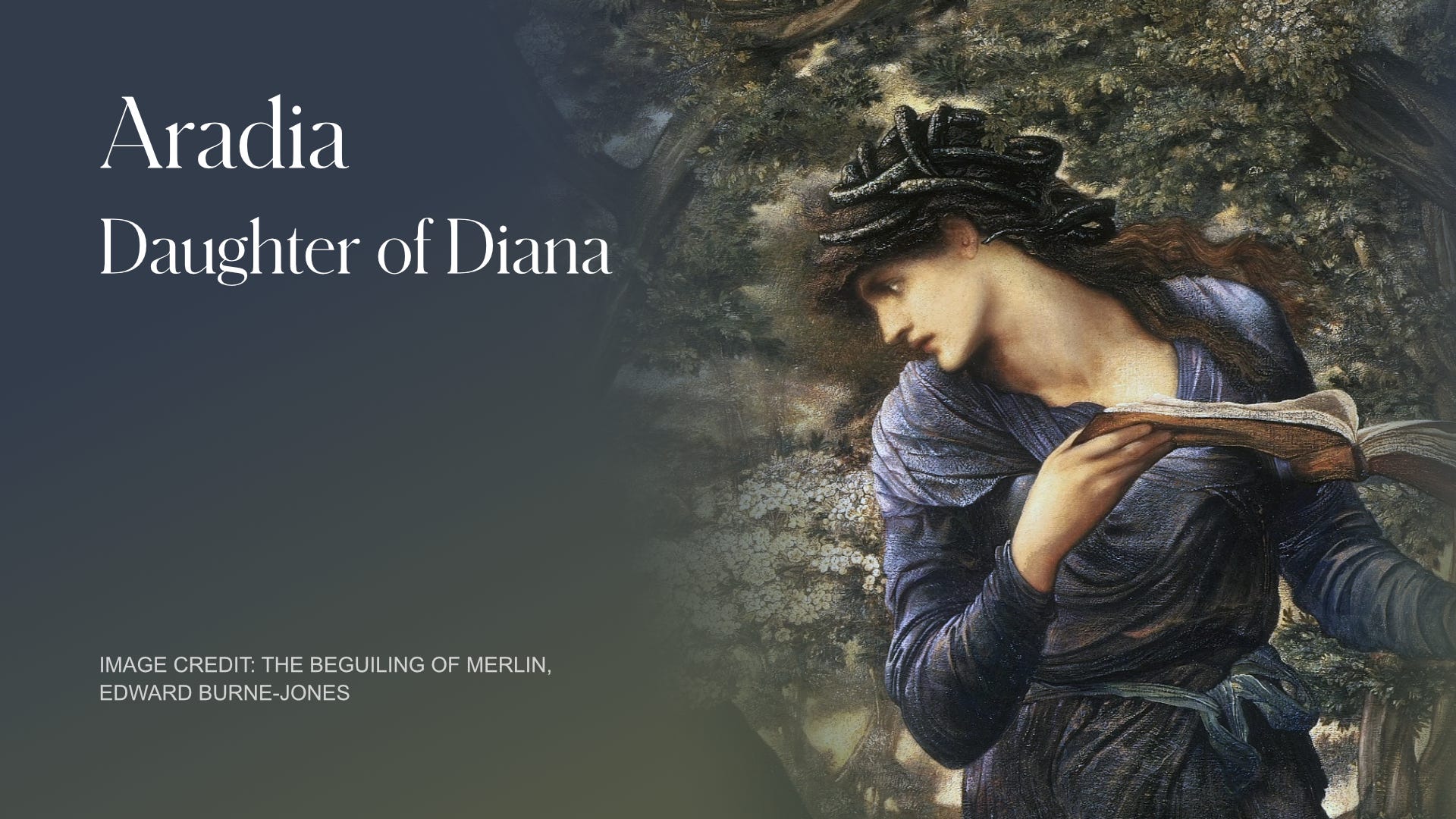
In 1899, an American folklorist named Charles Godfrey Leland published a slender book called Aradia, or the Gospel of the Witches. He claimed it was based on material given to him by a hereditary witch from Tuscany, named Maddalena, who’d been gathering the old teachings over many years.
In the beginning, according to Leland’s text, the primordial goddess Diana – who was the “first darkness” – divided her being in two: light and dark. The light portion became her brother and consort, and his name was Lucifer. Seeing how beautiful the light was, Diana was consumed by a desire to take it back into her darkness. When Lucifer fled from her, Diana assumed the form of a cat, tricked him, and seduced him. From this physical union, Aradia was born.
Later, Diana looked down on the Earth and saw a world deeply divided between wealthy lords and impoverished serfs. Struck by the immense suffering of the poor, Diana called on Aradia and gave her a divine mission. She was to descend to Earth, take on mortal form, live among the oppressed, and teach the serfs (both women and men) the secret art of witchcraft – or the stregheria.
Aradia taught the peasants how to destroy their oppressors, ruin the crops of the wealthy, and even poison the food of the cruel lords who held them captive. Then, with her work done, she returned to her mother, Diana. What she left behind was knowledge – the simple knowing that power had always belonged to those who thought they had none, and how they could use it to escape their plight.
Truth?
Unsurprisingly, scholars have been arguing about Leland’s text ever since it appeared. Was Maddalena real? Is this material genuinely ancient, or did Leland embellish it or invent it entirely? Of course, no one knows the answers to these questions, but I find myself wondering if it really matters. Every story is made up by someone. The valuable question is whether or not we can learn from it. And I’d argue that Aradia has plenty of wisdom to share, in particular about the ethics of power.
The ethics of access to power
Many tales about the ethics of magic pose questions of restraint: How can we use our power responsibly, and where do we draw the line between good and bad purposes? Aradia’s story poses these questions, certainly, but it asks another, too.
In Leland’s account, the ethical problem is that power has been loaded on the side of people who use it to oppress others, while deliberately and often violently trying to convince those same oppressed people that they have no power at all. Of course, this imbalance in the distribution of power is horribly prevalent in the real world – the atrocities of slavery, both historical and modern, are obvious examples. However, the themes of Aradia’s myth don’t only apply to literal enslavement or unjust outlawing. At a more general level, this is a story about who gets to know what they’re capable of, and why so many of us, even today, are kept from realising our full potential.
Why we doubt our power
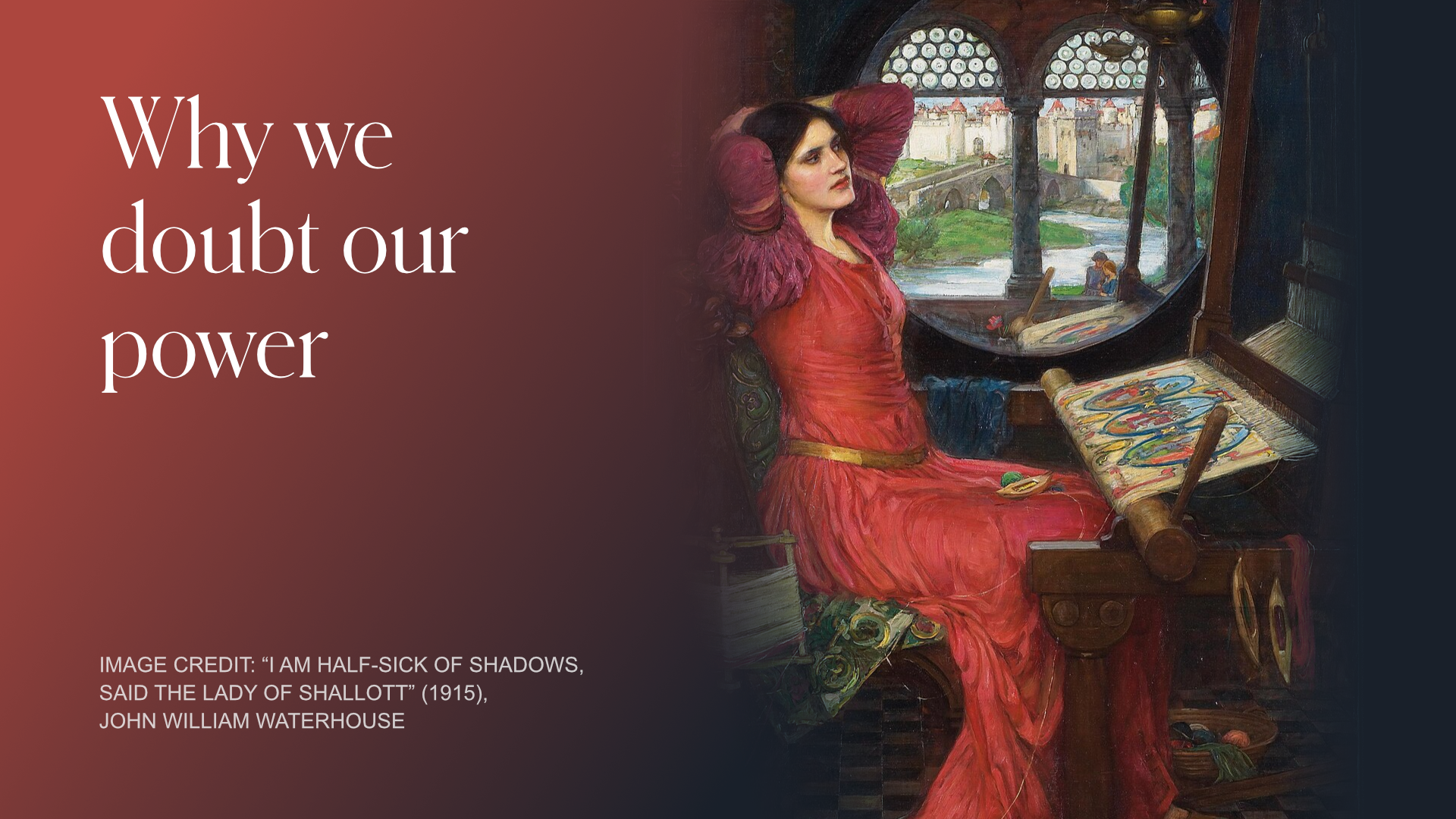
In the modern world, we’re trained to be suspicious of our own power. We wonder whether we’re taking up too much space, wanting too much, or claiming more than our fair share. Sometimes, this kind of self-examination is appropriate. In fact, it’s a really good thing that people ask these questions, and it would be great if more of us did. The problem comes about when our self-doubt is not born of healthy self-reflection, but instead, of assumptions installed in us by a system that relies on our ignorance and weakness. We might not be told explicitly that we can’t do things, but we’re smart, we’re sensitive; we intuit the message from the way others respond to us, especially others with power.
Learned powerlessness is everywhere. Women and girls are led to believe that they are less capable and clever than men, less deserving of success, a voice, an opinion. Global majority people suffer something similar – often taught that their cultural traditions and intellectual contributions are somehow inferior. In many global north societies, black people are told their anger is dangerous rather than legitimate, that their pain is less worthy of a compassionate response. Indigenous peoples across the world have had all kinds of cultural knowledge – their relationship with the land, their medicine and spirituality – classified as primitive superstition and systematically destroyed. People living in poverty are told their financial immiseration reflects personal failure rather than systemic design. Queer people are told that their love is disordered, and their identity a phase or a choice that causes pain to others. People with mental or physical differences are told they need to mask their true personality or that their bodies make them weak and imperfect, and that they need other people to speak for them or, worse, fix them. All kinds of people beyond a certain age are told that they have become irrelevant. And that’s not even the complete list.
That already-long list is, unfortunately, far from exhaustive, but you get the point. Aradia comes to those who have absorbed diminishing messages like these and asks them – asks us – to look again. Her message is this: “What you were told was the limit of what you’re allowed is not the same as what you deserve.”
The shadow of Aradia – Dark Willow
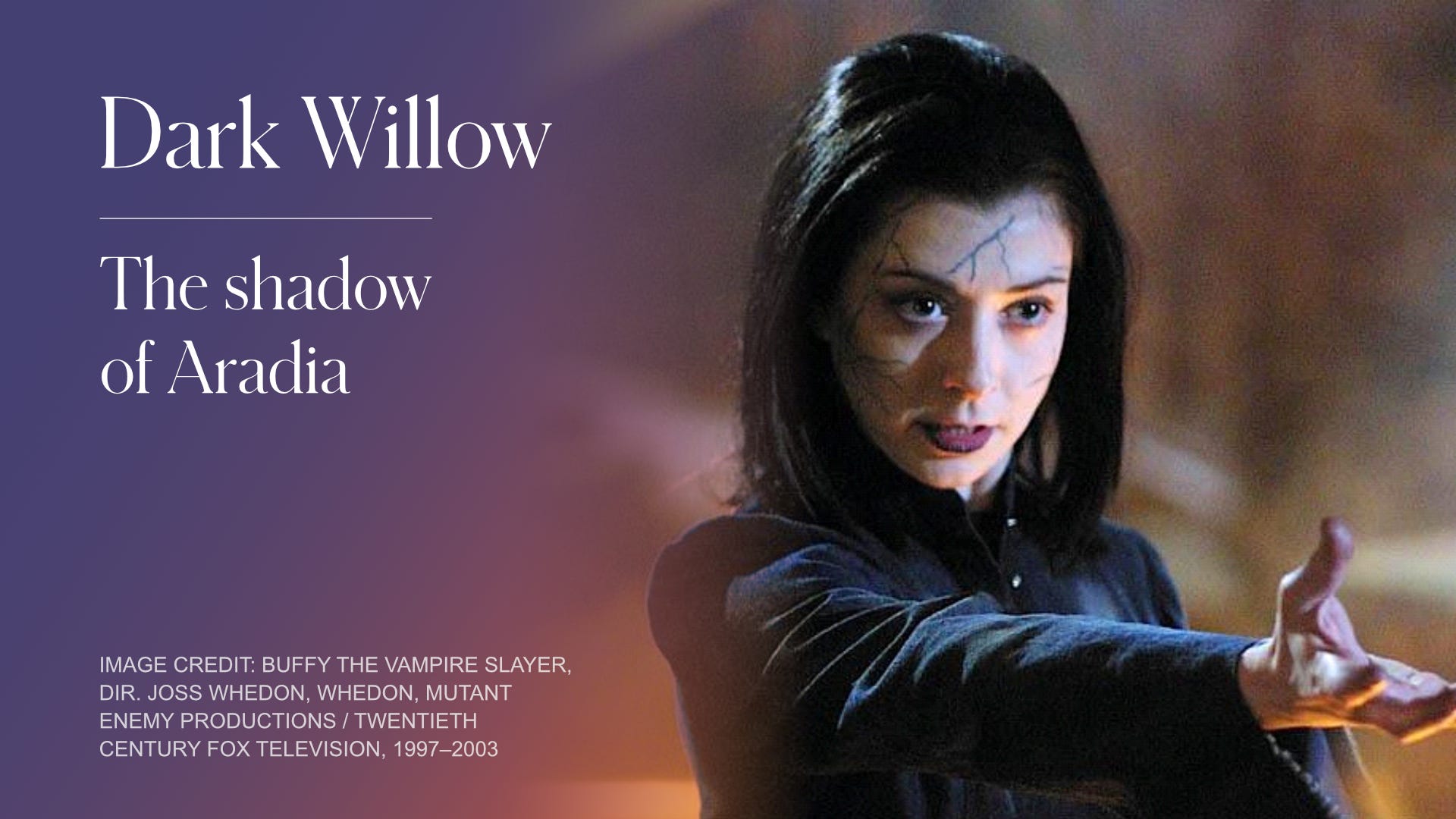
For Aradia’s shadow, we get to look at a more recent witch-aligned story. Anyone who’s watched a number of my videos probably knows that I like to worship at the shrine of Buffy the Vampire Slayer. I am, in fact, compiling this series just a few days after the passing of Anthony Head who played Buffy’s watcher, Giles, which has hit me unexpectedly hard. Judging by the saturated state of my social media feeds right now, I know I’m not the only one. He was also lovely in real life, by all accounts. Rest in peace, Anthony Head.
Buffy the Vampire Slayer echoes Aradia’s myth in a number of ways. Its creator, Joss Whedon, conceived the show as a deliberate inversion. He wanted to take the pretty blonde girl that horror films had always cast as the victim, and give her the power.
For girls who grew up in the eighties and nineties who’d already absorbed a lifetime of messages about what we were and weren’t capable of, seeing Buffy walk into a room full of monsters and kick some serious butt was something close to revelatory. It didn’t matter that she was fictional; the seed was sown nonetheless. In Buffy, we saw what power could look like if we, too, were to wear it like a pair of stylish but affordable boots.
A brief warning for anyone who wants to watch Buffy the Vampire Slayer – I’m about to drop a few considerable spoilers. If you haven’t completed the series, first: Why not?? Second, you need to bookmark this article and come back later.
By the sixth season of Buffy, Willow Rosenberg, who started out as a fluffy bookworm nerd, has grown into a witch with immense power. Until now, she’s used that power with care, love and a reasonably healthy respect for the consequences. But then her girlfriend Tara is killed, and Willow, in her grief, goes rogue. She hunts down the man responsible, tortures him, and horrifically flays him alive before incinerating his remains. After that, her rage escalates from a personal vendetta into a full-scale apocalyptic threat.
On the surface, Dark Willow’s arc may read as a cautionary depiction of what happens when power is placed in the wrong hands. But of course this isn’t the message. Both Willow and Buffy are people who apparently “shouldn’t” have great power but do, and yet Buffy doesn’t come close to ending the world – at least, not on purpose.
Both characters also experience great loss – Buffy loses Angel and her mother, and has to accept that she can’t have a normal life. She also dies, literally. Twice. But even though she has her wobbles, the difference between Buffy’s power and Dark Willow’s terrible magic is that Buffy stays connected to something beyond her own pain even when it seems as if all else is lost, doing unspeakably difficult things because the world depends on her.
By contrast, Dark Willow’s power is used in service of her pain and her pain alone. And while both are legitimate responses to trauma, only one leads somewhere worth going.
In the end, Dark Willow is stopped and ultimately saved by the love of her oldest friend. Xander puts himself directly in her line of fire to prevent her from leaching the life energy out of the world. “I love you,” he says, over and over, as she blasts him with magic. He reminds her of how she cried for an hour after breaking a yellow crayon as a child because even then, her heart was too big to bear the idea of causing any harm. Faced with Xander’s unconditional love, Willow bursts into tears, and the dark magic safely drains from her body.
Dark Willow is the one Big Bad that Buffy’s power can’t overcome, because retaliation – which is exactly what Willow has been doing – simply won’t cut it. Instead, she needs someone to remind her that she’s connected to something bigger than herself and her pain.
Aradia’s magic
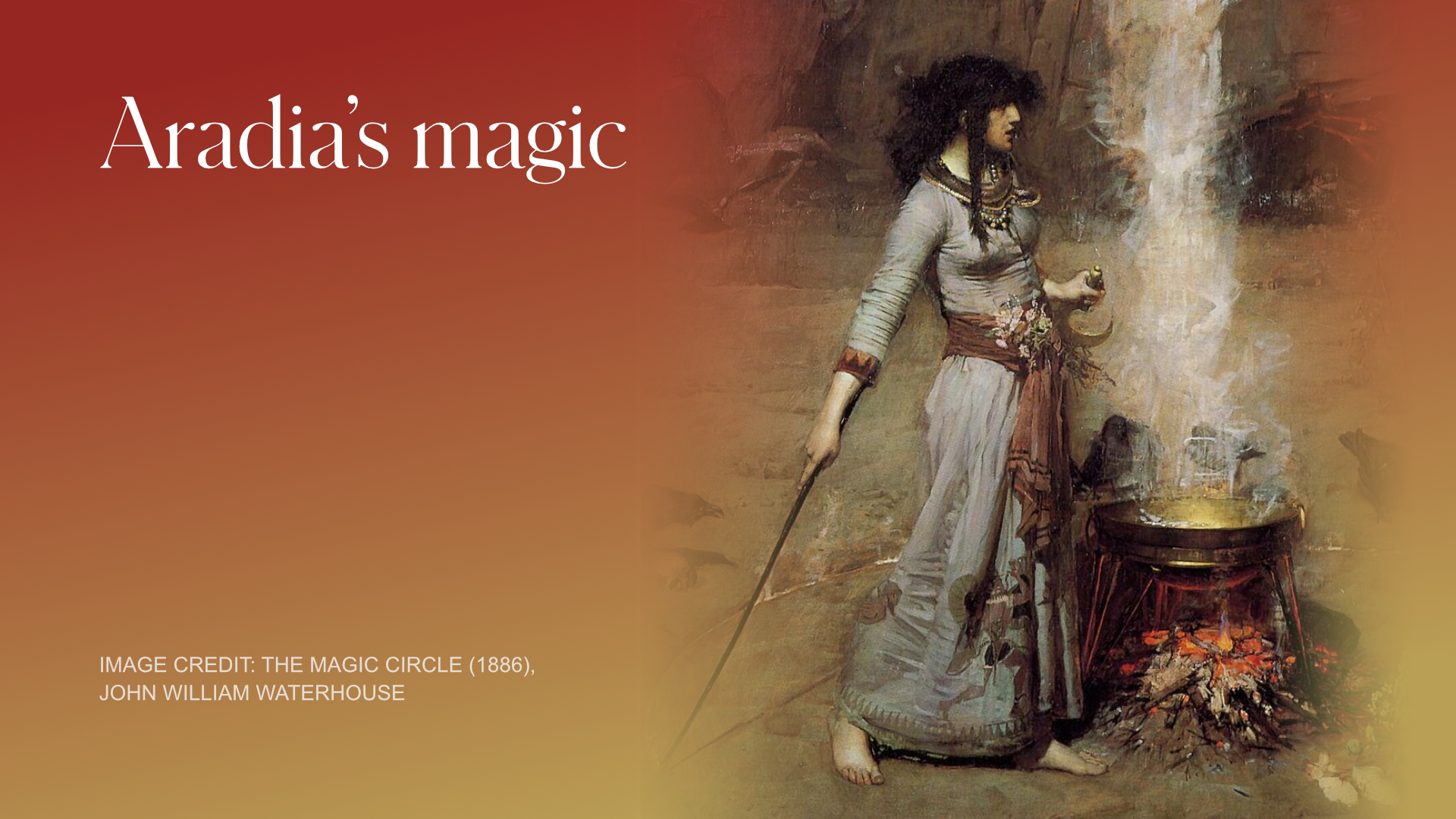
This brings us back to Aradia, whose gift of magic was ultimately intended for a greater good: to break the chains of feudal slavery; bring luck to the less fortunate; and empower the oppressed.
The distinction between these two ways of using power – connected and outward-facing versus individual and pain-focused – is important when we bring it into the real world, too, because everyone faces moments when their pain is so consuming that acting from inside it feels like the only option, but the problem is that this reaction tends only to bring further pain.
Philosopher Martha Nussbaum argues that pain-driven action operates on what she calls a magical fallacy: the belief that making someone else suffer will somehow balance or repair our own loss. But, as this research shows, people who get revenge against those who wronged them consistently feel worse afterwards than those who don’t. This is because the act of revenge keeps them mentally and emotionally entangled with the pain rather than allowing any movement away from it. To put this another way, after Dark Willow kills Warren, Willow is even more focused on her grief, and yet Tara is still dead.
Viktor Frankl, reflecting on his time spent in a Nazi concentration camp in Man’s Search for Meaning, observed something similar but from the opposite direction: that the people who survive trauma and extreme adversity psychologically are not those who try to escape, numb their pain or get payback, but those who find something to orient their suffering towards.
None of this is to say that anger is wrong, or that pain has no place in how we act in the world. Aradia’s followers are angry, and rightly so, and they do use their rediscovered power in some retaliatory ways, too. But ultimately the magic Aradia brings them is bigger than a personal vendetta – something that will outlast their anger, exist beyond it, and change the world for other people, too.
The tethering of power
Taken together, the stories of Aradia and Dark Willow seem to land in a similar place. Delivering, first, the message that we have power – more power, almost certainly, than we may have been led to believe. And second, that to keep that power tethered to goodness in some way – be that love, connection, emancipation of the oppressed, or any other kind of bigger, more hopeful goal than just the alleviation of our own suffering – is not only the most ethical, but also the healthiest and most effective thing we can do when in pain.
I don’t think anyone is saying this should be easy, least of all me. It often takes time to switch from inner to outer, and to reconnect with our tethers, too: to hear the Xanders to our Dark Willow; to bring our values and beliefs back into the light; to let ourselves feel connected to creativity, meaning, nature, happy memories, or a simple desire to leave the world a better place than we found it. But it doesn’t need to be easy to be possible.
So, with that said, I wonder if you’re ready to meet Aradia?
The gathering in the dark
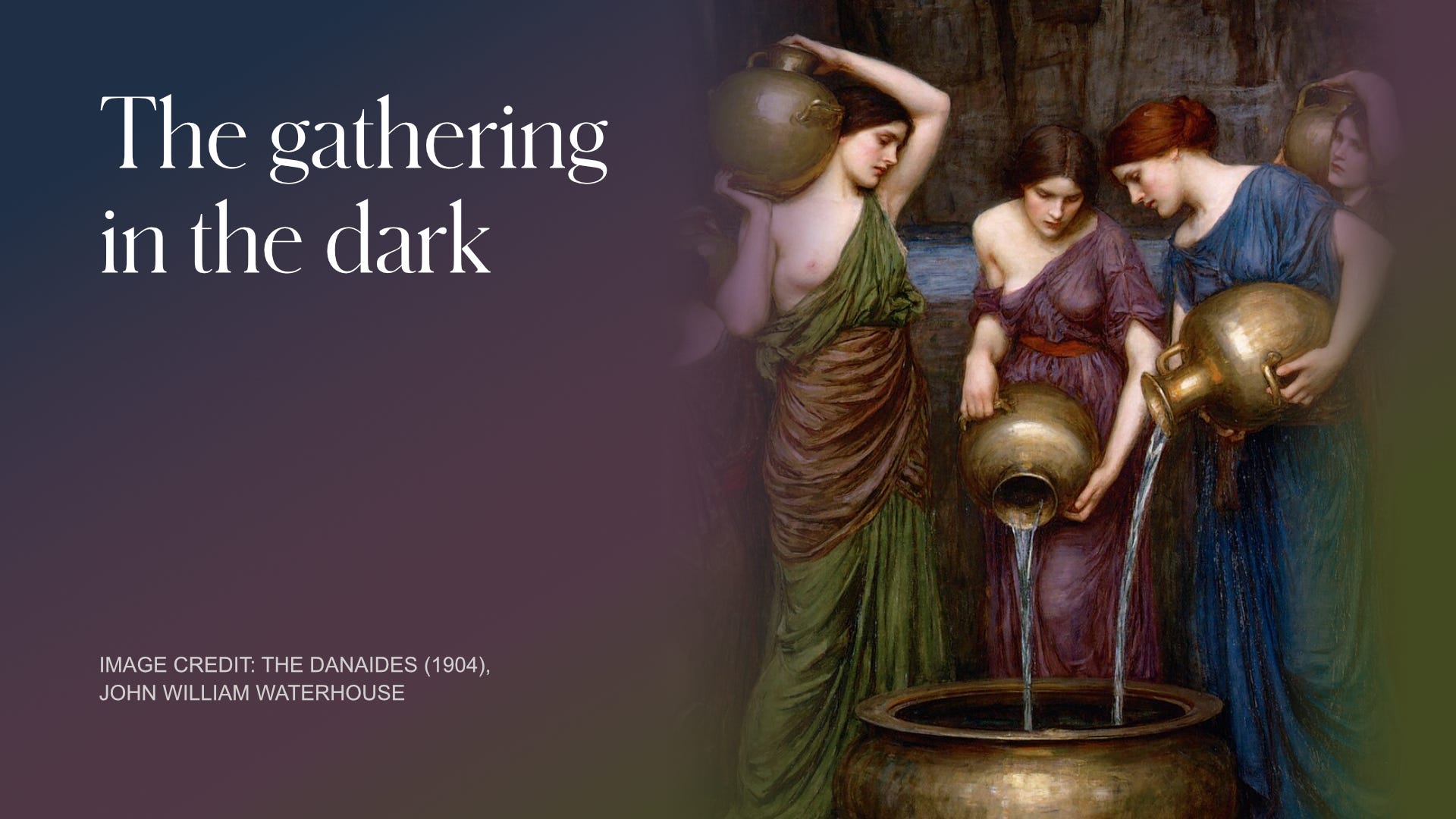
You’re in a clearing under the stars. A ring of trees surrounds you, tall and dark against the scintillating sky. Before you, a fire burns slowly – more embers than flame.
There are others here, too – people who, like you, were drawn to this place by the promise of more or better. You look around to see the different faces of people with varying histories and struggles, and different stories about what they were told they couldn’t have, too. And yet, a thread of sameness links every one of you together.
Aradia waits at the centre, near the fire. She is both younger and older than you might have expected, appearing as a fresh-faced maiden one moment, an inky-eyed crone the next. She takes time to meet the eyes of everyone who has gathered before beginning the ceremony. As she holds your gaze, you sense one thing to be true – that Aradia knows the spells that have been cast upon you, and can see through every single one.
It must only be a few seconds, but this moment of seeing seems to stretch to infinity. Your mind reels, casting back over the course of your life to remember the stories you’ve been told: stories about things you weren’t supposed to be good enough to do; about things you wanted but were told you didn’t deserve; dreams and aspirations you were never allowed to pursue; emotions you weren’t allowed to express or even feel.
Now, there’s a fire in Aradia’s gaze that burns through every story as it occurs to you, as if she’s placing them one by one into the smouldering embers and delighting in their reduction to ash. Her eyes glimmer when it’s done.
After everyone gathered has been seen, Aradia continues around the circle, now handing a small object to everyone present. You notice how people stand a little taller as they receive it. You wait for your turn, wondering what it could possibly be.
When the goddess places the offering in the palm of your hand, you look down and try to discern its shape, but it’s like nothing you’ve ever seen before. It’s blacker than black, but also glows. It’s tiny – no larger than a seed – and yet it feels as if it weighs a tonne. Frost encases it, but it feels warm to the touch. And as you hold it, Aradia still standing before you, you find that the same kind of paradox resounds within – the strange, almost eerie sense of feeling that something has always been true while knowing entirely that it is not.
Where the stories said “No,” Aradia’s gift says, “Yes.”
Where the stories said “Not for you,” Aradia’s gift says, “Exactly for you.”
Where the stories said “Not good enough,” Aradia’s gift says, “More than enough.”
Where the stories said “You can’t,” Aradia’s gift says, “Oh, but you can.”
And you can. Because what follows Aradia’s countering magic is another knowing, this one bigger, more diffuse. As the witch holds your gaze, you can feel her willing you to understand just one thing: that the limits you once accepted were never about you in the first place. They were nothing more than decisions made by other people, for their own reasons, that were handed to you and that you eventually mistook for the truth about who you are. Because that’s what we do when we’re young or scared – it’s what we *have* to do, sometimes – but it’s not something you need to do any more, because it’s true, is it not, that the letting go is bigger than the holding on?
Aradia nods, and as the smile stretches across her face, you find yourself realising that every story told to you has been told to countless others before you and will be told countless times again. Those stories were never reasoned reactions to your abilities or worth, but tired old lies that had simply been spoken so many times we all started to feel as if they were true.
They are not. They never have been.
And this means that the act of rewriting the stories that have held you back isn’t just about you, either. When we challenge the limits placed upon us, others will be just that little bit less restricted, because they can see our strength and know they have it too.
So, I don’t know which lies Aradia has unravelled for you, nor how easy it is for you to see through them as she did. But I do know that you can, and that when you do, everything will seem different. Because it will be.
References
- Charles Godfrey Leland, Aradia, or the Gospel of the Witches (1899)
- Ronald Hutton, The Triumph of the Moon
- Buffy the Vampire Slayer, by Joss Whedon
- Clarissa Pinkola Estés, Women Who Run With the Wolves
- Silvia Federici, Caliban and the Witch
- Martha Nussbaum, Anger and Forgiveness (2016)
- Kevin Carlsmith, Timothy Wilson and Daniel Gilbert, “The Paradoxical Consequences of Revenge” (2008)- Viktor Frankl, Man’s Search for Meaning (1946)