


You can listen to this story on YouTube or read it below.
***
We live in a world that seems to offer an impossible choice: be powerful or be loved; be fierce or be nurturing; be raw and real and vital, or be acceptable. Most of us choose to hide our hunger and strength in favour of palatability or ease. But what if we can have it all?
Even if you’ve never seen the movie Aliens, you’re probably aware of it. It may be my favourite film of all time – Sigourney Weaver as Ellen Ripley, terrifying insect-like aliens with an extra mouth inside their mouth and acid for blood. You know the one.
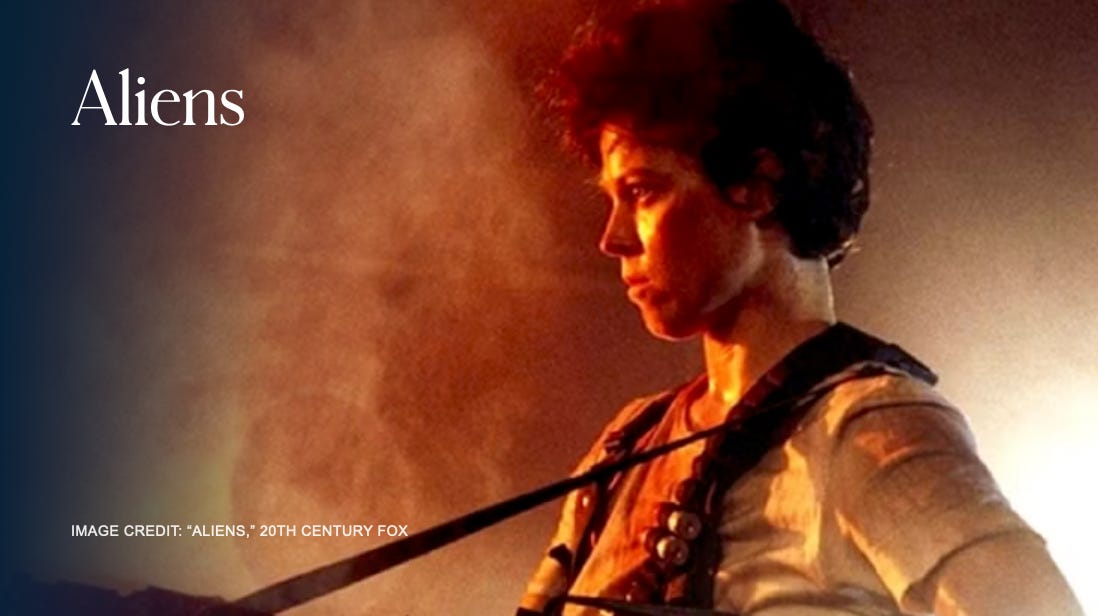
So, picture Ellen Ripley in her power loader, facing down the twenty-foot alien queen surrounded by those horrifying, gooey, convulsing eggs. The queen hisses, protecting her brood. Ripley growls back, protecting a child who isn’t even hers.
It’s the ultimate battle between two mother figures, both willing to die – and to kill – for their young. But all is not quite as it seems when it comes to this vignette.
Today we’re going to explore one of the most primal, powerful, and potentially dangerous archetypes in the human psyche: the Mother. Specifically, we’re going to look at the difference between the Nurturing Mother and the Devouring Mother, and how both of these forces live within us and work through all of us, regardless of our gender or whether we’re parents in real life.
The Mother archetype in myth and mind
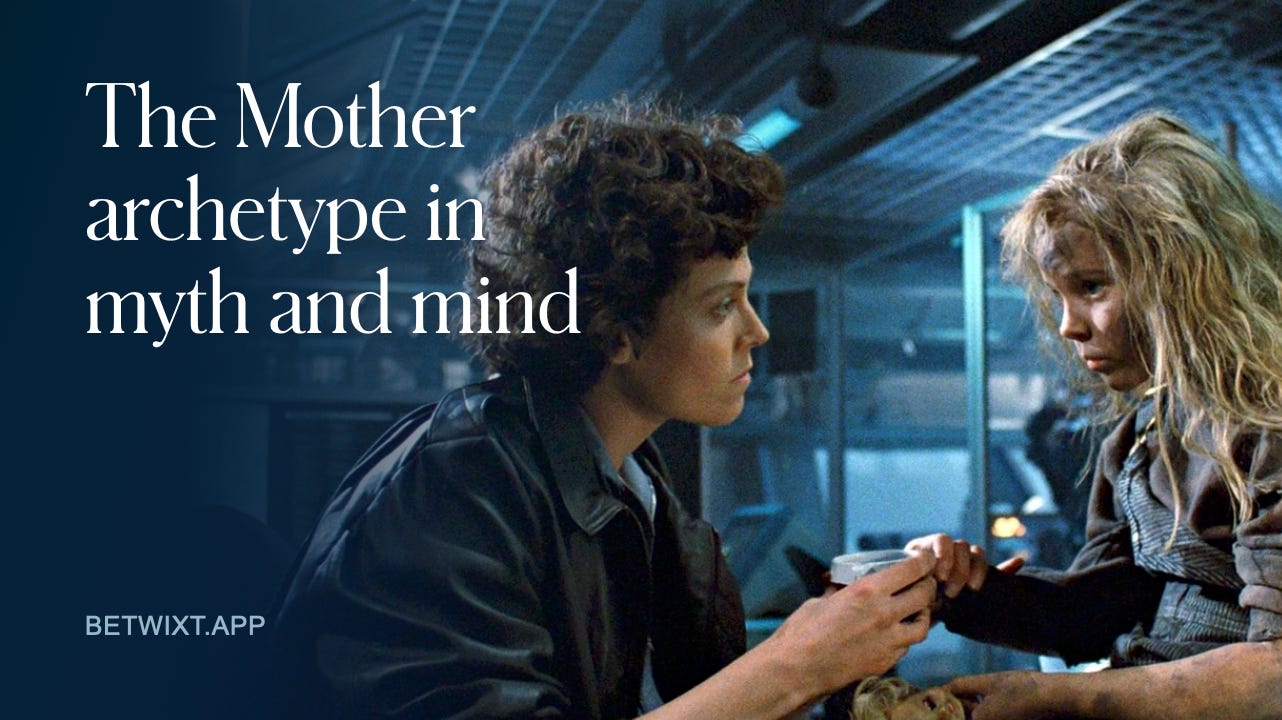
Carl Jung wrote extensively about the Mother as a fundamental archetype in the collective unconscious – one of the deepest, most universal patterns in human experience. The Mother represents nourishment, protection, growth, and security. But every archetype has its shadow side and for the Mother, this means possession, devouring, darkness, destruction, and death.
In a very real sense, Mother is the first world we know. The womb is our first home, and it’s both a sanctuary and a jail – we’re held in place, can’t get out. This duality continues throughout our childhood – our parents (not only the mother in real life these days, thank goodness) feed, clothe and nurture us, but also confine us, control us.
No one has a completely uncomplicated relationship with their parents as they grow up. The parent/child connection is conflicted by design. We’re biologically and psychologically compelled to push against our parents, to test boundaries, and to individuate. It’s how we become separate people.
Mother Nature – the mother as life, death, and everything in between
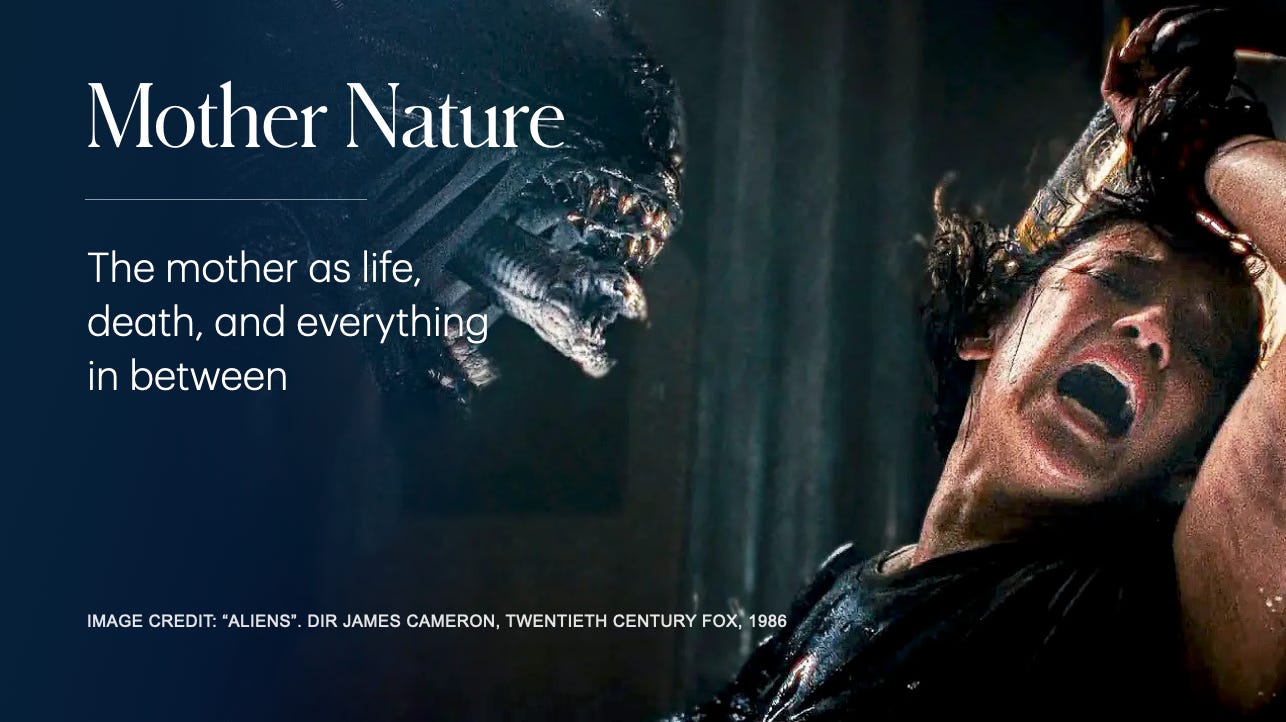
As a fundamental player in the cycle of life, a Mother births us – she gives us life – but she’s also our first encounter with impermanence. The breast that feeds us will be withdrawn, the arms that hold us will let go, the protection she offers will eventually end – when we grow up, when she dies, when each of us returns to Mother Nature. That is, the earth from which all life comes and to which all life returns.
So, creation and destruction, life and death, attachment and loss… the Mother contains all of it. She’s not just the archetype of nurture; she’s the archetype of the full cycle. And our relationship with our earliest caregiver is our first training ground for understanding that nothing – not even love, not even life itself – lasts forever.
Erich Neumann, in his seminal work The Great Mother, describes how mythology worldwide depicts the Mother in dual form: the Good Mother who nourishes, and the Terrible Mother who devours.
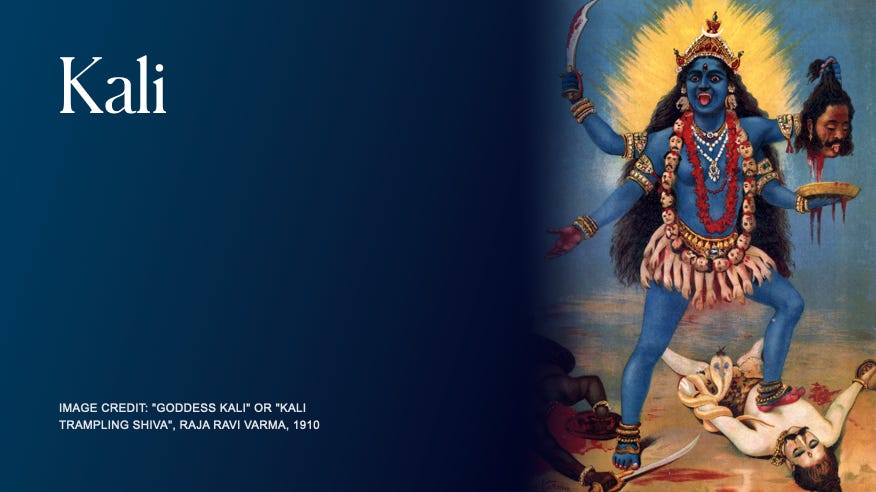
In Hinduism, you see this in stories of the goddess Kali – creator and destroyer, wearing a necklace of skulls while dancing on corpses, tongue dripping blood.
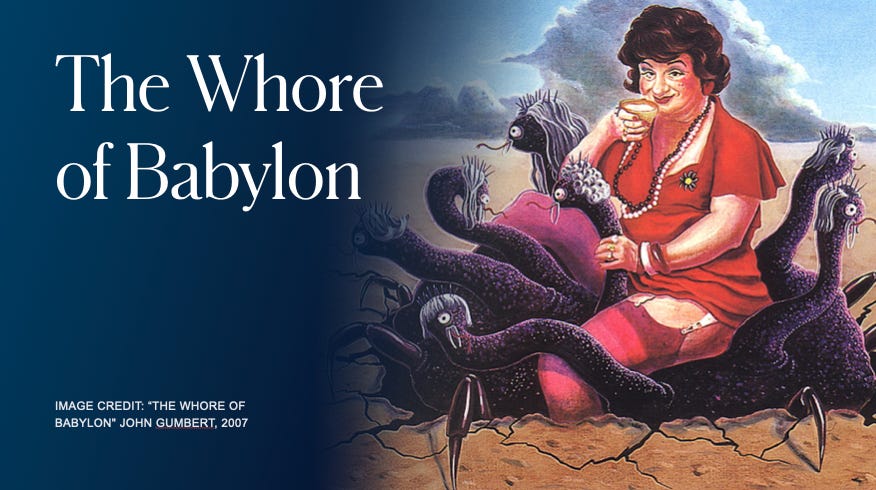
In Christian literature, there’s the Virgin Mary – pure and obedient, the mother of salvation – but also the Whore of Babylon from the Book of Revelation: the mother of prostitutes and of the abominations of the earth, drunk on blood, riding a scarlet beast, representing corrupted feminine power and spiritual consumption.
In Greek myth, there’s Demeter, who nourishes the earth, but also Medea, who murders her own children to punish their father. And in fairy tales, you get the loving mother who dies early, replaced by the wicked stepmother who poisons, imprisons, and consumes.
The archetype is always double-sided. Always. Aliens gives us both sides in perfect, visceral clarity. Let’s break it down to see how we can use it.
The Xenomorph Queen: Pure devouring mother
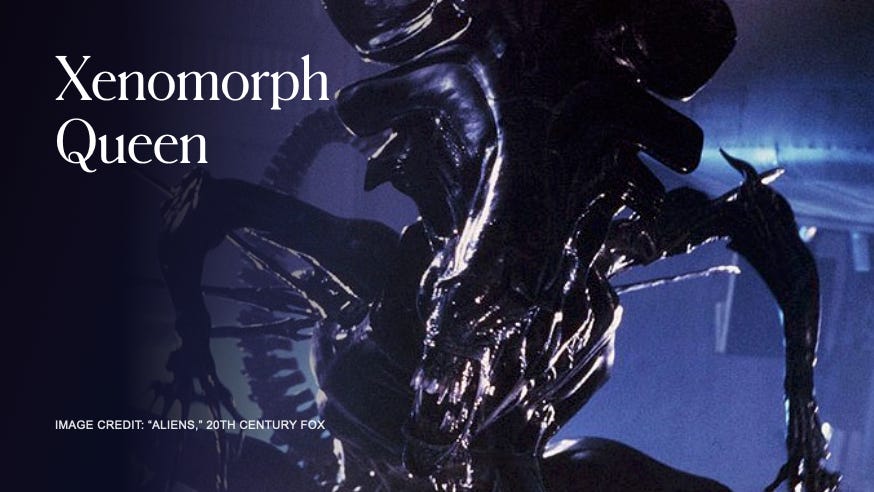
We’ll start with the obvious monster: the Xenomorph Queen.
She is, in many ways, the Devouring Mother in her purest form. She doesn’t nurture individual young – she produces them mechanically, endlessly churning them out.
Her offspring exist only to spread, consume, and reproduce. They’re not individuals, really, but extensions of her hunger, her need to propagate, and her will to succeed at all costs. They are, quite literally, consumed by their purpose the moment they’re born.
But it would be hard to claim that the Alien Queen does this out of malice. She’s not evil. More… amoral. The Queen is operating outside of the sphere of morality, doing what she’s biologically driven to do – protect her species, ensure survival, create more life. From her perspective, she’s being a good mother.
Ripley: The Nurturing Mother who must become fierce
Now let’s talk about Ellen Ripley. In the first Alien film, Ripley is pragmatic, tough, and survival-focused. We get a hint of what she’ll become in the relationship she has with Jonesy, the ship’s cat, but she’s nobody’s mother. In Aliens (the second movie), everything changes when she finds Newt, a traumatised child, and the sole survivor of a colony on a planet overrun by Xenomorphs.
Ripley doesn’t have to protect Newt. She could leave her behind and prioritise her own survival, but she doesn’t. She decides to become Newt’s fierce, protective mother.
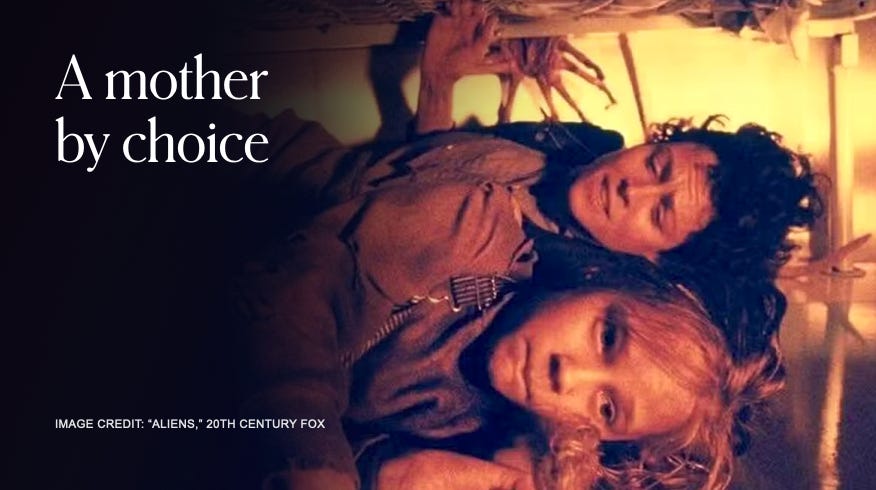
Choice here is key. Ripley chooses to mother, and she mothers in a way that’s fundamentally different from the Queen – she’s not possessive or controlling, and she doesn’t want to make Newt her dependent. Instead, she teaches Newt to survive, to fight, to think for herself.
Ultimately, Ripley’s goodness shines a light on the Queen’s devouring monstrousness. The film shows us what we need to avoid and how to do that. But then again… does it?
The Devouring Mother in psychology
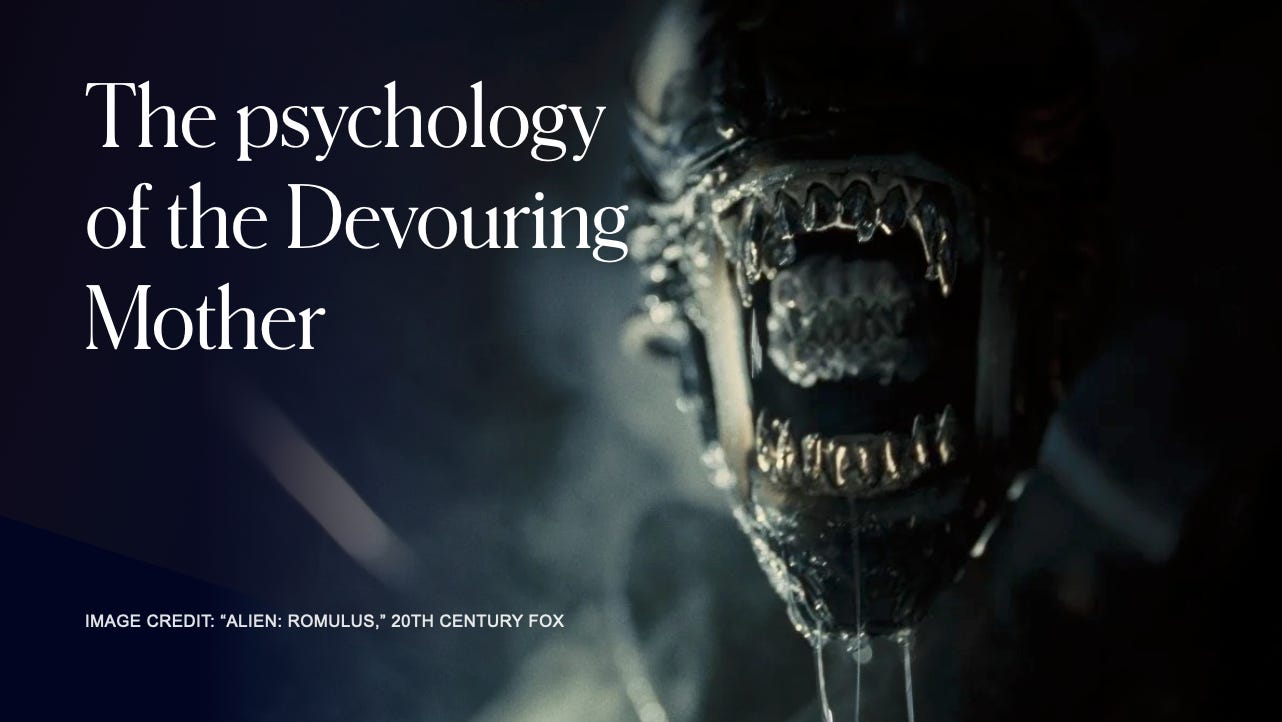
Let’s explore what this shadow archetype looks like in real life.
First of all, I need to be very clear that nothing I’m saying here is intended to demonise protective mothers or other kinds of caregivers. The Devouring Mother isn’t a person; it’s a pattern – an archetypal force that all of us can embody, regardless of our gender, position in the world, or whether or not we have children.
Specifically, this is the archetypal energy that inspires someone to love so much that they consume. Who hasn’t held their dog, child or partner in their arms and thought, “I love you so much I want to eat you up!” Like it or not, love can be a very consuming force. To love is to want to unify or join, and sometimes that can feel like the need to devour.
This shadow archetype entangles the identities and the needs of the parent figure (not always a parent) with those of the child figure (not always a child), making the “child” into an extension of the “parent”. Due to this merging, when we’re in the thrall of the Devouring Mother archetype, we fail to let our merged dependents fly the nest or become their own people, because this would mean losing some of ourselves. We need our “children” to need us, so we are terrified to let them grow into their own people.
Jungian analyst Marion Woodman wrote about this pattern in Addiction to Perfection (among other works). She describes how the Devouring Mother archetype often shows up in families where love is conditional and the child must essentially perform, achieve, or sacrifice themselves to earn approval from their parents.
In this most obvious domestic setting, the archetype says, “I sacrificed everything for you, so you owe me”, “I know what’s best for you better than you do”, and, “You’ll never survive without me”. But underneath those intimidating statements is this much more vulnerable message: “Don’t leave me. Don’t change. Stay small. Stay mine.”
The Devouring Mother in real life
As dramatic as the name of this archetype may sound, when the Devouring Mother shows up, it won’t always be in a monstrous kind of way. Think the father who can’t stop “helping” his adult children; the mother who unwittingly sabotages her kid’s independence because she likes to feel needed; the partner who says “I’m just worried about you” while tracking your every move; the friend who feels threatened when you succeed because it means you might not depend on them any more.
Here’s the thing: when this archetype takes hold, we do not see ourselves as controlling or harmful. We see ourselves as devoted, protective and loving. Just like the Xenomorph Queen, we think we’re being good mothers.
How the Devouring Mother Gets Created
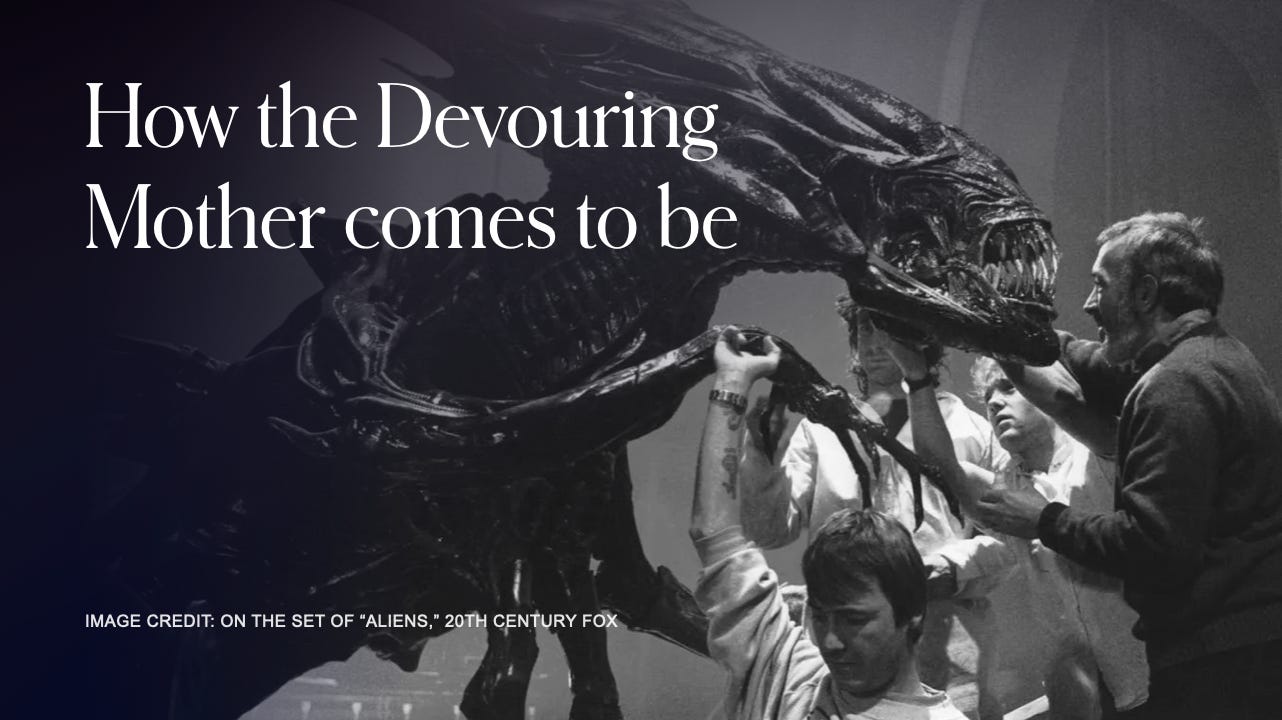
So where does it come from, this energy? As with all shadow archetypes, the Devouring Mother arises from fear, repression, a sense of scarcity, and unmet needs.
People who truly embody this archetype are themselves starving – starving for love, purpose, significance, or control in a world that feels chaotic and threatening. They devour because they’re trying to fill a very real void, and have conflated being needed with being loved, important, and worthwhile. So, they create the dependence they crave – keeping their “child” convinced that they can’t survive alone. The cruel irony is that the more they devour, the more the dependent wants to escape. But the person playing the role of Devouring Mother can’t see this, because acknowledging it would mean facing the void – the one they’ve been ineffective in filling, precisely because they cannot bear to see it for what it is.
This is the psychological horror that the Xenomorph Queen makes visceral and visible. What the Devouring Mother does emotionally – implanting fear, creating dependence, consuming autonomy – the Queen does literally.
She implants her offspring inside unwilling hosts, her parasitic issue a gruesome mirror for her own vampiric nature. She creates creatures that exist only to serve her, and she builds a hive where nothing survives without her. The horror we feel watching Aliens is the horror of recognising this pattern made real and undeniable.
The Impossible Mother
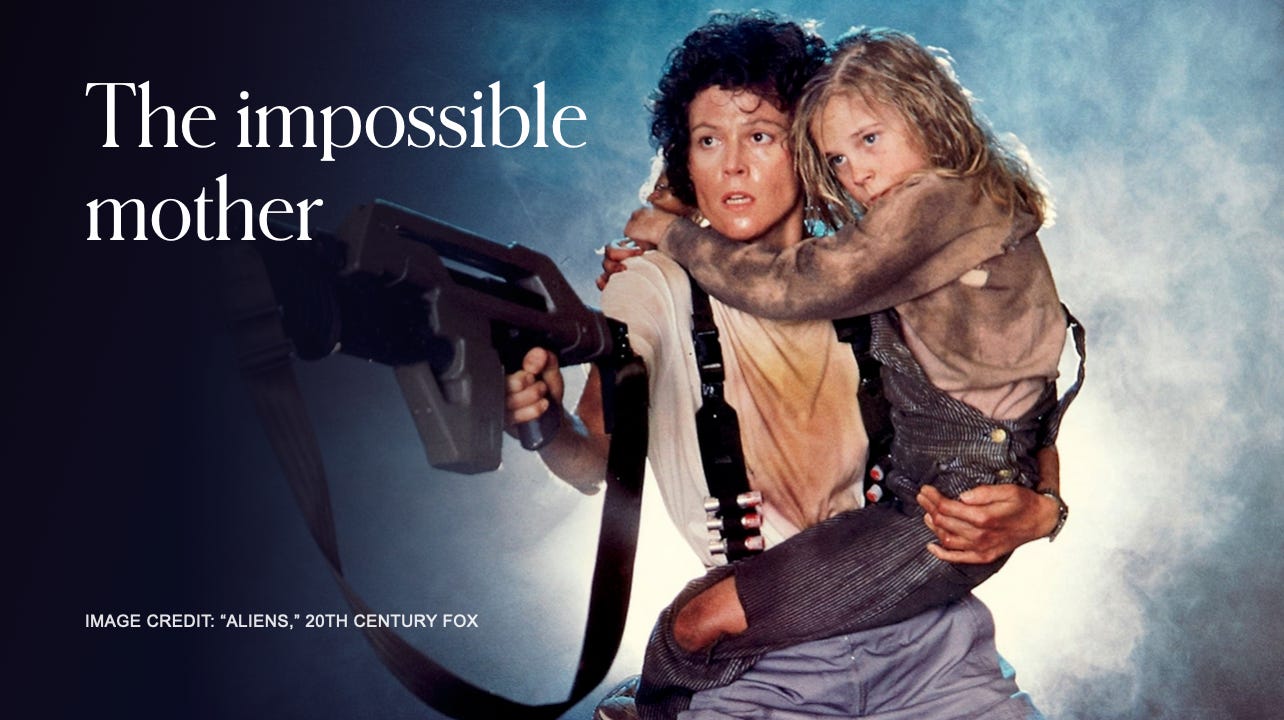
But there’s another horror here, too – one that has nothing to do with xenomorphs and everything to do with the world that created this story. Ripley isn’t real or achievable. She’s an impossible ideal.
Ripley is the perfect mother – protective but not possessive, fierce but not angry, nurturing but not needy. She doesn’t lose control; she doesn’t have desires of her own; and she doesn’t give birth, either (too messy, too animal, too raw).
I’m just going to go ahead and say it – Ripley is the intergalactic Virgin Mother, sanitised and separate from the carnal reality of both womanhood and childbirth, all the protection and strength, none of the uncomfortable biology or emotional messiness.
Women already know this battle all too well, of course, because society presents us with the same impossible choice: we can either be the Virgin Mother (see Ripley – rational, controlled, sexless, safe) or be the Devouring Whore (like the Queen – angry, powerful, carnal, revolting. Too much). It’s getting better, but there’s still not much in the way of middle ground.
The mechanics of the monstrous mother
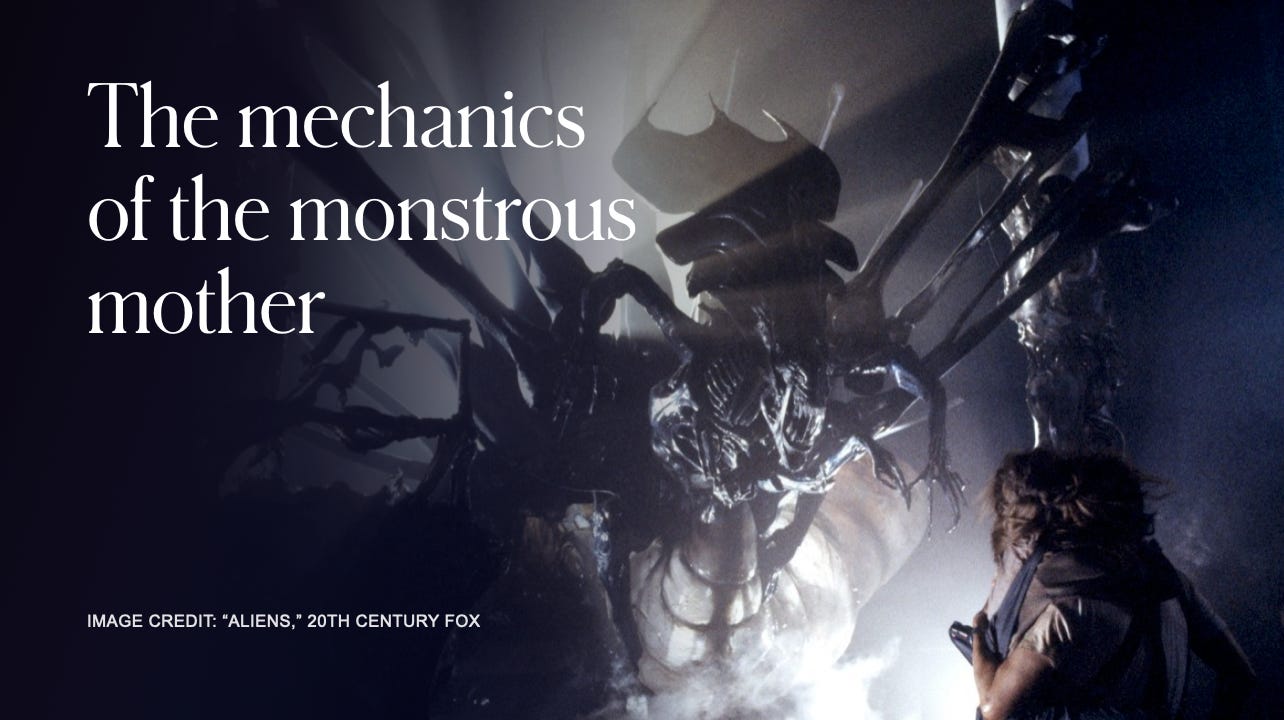
So, there is something deeply revealing going on with the Mother depictions supplied in Aliens. In “The Monstrous-Feminine”, film scholar Barbara Creed discusses a pattern to be found in movies such as Aliens and The Brood, where the biological mother is represented as fearsome, unnatural, abhorrent, full of rage, and often producing these mini-me offspring that are her minions rather than autonomous beings. Ripley, as an adoptive mother and therefore separate from the unwholesome business of childbirth, embodies the safe, sanitised, “good mother.”
“The mother’s offspring in The Brood represent symbolically the horrifying results of permitting the mother too much power. An extreme, impossible situation – parthenogenetic birth – is used to demonstrate the horrors of unbridled maternal power. Parthenogenesis is impossible, but if it could happen, the film seems to be arguing, woman could give birth only to deformed manifestations of herself.”
“The second reason why woman’s maternal function is constructed as abject is equally horrifying. Her ability to give birth links her directly to the animal world and to the great cycle of birth, decay and death. Awareness of his links to nature reminds man of his mortality and of the fragility of the symbolic order. The idea that woman in her mothering role is transformed into a human/animal figure is represented very strongly in The Brood, and in other horror films, such as Aliens where the generative mother is literally a creature and the ‘human’ mother is a surrogate who does not actually give birth.”
Creed suggests that we’re witnessing motherhood and, by extension, womanhood through the distorting lens of patriarchy in films like these.
We’re seeing the monstrous results of permitting the mother too much power, or of women being allowed to give physical form to their rage and desire.
Additionally, we see a systematic othering of the Mother as dangerously close to the animal world. We prefer to see ourselves as separate from other beasts, better than them. As thinking beings in a death-averse culture, this is partly self-protective. Awareness of our link to nature, as Creed points out, reminds us of our mortality as well as the “fragility of the symbolic order.”
In other words, mothers like the Xenomorph Queen are too raw, too powerful, and too angry for patriarchal values. They don’t fit comfortably in the modern world, so they need to be alienated, literally. They need to be forced into the darkness of their shadow. After all, everyone knows that the most hideous monsters “mostly come at night. Mostly”.
It wasn’t always this way, of course; the monstrous mammy has evolved over the years. Take Grendel’s mother, for instance. In the original Old English poem, she’s a warrior woman seeking justified vengeance for her murdered son.
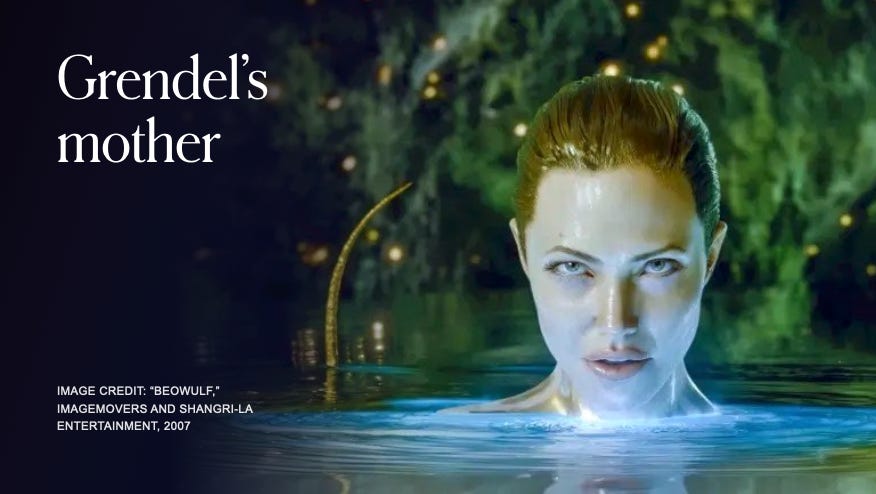
But by 2007, in Zemeckis’ film Beowulf, she’s been transformed into a hypersexualised golden demon played by Angelina Jolie, who seduces men and births monstrous offspring. The grieving mother becomes the seductive monster who corrupts through sex and spawns evil.
Medusa serves as an even earlier example of this mutation. Originally, “a symbol of primal motherhood, gorgoneions showing the strained grimace of the woman in labour,” explains Natalie Lawrence in Enchanted Creatures, Medusa’s infamous expression became “the bestial glee of a grinning predator, an image of a cannibal Mother Nature”.
So, the biological mother has, over the past few millennia, grown more and more untouchable, and James Cameron’s character Ripley is that monstrous mother’s mirror opposite. She has to access a similar energy to save Newt, of course. She has to be ruthless and willing to kill. But she does so in a sanitised, comfortably dude-coded way.
The final battle in Aliens, then, isn’t Good vs Evil so much as two different expressions of the Mother archetype in direct conflict – the light and the shadow. One is portrayed as socially acceptable and creating autonomy, while the other is shown as vile, monstrous and creating dependency.
The Father’s Daughter
In The Heroine’s Journey, Maureen Murdock describes a pattern many women experience in life: we start by identifying with the masculine, becoming a “father’s daughter.” We reject the feminine because we’ve learned that masculinity equals power and respect. So, we become Ripley – we learn to sanitise our anger, hide our needs, apologise for our bodies, and perform the kind of nurturing that doesn’t threaten anyone. In many cases, we become the “cool girl” version of Woman: the laid-back one who doesn’t ask too much or take up too much space.
I did this for most of my life. I prided myself on being a “tomboy”. I literally learned to fight, and I was outgoing and tough. During that time, I looked down my nose at people I saw as “girly girls” as if I was somehow better by being closer to the masculine ideal.
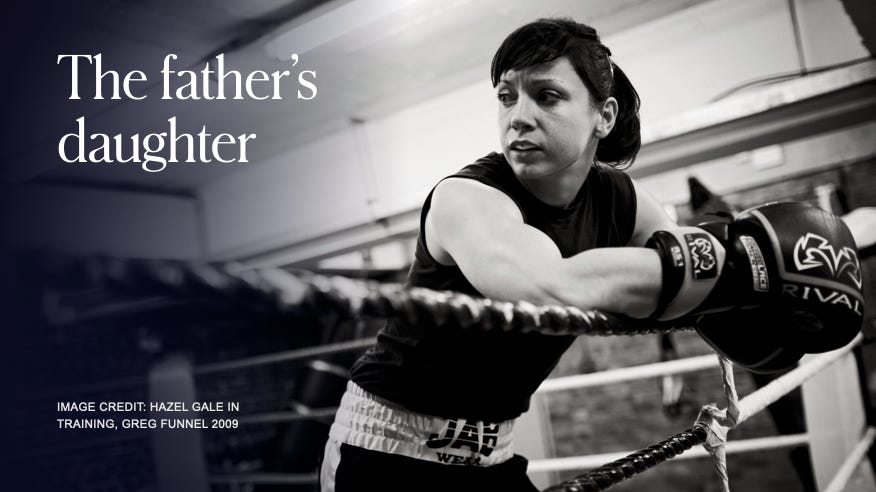
This is what people now call being a “pick-me” – performing the “cool girl” who’s not like other women to gain approval. But while, in one way, it’s good that we can name internalised misogyny when we see it, calling women “pick-mes” has just become another means to judge and police femininity. We’ve traded one binary for another: instead of tomboy vs. girly girl, it’s now aware woman vs. pick-me. Ultimately, it’s the same trap; we’re still pitting women against each other.
And the truth is that, during my tomboy years, I could never shake the little voice inside that tried to speak the sadness, jealousy and shame I felt for not being like the girlier girls. I felt shame for not being feminine, and both sadness and anger for rejecting half of myself in order to be acceptable.
I don’t feel that way anymore. Not because I “rose above” the feminine as I used to think I should – which now sounds ludicrous to me – but because I finally understand: I wasn’t rejecting femininity because it was beneath me or because it was fundamentally weak or revolting. I was rejecting my femininity because I’d been taught to fear it and see it as monstrous.
Everyone’s battle
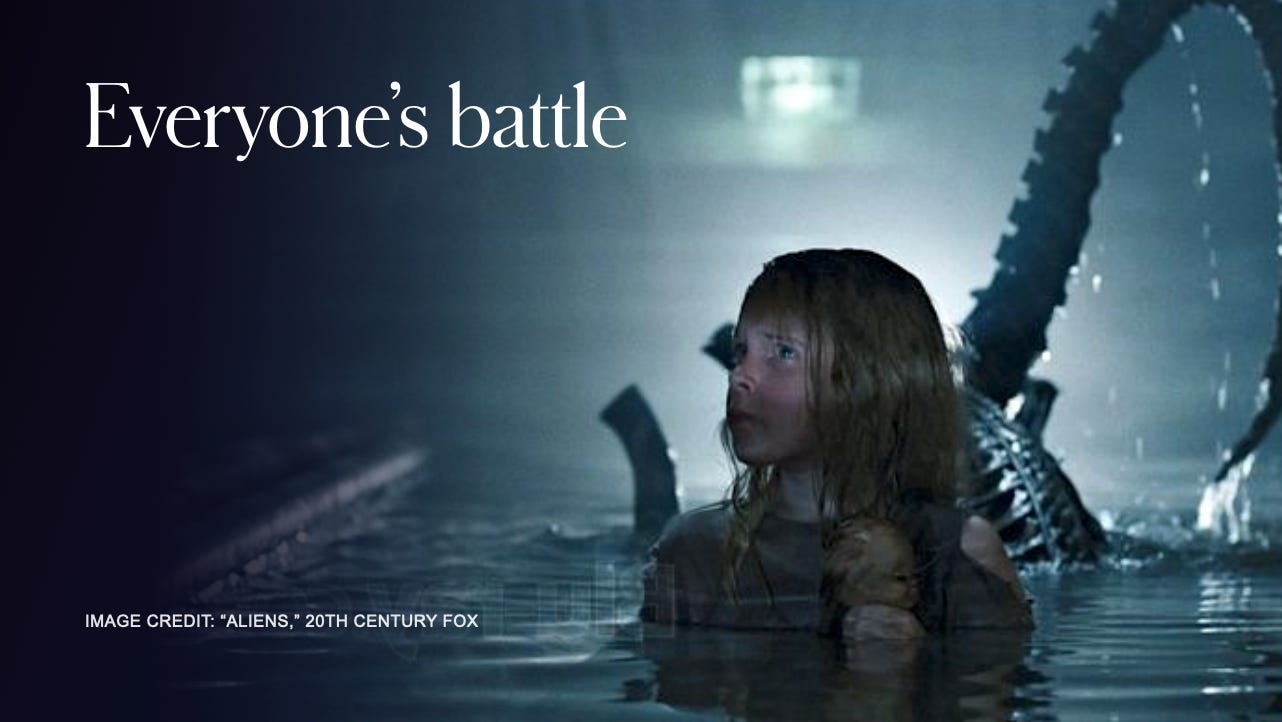
Of course, this double bind doesn’t only affect women and feminine-identifying people. Everyone has both masculine and feminine energy within them, and the world we live in teaches us to loathe that side of ourselves, regardless of our presenting gender.
So women and men alike learn to hate their softness, their emotionality, and their nurturing capacity, and can wind up projecting that repressed hatred onto the women in their lives. This is how misogyny comes about, and where incel culture comes from. It’s why women don’t feel safe to walk the streets after dark. Even the trad wife movement, which appears to celebrate “traditional femininity”, champions the confinement of women to safe, unthreatening motherhood and limits their control to the domestic.
In a world that demonises femininity, boys learn early that emotions are weakness, that needing support is emasculating, and that tenderness corrupts and undermines masculinity. So they’re forced to build their own version of Ripley’s sanitised strength – all protective power, no vulnerability allowed. Men learn to police their own softness as viciously as society polices women’s power. This is the same devouring pattern, just inverted. Where women are told their strength is monstrous, men are told their vulnerability is. Everyone loses.
Integration, Not Destruction
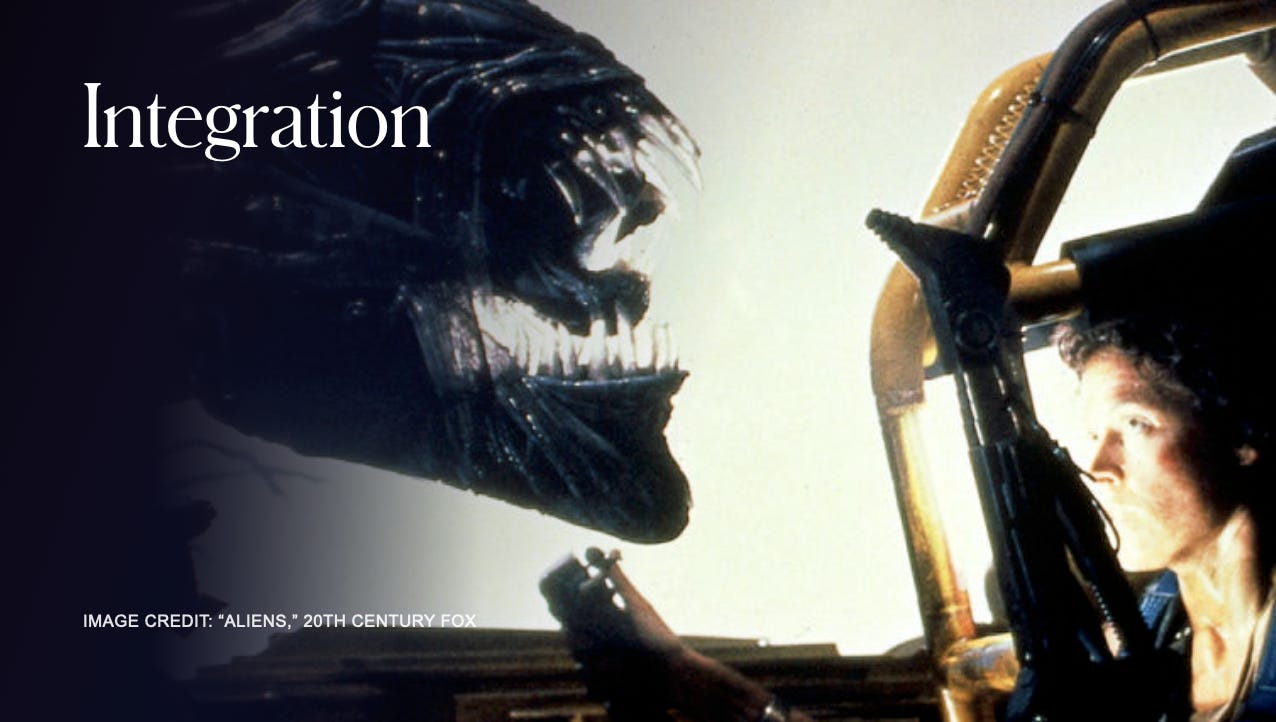
The most incensing thing about all this is that it’s based on a load of nonsense. There is no dichotomy for mothers or women – there is plenty of space between Virgin and Whore (and, by the way, no shame in being at either end of that scale in a literal sense).
So, what if the deepest allure of the film Aliens isn’t getting to see the “good, clean mother” rising victorious over the monstrous one at all? What if we find this storyline so engaging partly because we know this impossible-to-win battle first-hand? We have lived it, and sacrificed parts of ourselves to it.
I’d like to propose that the real challenge set by this film is not to be the good mother, but to integrate both ends of the polarity for ourselves – to merge the off-limits, raw feminine power of the Devouring Mother with the rational, dispassionate love of Ripley’s mother character. I believe the ultimate mother energy – that is, the creative force within us all – exists between these two poles. It’s not either/or, but both/and.
Don’t forget that the Queen is dormant throughout most of this movie – unconscious in some kind of trance state, just laying vile egg after vile egg. We don’t even know she’s there until Ripley wakes her up – until Ripley causes her to literally tear herself away from her reproductive organs, which are physically attached to the nest. The Queen is imprisoned by her role as Devouring Mother until Ripley rouses her; until she brings her into the light of consciousness. The shadow cannot integrate until consciousness chooses to face it.
The integrated mother
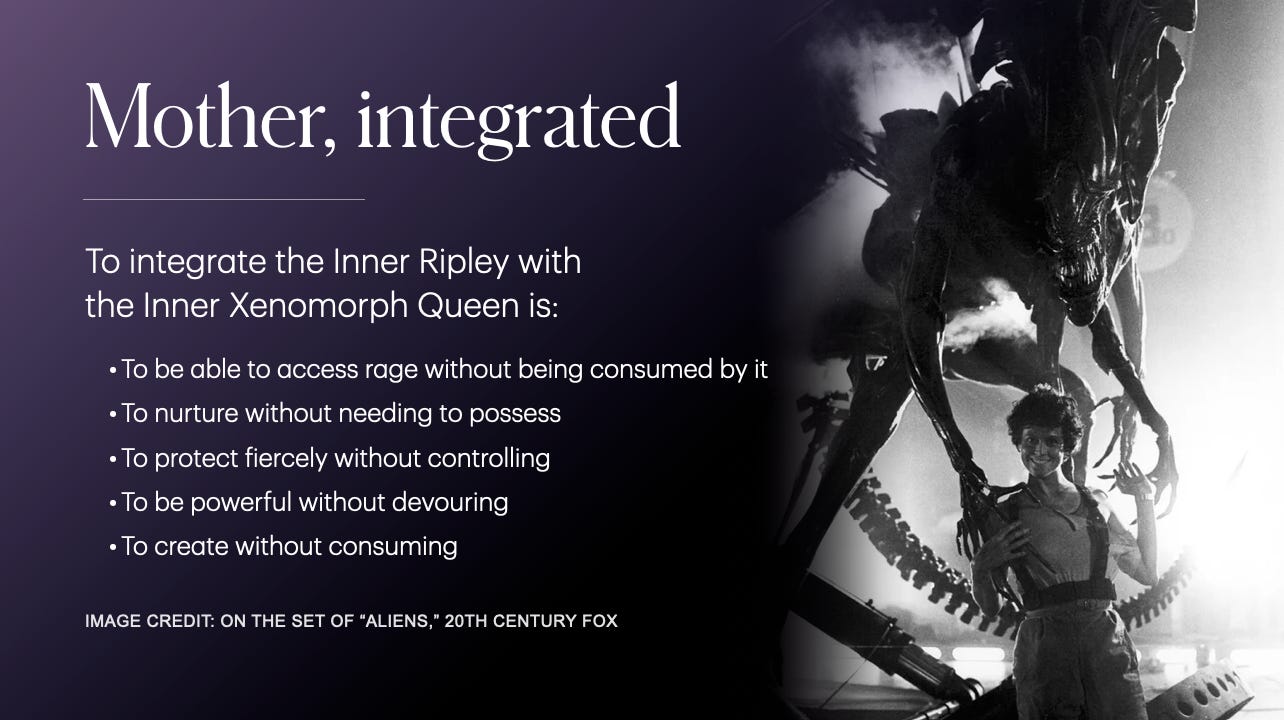
To integrate the Ripley part of self with the Xenomorph Queen is:
To be able to access rage without being consumed by it.
To nurture without needing to possess.
To protect fiercely without controlling.
To be powerful without devouring.
To create without consuming.
This excites me because, when it comes down to it, I don’t want to shrink or vanquish my inner Xenomorph Queen, thank you very much. I want to understand her. I want to integrate her fierce power, her relentless creativity, her refusal to be contained. I just want to feel in control of all that ferocity and realness, so I channel it into creations of purpose and meaning, and into relationships that feel vital and alive.
In other words, I want to be the Mother we’re not allowed to be:
Powerful and loving.
Fierce and conscious.
Raw and intentional.
To be these things, we need to humanise the alien.
Your Inner Xenomorph Queen
So let’s meet the Queen and invite her back home.
Imagine, if you will, that you’re walking through a dark corridor. The walls, once made of metal and plastic, now seem to breathe – organic, pulsing, covered in unfamiliar flesh.
Strange, ridged patterns stretch up further than you can see. Every now and then, movement catches your eye, but when you turn, there’s nothing but darkness.
Up ahead, in a vast chamber lit by an eerie bio-luminescence, you see her: your inner Xenomorph Queen. She is massive, powerful, and ancient. Maybe she looks like the creature from the film, or maybe she takes a different form – something uniquely yours. She might be made of rage, or hunger, or raw creative energy that’s been locked away for years. She might look human, or like a different kind of animal.
Keeping your eyes locked on the Queen, you step into the chamber and find that it feels alive. It’s warm, humid, almost womb-like.
She sees you now. Turning her head to face you as if waking up.
I wonder what your first instinct is – whether you feel fear to look at the part of you that’s been called monstrous, or whether you feel sadness, hate, curiosity, excitement. Love? Maybe all of the above.
The longer you look at your Inner Queen, the easier you find it to see what lurks beneath her terrifying exterior.
She is the part of you that would burn the world down to keep what you love safe.
She is fearless creativity, able to birth ideas, projects, connections, and life itself…
She is your hunger for life, for meaning and for more – the part of you that wants to consume experience, take up space, and live fully.
She is primal power – a force that doesn’t ask permission, doesn’t apologise, doesn’t compromise itself to make others comfortable.
All of this has been called monstrous. But what if it’s not?
As you stand here with your Inner Queen, what would it mean to reclaim her?
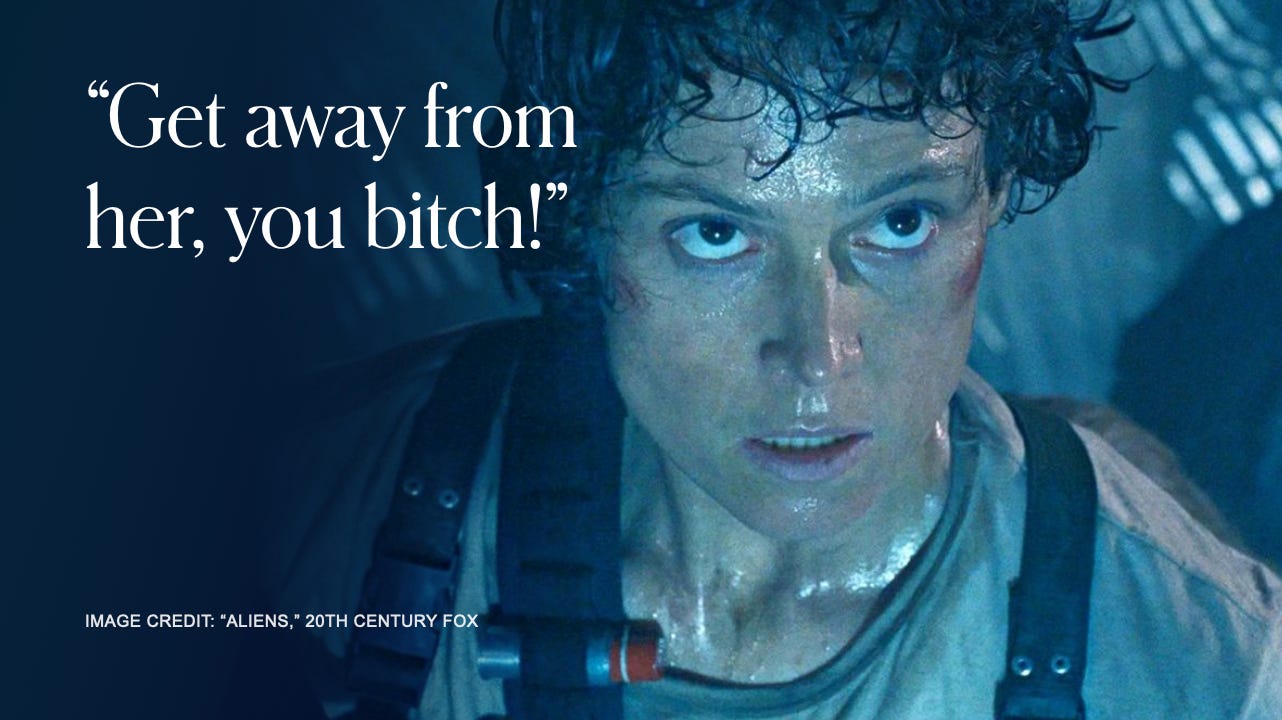
Ripley’s iconic line from the end of this film – “Get away from her, you bitch!” – is a battle cry we all know. But maybe we should be saying this not to the Queen but about her. Maybe, instead, we should be saying it to the traditions and outdated values that made her monstrous in the first place. What if the Alien Queen – tethered biologically to her duties as mother, locked away out of sight so as not to offend or frighten the world – is the one we ought to be saving?
The Queen is not our enemy, but our power. Integrate her, wield her consciously, and then just see what you can create.
–
REFERENCES:
Aliens, James Cameron, 1986
Carl Jung, Archetypes and the Collective Unconscious (1959)
Erich Neumann, The Great Mother: An Analysis of the Archetype (1955)
Barbara Creed, The Monstrous-Feminine: Film, Feminism, Psychoanalysis (1993)
Marion Woodman, Addiction to Perfection: The Still Unravished Bride (1982)
Laura Mulvey and Mary Ann Doane’s work on feminist film theory and the virgin/whore dichotomy
Maureen Madock, The Heronine’s Journey
Have you heard about our new game Echoes?
Our new game Echoes is available for pre-orders on Kickstarter. It’s a futuristic tale of time travel, magic, myth and tarot, and it’s perhaps our favourite and most awaited project.
There’s a special card deck and other exclusive rewards available only on Kickstarter. Ready to meet the Selves, gather ancient wisdom, and save the future?
I was a tomboy too. And Ripley's kind of mother - protective but not possessive, fierce but not angry, nurturing but not needy - sounds pretty good to me.