


You can watch and listen to me narrate this post on our YouTube channel.
***
Some things don’t die. Not because they shouldn’t, but because they were never allowed to — never mourned, never laid to rest — and so they linger, they whisper, they wait. They haunt.
But here’s the thing: if we’re brave enough to listen, our ghosts can teach us how to live again.
That memory you try to bury but which never really leaves is your Ghost, and it’s trying to talk to you. This is how to hear its message and finally lay it to rest.
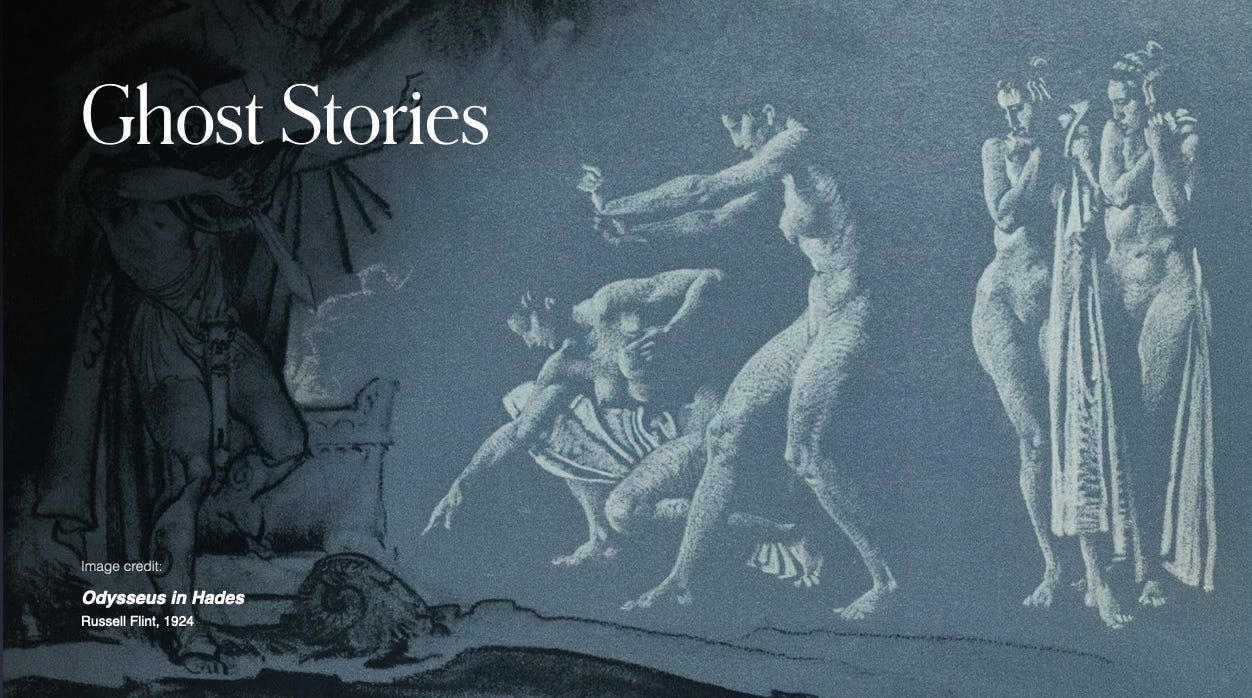
Ghost stories
In stories, Ghosts appear to offer advice or show the way.
In Homer’s Odyssey, Odysseus travels to the edge of the Underworld to speak with those who have crossed that threshold. His journey involves a ritual to summon the “shades of the dead”, and it’s through their advice that he gains the knowledge necessary to navigate the challenges of his journey back to Ithaca.
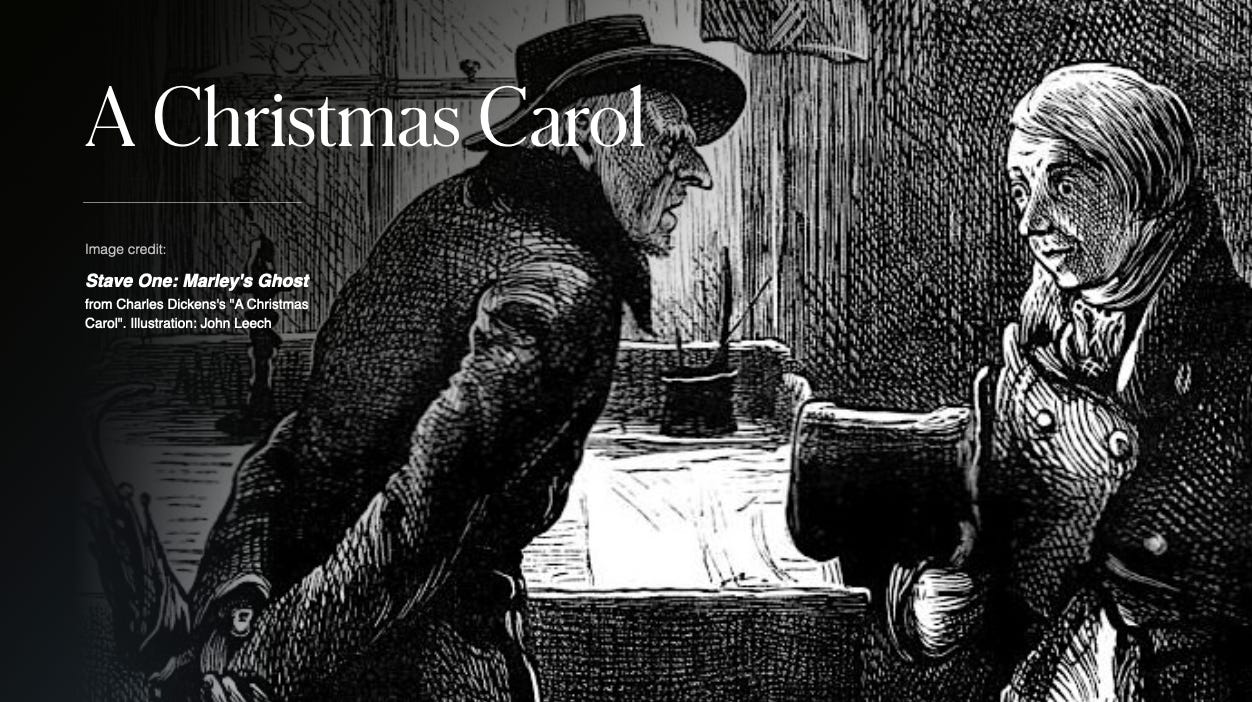
In Dickens’ A Christmas Carol, Ebenezer Scrooge is guided by the Ghosts of Christmases Past, Present, and Yet to Come. They show him his life from new perspectives, transforming his character.
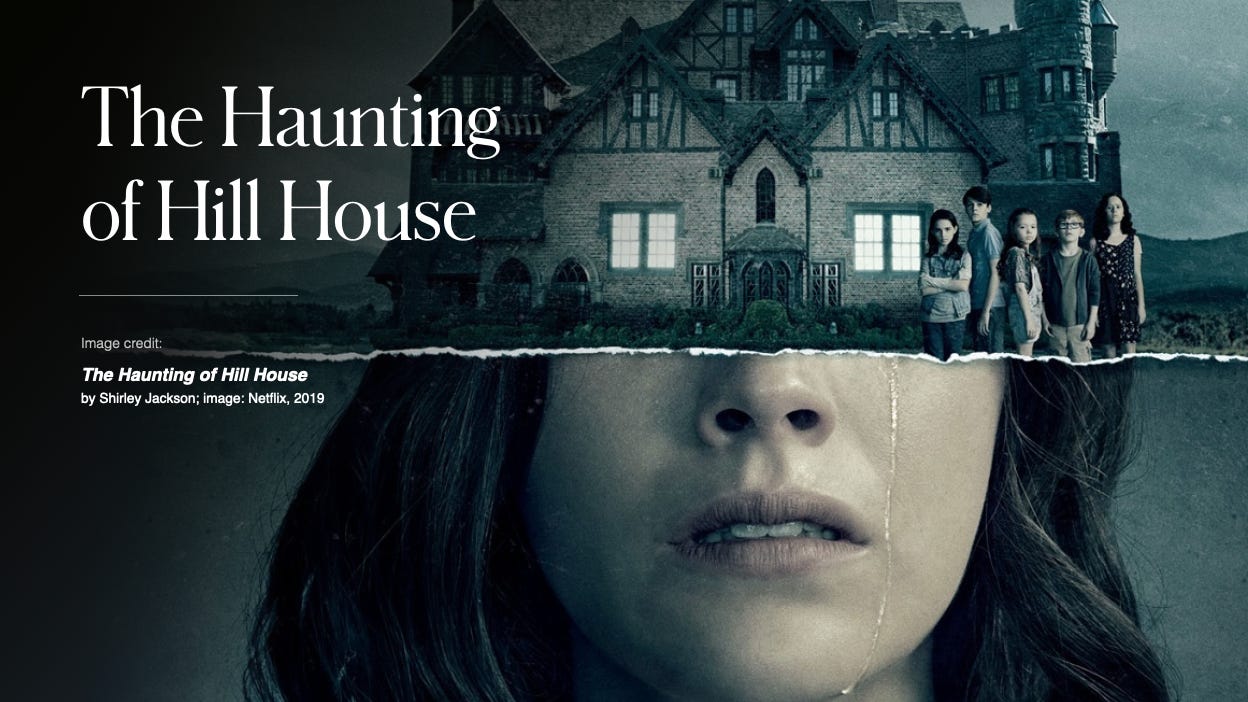
In Shirley Jackson’s The Haunting of Hill House, the house itself is a psychological entity: its walls creak with all the pain, fear and longing that the living characters refuse to speak but need to face.
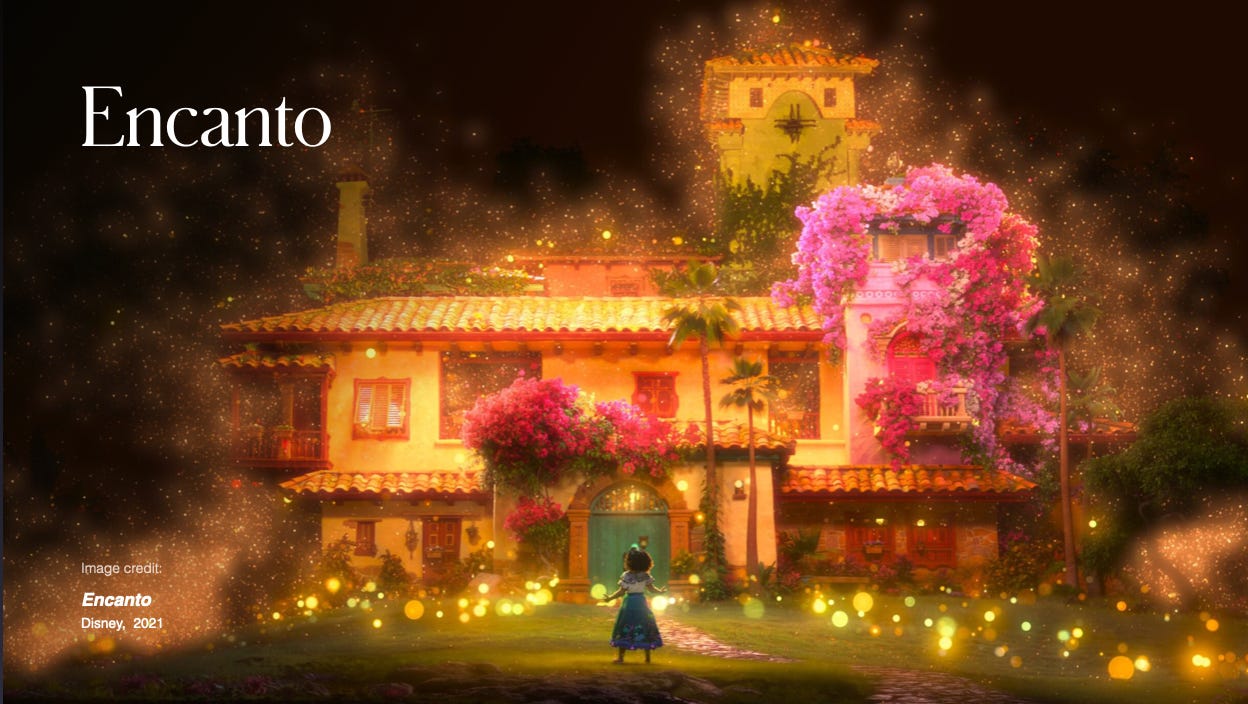
And in Disney’s Encanto, the magical house literally begins to crack under the weight of generations of unprocessed trauma. Healing only happens when the unspoken pain finally finds a voice.
Narrative Ghosts are rarely about horror. They are about memory. They come back so that what was silenced can be heard. The same is true of our inner spectres.
The Ghost as archetype
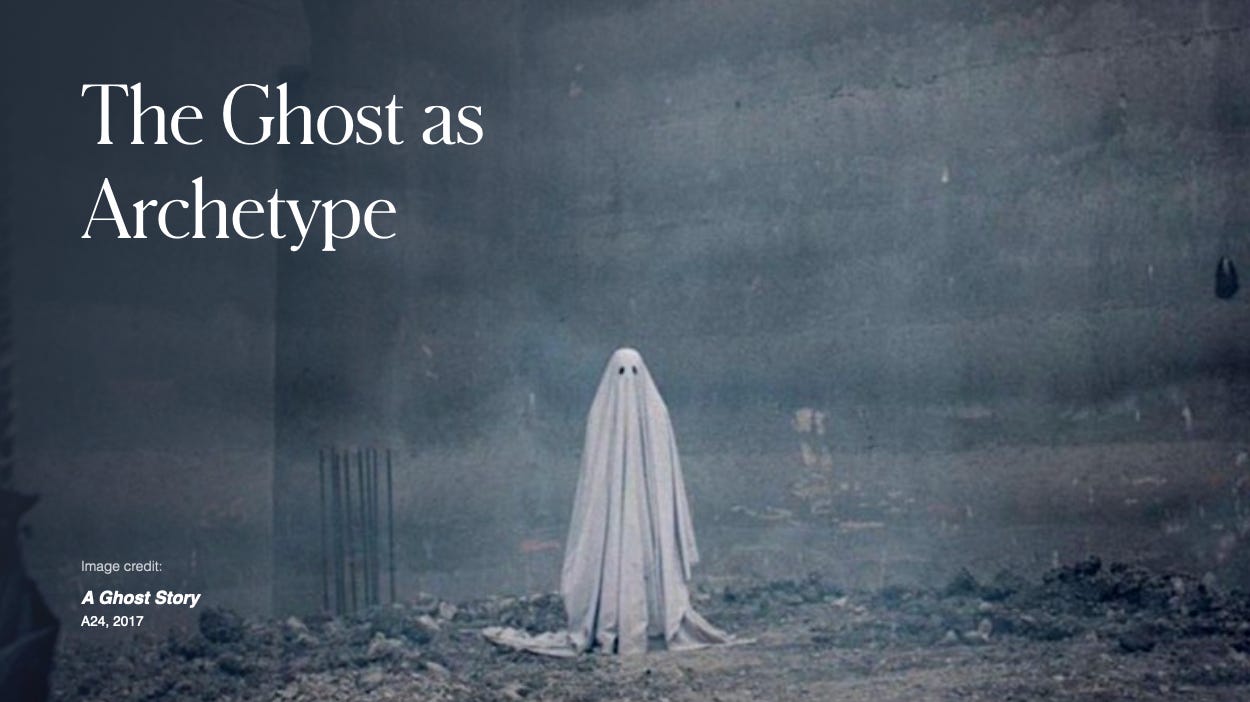
Symbolically, Ghosts have a number of potential psychological meanings, all very potent. Our Ghosts are our unfinished business, unacknowledged grief, memories we couldn’t bear to bury, parts we couldn’t allow to live on.
Carl Jung proposed that the unconscious mind was populated by autonomous “splinter psyches” – clusters of feelings, memories, and thoughts around specific emotional themes that often operate outside our conscious awareness. Effectively acting as self-contained entities, Jung believed that these “complexes” can influence behaviour and patterns of thought, just as a Ghost may haunt a house or person.
“(splinter psyches) lead a separate existence in the dark realm of the unconscious, being at all times ready to hinder or reinforce the conscious functioning”
Carl Jung, ‘Psychological Types’
So, as with all the psychological monsters we’re discussing in this series, our Ghosts are not monstrous, not truly; they’re merely unresolved – aspects of self doomed to operate from old, outdated strategies. Without the means to update these strategies due to being isolated from the greater self, they are forced to live on another plane, cycling through the experiences that made them.
Ghosts in myth and mind – what haunts us and why
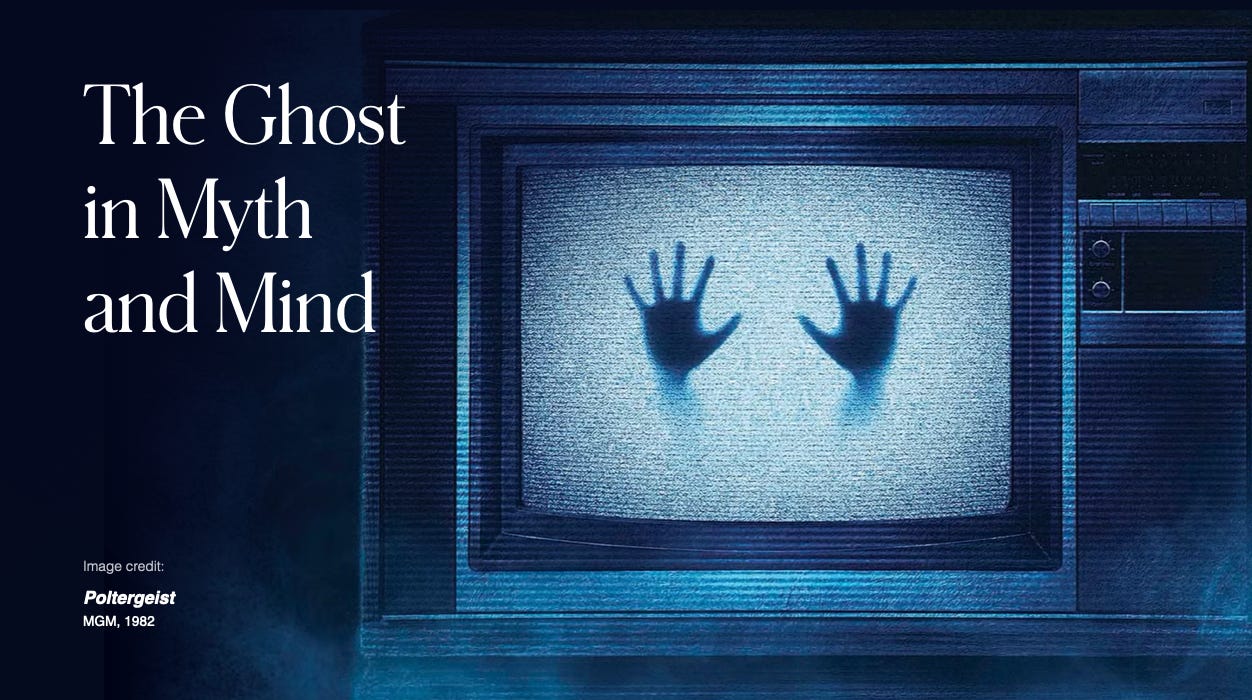
So, in both myth and mind, Ghosts arise when we deny grief; repress pain, anger, trauma; or when we leave parts of ourselves behind – the hurt child, the abandoned dream, the love that was lost but never mourned.
Then, when they return, they do so with a distinct purpose: they come to warn us; to demand justice; to weep for what was lost. To remember.
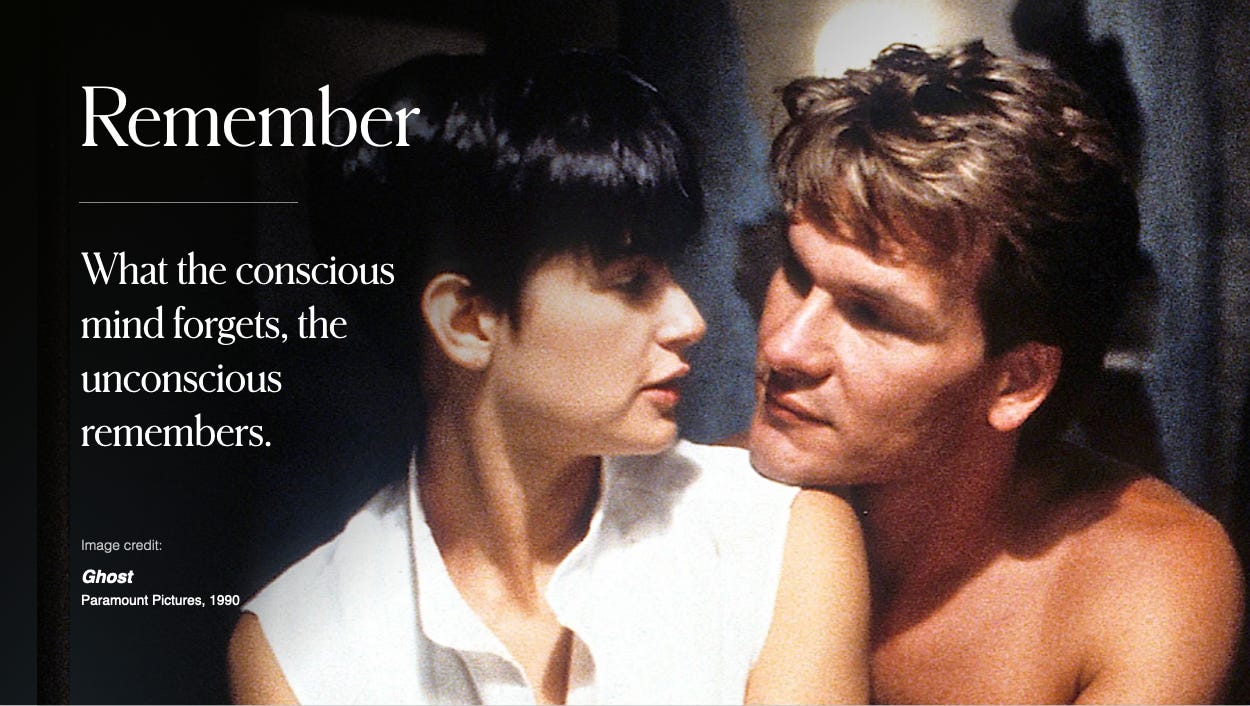
Ghosts live on because the pain that was too much to feel in the first place still needs to be processed. Or, in other words, what the conscious mind forgets, the unconscious remembers. If we don’t consciously honour our past, it will haunt us. Although this might feel like punishment, retribution is never the motivation of the unconscious mind, which is geared to survival, safety and happiness – not judgement or damnation.
So, the Ghost is not the wound itself, and it’s not trying to drag us back in. Rather, it’s the aspect of self that suffered that wound, and even though we might consciously believe we’ve buried the memory, this part has never been able to leave the gravestone. It’s still standing there, holding a bouquet of flowers, waiting for us to say, “Yes. That happened. That mattered. That hurt.”
Ghosts as guardians
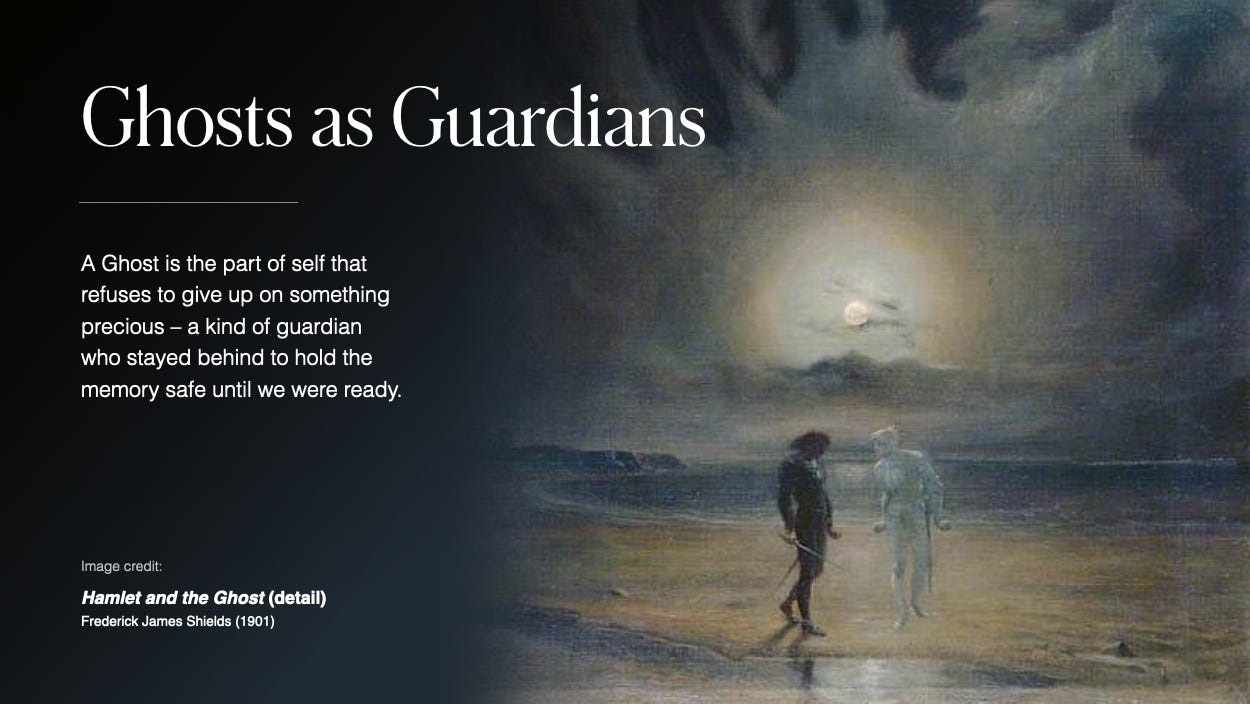
A Ghost is the part of self that refuses to give up on something precious – a kind of guardian who stayed behind to hold the memory safe until we were ready. And if all of that sounds a bit too much like a bunch of therapeutic “shoulds” and “oughts”, then perhaps it would help to remember that, just like every other monster we’ve explored in this series, each Ghost is the guardian of some kind of psychic treasure.
The gift may simply be clarity – offered by the Ghost who points to an old decision you made out of fear and whispers, “It’s time to choose differently now.”
It may be freedom – when you finally cry the tears you never allowed yourself as a child, and can move on at last.
Sometimes, the treasure is tenderness – a deeper compassion for yourself and others, born of having turned towards pain rather than away from it.
It can be meaning, too – a renewed sense of why you do what you do, what you value, need or truly long for.
When a Ghost is witnessed, something shifts, and that movement – no matter how subtle – is how a haunting begins to loosen its hold.
Questions for the haunted
So, I invite you now – very gently, and only if it feels safe to do so – to ask:
What have I lost that I never mourned?
What version of me still haunts the halls of my inner world, waiting to be remembered?
Your Ghost may be the tender young self who lived in the childhood home you never said goodbye to; the part that misses the friend who drifted away without a farewell; the dreamer that dreamt the dream you quietly decided was impractical.
Your Ghost may mourn the body you once had before illness or age changed it; the person you loved but never kissed; the faith or sense of meaning you outgrew but never replaced; the safety you lost when trust was broken.
Perhaps your Ghost is the version of you who was wild, creative and free before responsibility took hold; the one who loved freely, before heartbreak made you cautious; or the voice you silenced to keep the peace.
Maybe you have Ghosts of all these kinds and more.
If any of these examples ring true, or if a different kind of Ghost comes to mind for you, then the final question to ask is this:
What would it take to lay my Ghosts to rest, not by forgetting, but by allowing?
If it feels safe, imagine that you’re walking slowly through a house you once knew well. As you move through its rooms, you notice a door you’ve never seen before, never opened before. So, quietly and with just a little caution, you turn the handle.
Behind the door, a small figure waits – your Ghost. But they don’t speak; they just hold out their hand. You look down and you pause, because these decisions are not to be made lightly.
Will you take the Ghost’s hand and let them show you what they’ve been holding all this time? You don’t have to, if it’s not the right time or if it doesn’t feel safe. I’ve led you through this little visualisation just to remind you that you can if you want to.
A ritual of remembrance
In the real, practical world, there are countless ways to honour past pain, and no one method will be right for every person. You may choose to start by naming your Ghost, by drawing it, or imagining its message and putting it into words.
Perhaps you’d like to light a candle, write a letter, or sing a song that this part of yourself would know and love. Or, maybe you need only whisper, “I do remember.”
Sometimes, the tiniest of outward gestures can create inner release. The moment we remember with compassion, our Ghosts can start to settle – not dead and buried, but reintegrated and allowed: parts of the living self at last. In spite of their focus on remembering, Ghosts are not designed to drag us backwards. Rather, they appear so that, at last, we can carry them forward with us. And therein lies the true magic of this archetype – the Ghost shows us that the very memories that haunt us are also the ones that can set us free.
Our new game Echoes
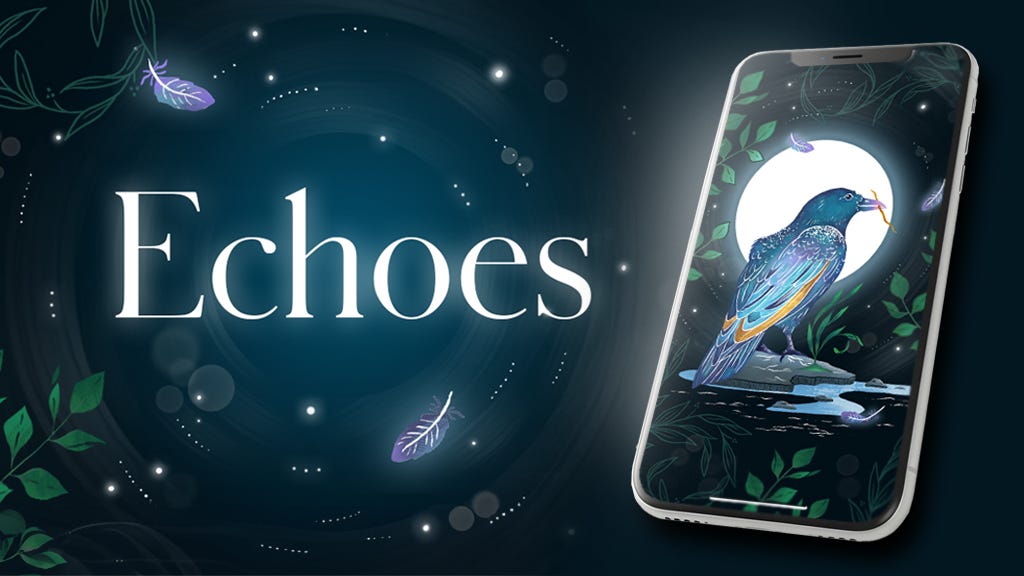
Our new game Echoes is available for pre-orders on Kickstarter. It’s a futuristic tale of time travel, magic, myth and tarot, and it’s perhaps our favourite and most awaited project.
There’s a special card deck and other exclusive rewards available only on Kickstarter. Ready to meet the Selves, gather ancient wisdom, and save the future?
Outstanding read thank you