


You can listen to this post on YouTube or read it below.
***
Some time ago, I was ghosted by someone I thought was a good friend. It wasn’t dramatic – no fight, no confrontation. Just… distance, and that gradual fade that feels worse than a clean break because it leaves you wondering: What did I do wrong? In trying to answer that question, I spiralled: was it something I said, or something I did? Was I too much, too intense, too weird?
I took it to my therapist, expecting her to help me figure out how to fix the broken relationship. Instead, she shared a story, and it changed everything for me.
Today I want to tell you about the three colours of friendship, why most of us are drowning in the wrong kind of shade, and why and how we should stop performing for people who will never actually see us.
The Ugly Duckling
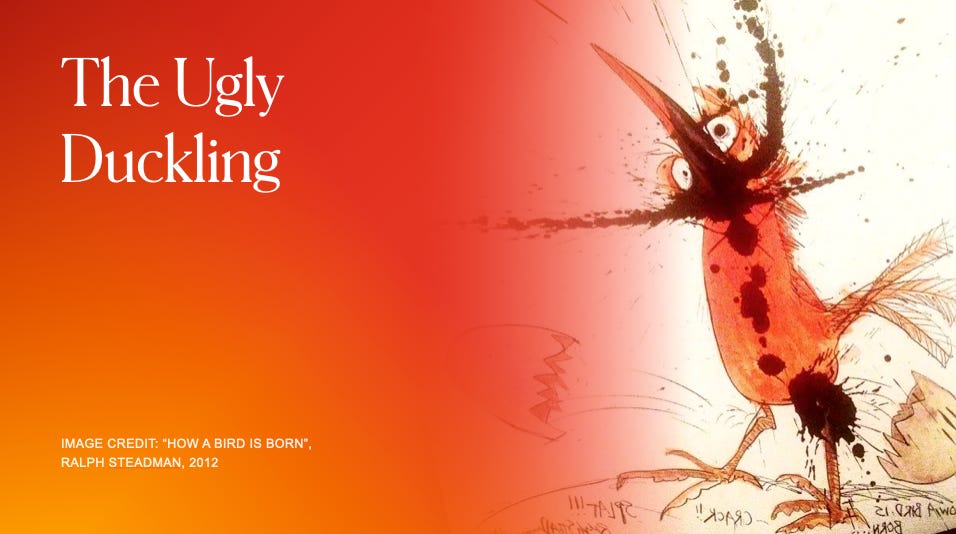
You almost certainly know the Hans Christian Andersen fairy tale “The Ugly Duckling.” A little duckling is born in a farmyard, and from the moment he hatches, he’s different: too big, too grey, too long-legged and awkward. The other ducklings – all perfectly fluffy, cute and yellow – mock their odd-looking sibling: they ridicule him for being different, and peck at him as if trying to keep him at a safe distance.
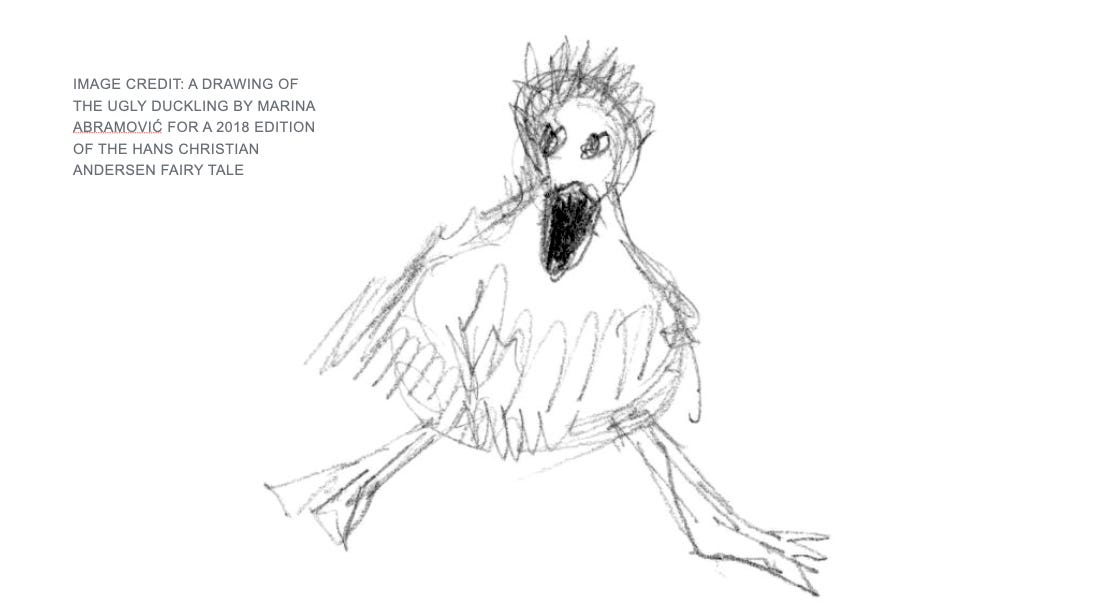
Even his own mother is embarrassed by him. So he tries to fit in, making himself smaller, staying quiet, and struggling to perfect the other ducklings’ style of waddle and quack. But nothing works – they still reject him, so he runs away in search of somewhere to belong. On his travels, he finds wild ducks who tolerate but don’t embrace him.
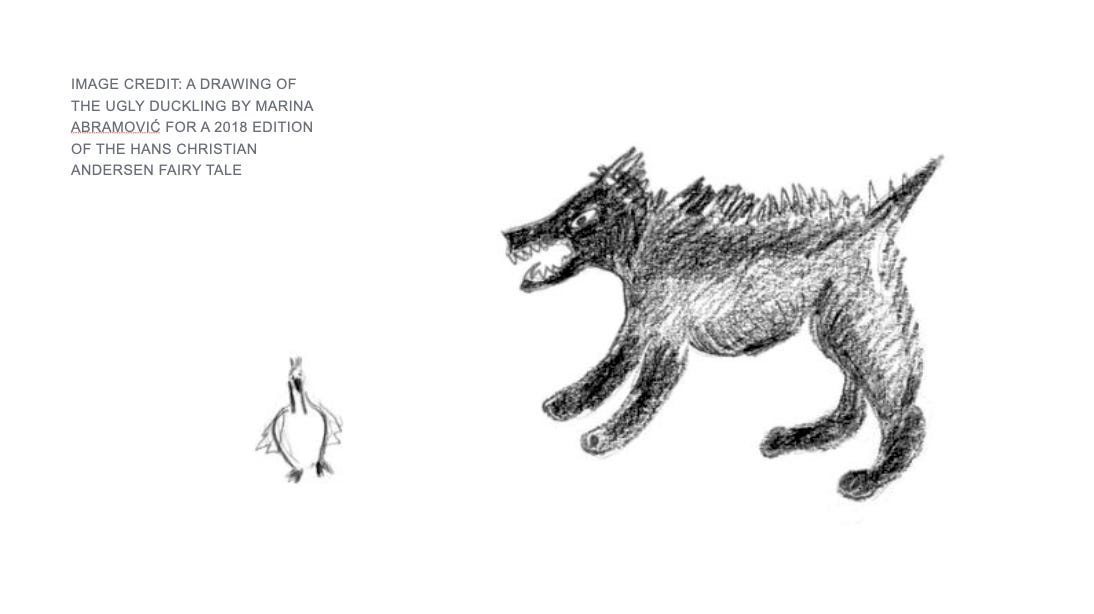
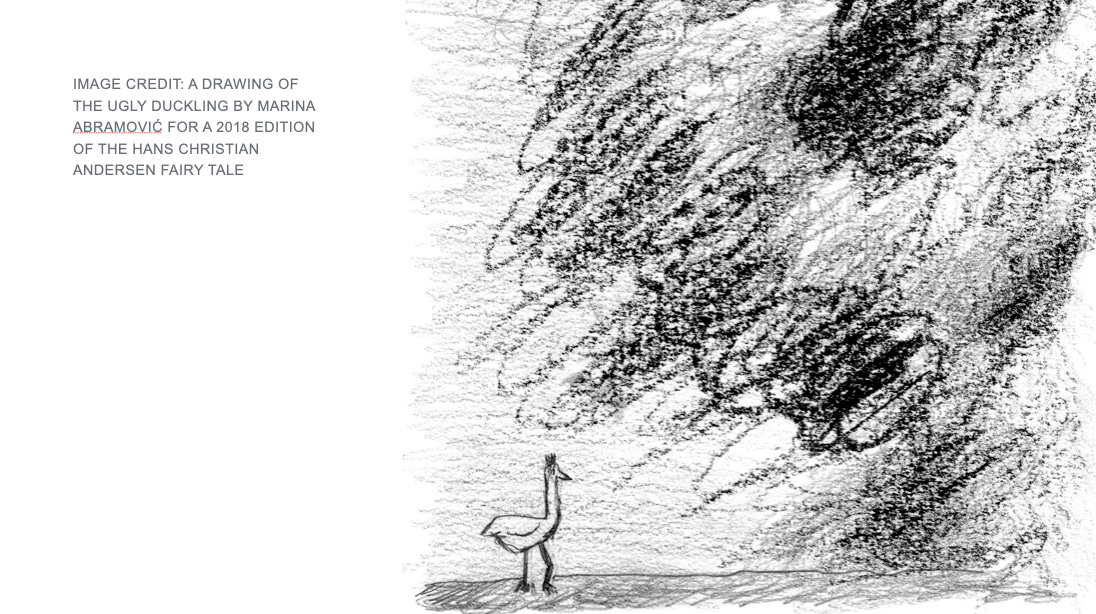
He finds geese – they’re shot by hunters. He finds an old woman with a cat and a hen, but they mock him for not being able to purr or lay eggs. When winter comes, the ugly duckling is alone and exhausted. One night, he hides in the reeds by a lake, and by morning – the water having turned to ice overnight – the frightened little creature finds himself frozen in place, nearly dead from the effort of trying to belong where he doesn’t.
The Three Colours of Friendship
When I took the story of my ghosting friend to therapy, I too was frozen in the water. I couldn’t go back to my old, broken friendship, obviously, but I didn’t know how to move forward either. My therapist listened to my situation, nodded, took a breath and then said, “When it comes to people, there are just three colours in this world: green, orange, and yellow.”
Greens are the people who see you – the real you – and like what they see. It might be that they understand you, they may admire your principles, feel inspired by what you do, or share your passions. But not necessarily, and even if they do, there’s more to Green than a completed checklist of similarities. When it comes down to it, these people are simply your people, and there’s nothing more to it than that. They will stand by you through thick and thin, they will cheer you on and celebrate your successes because, for whatever reason, they are your true friends, and you know this instinctively.
When we’re with people who are Green for us, we feel safe to be vulnerable, honest, authentic and real because we just know that they love us for who we are.
Oranges, on the other hand, are the opposite – not your people, not your vibe. They may disagree with your opinions, principles, politics, work, or whatever. Or, they might just rub you up the wrong way – again, there’s no formula here. Some people just aren’t your people, and that’s fine. It’s good, actually, because it proves you’re being true to yourself. No one in this world is innately, automatically likeable to everyone, so Oranges are inevitable when you choose to be Green for yourself. They’re the natural result of being authentic in the world. And that’s a good thing.
And then there is Yellow. Yellow relationships are performative and inauthentic – the ones where you can’t quite be yourself.
Yellow might be a close friend, a colleague, a family member, or someone you barely know. What makes them Yellow isn’t how well you know them, but how you feel around them: like you need to learn to waddle in a certain way to fit in. Like you’re carefully editing yourself, monitoring what you say, walking on eggshells, or simply trying to appear funnier, tougher, more successful, more agreeable, or just... different. Even if there’s no specific trait you need to perform, you can tell a Yellow relationship from the persistent feeling of unease it brings – a sense that any misstep could lead to judgment, and that you need to stay carefully calibrated as a result.
Often, Yellows are the people you think you should be friends with for some or other reason. Perhaps they’re a friend from school or someone another friend really likes. Perhaps they’re in your family or your team at work, and you think you simply have to find a way to keep it going. So you bend for them, just a little. You fold yourself, contort yourself; you speak in half-truths and polished, censored stories… You do whatever you need to do to keep them on, even though they leave the faintest hint of a bad taste in your mouth every time you walk away.
Yellow is any relationship where you leave feeling slightly diminished and a bit less like yourself. When my therapist shared these ideas, she leaned forward at this stage, looked me right in the eye, and said, “Yellows are the people who invite you to their dinner party simply because they have one seat left to fill.” Then, she sat back, lifted her chin, and said, “The only colour to get rid of is Yellow.”
Why we stay

Remember, the ugly duckling stayed in that farmyard for quite some time before the ridicule and pecking finally got too much. He kept trying, kept performing, and kept making himself smaller, quieter and, ultimately, less like himself.
Why? Because leaving is tough. Admitting that people in our lives are not our people – perhaps never have been – is fundamentally difficult. It’s hard to admit to ourselves that all the effort we’ve been putting in will ultimately have been for nought, and because no relationship is all bad, there will undoubtedly be some things about it that we don’t want to let go of: people, places, events, or other kinds of “perks” that we will miss out on from the moment we walk away.
So we stay, and we keep the performance going just a little longer – exhausting ourselves trying to quack when we were meant to glide.
The damage of performance
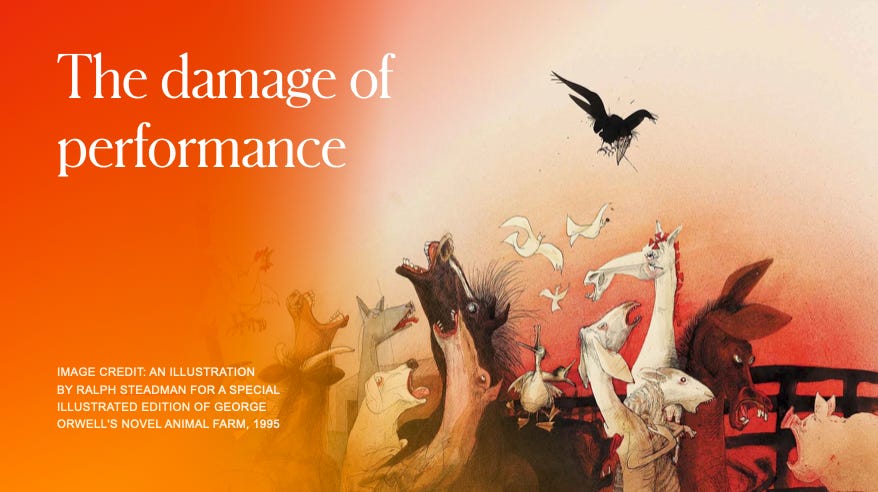
When it comes down to it, Yellow relationships are built on the lie that if we just perform well enough, if we just hide our differences effectively enough, we can belong anywhere. But we can’t, of course, and nor do we want to. Not really. Because this kind of performance is profoundly damaging.
When we repeatedly self-censor, we teach ourselves over and over that who we really are is simply not safe to show the world. Simply not good enough. This is true even when we’re conscious of the reason for the performance. Who hasn’t had to suffer through a dinner party or work event being polite to people they don’t really like, only to find themselves having to shake off the experience afterwards? Social performance like this feels fundamentally dirty and wrong. Each time we do it, we like ourselves a little less.
The only colour to get rid of is Yellow… not Orange.
What if the ducks were never wrong?
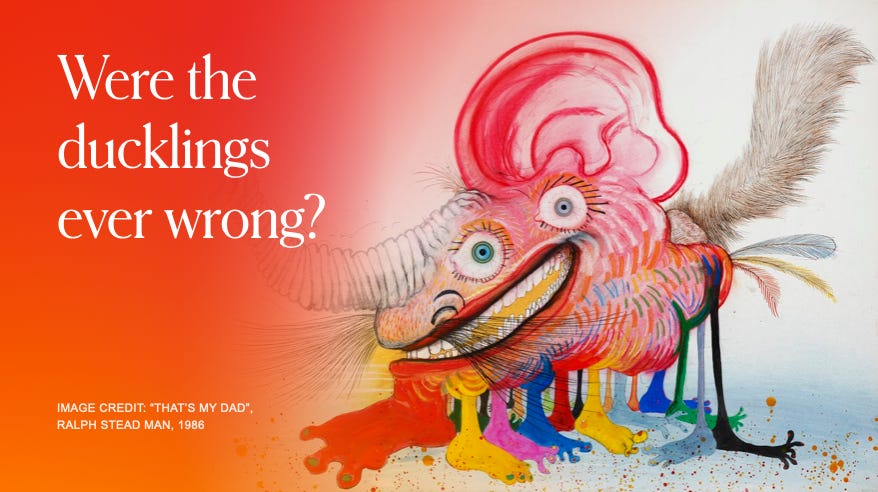
When we hear the story of the ugly duckling, we instinctively want to boo at the chicks when they reject our ill-fitting hero. But the ducklings aren’t villains in this story. They just aren’t swans. The same goes for the people who are Orange for us. Just because we don’t like them and they don’t like us doesn’t necessarily make them bad people. They’re just not our vibe, and that’s fine.
In fact, it’s better than fine; it’s a good thing. Oranges validate us because they prove we’re not performing. They also give us a chance to test our principles, to healthily question ourselves, and to understand our purpose, direction, values, with more clarity.
I’m not saying we ought to hang out with our Orange people – why on earth would we want to do that? What I’m saying is that we needn’t fear them, because the problem has never been the fact that Orange exists. The problem is that we don’t let Orange be Orange, but turn them into Yellow instead. The problem is when we think, “This doesn’t feel right, but if I just change this one thing about myself, maybe it will.” That’s how we end up frozen in a pond somewhere, wondering where we went wrong.
So, no, Orange isn’t the enemy. The only colour to get rid of is Yellow.
How to get rid of Yellow
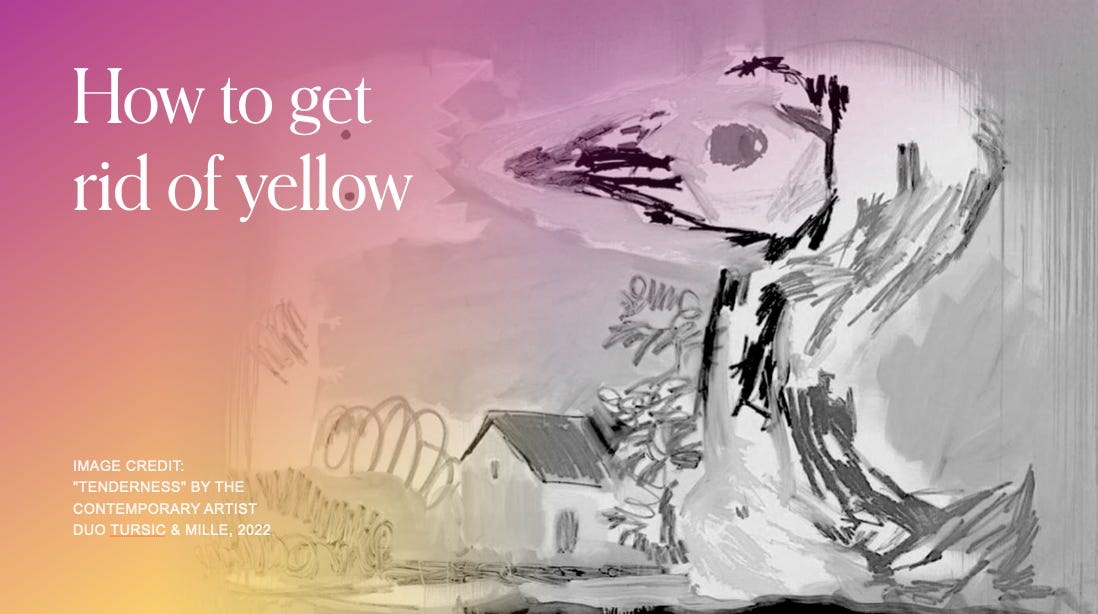
Now, I’ve told this story before, and I know that “the only colour to get rid of is Yellow” can sound like I’m suggesting we should cull all of our awkward friends – or unceremoniously cut out all of the people we’re afraid to be ourselves around. But that’s not exactly the case.
A person’s friendship colour isn’t about who they are; it’s about who we’re being around them. Yellow is our fault – it means we’re not being ourselves with this other person.
In reality, they could be the biggest Green in the whole world. Or they could be Orange. We haven’t found out yet because we aren’t showing them who we really are – we’re not giving them a chance to reject or embrace us, because we’re scared.
Getting rid of Yellow, then, is not about cutting people out. It’s about being real. It’s about finding the courage to show up as ourselves. To be Green for ourselves.
To be Green for yourself means dropping the pretences.If you’re part of or in touch with the neurodivergent community, you’ll know this as “unmasking”. It means choosing not to hide your weirdness or your difference. It means deciding to express your passions, opinions, and vulnerabilities – not all the time or totally without filter because that might not be safe, but whenever it feels right to share these things.
Sometimes, being Green for yourself means choosing honesty that might make someone else think less of you or feel uncomfortable. Ultimately, it means risking Orange – both being Orange for others and realising they’re Orange for you. It means risking rejection in order to learn where you stand.
If you do this, and a former Yellow turns out to be Orange, then that’s fine. Sure, it can be disappointing, but it’s better to know. And now that you do, they’ll drift away. There’s no need to keep people in our lives that make us feel uncomfortable to be ourselves, it’s as simple as that.
But sometimes we’ll discover that a former Yellow has been Green all along, just waiting for us to finally show up. Perhaps they’ve been afraid to open up around us, because they’ve been feeling uneasy too. Human beings can sense inauthenticity, and we don’t like it one little bit. It makes us feel unsafe and uncertain. So, when we finally decide to be Green for ourselves, the people around us breathe a sigh of relief, too.
The only colour to get rid of is Yellow. And we do that by being Green for ourselves.
Your actual flock
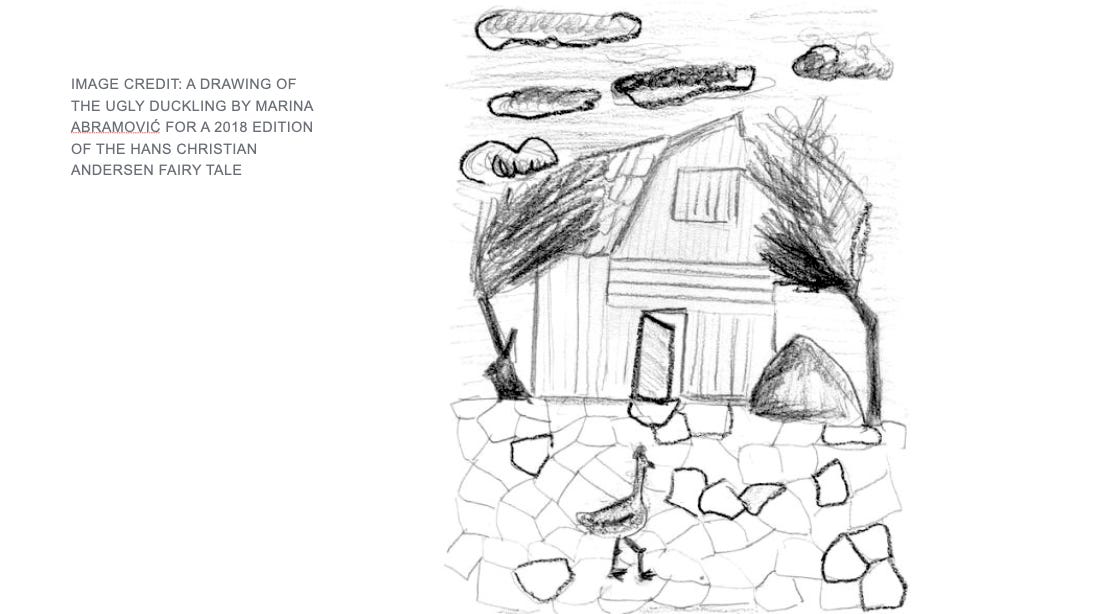
The morning the ugly duckling finds himself frozen in the lake, a kind-hearted farmer breaks him out of the ice, takes him home, and revives him by the fire. The ugly duckling recovers, but of course realises this human household is not where he belongs either. It’s full of children, for one thing, and they’re noisy and scary, so he leaves the farmhouse and goes back into the wild world outside.
But it’s warmer now, at least. The ice has thawed, spring has sprung, and one day, feeling the summer sun on his back, the ugly duckling makes his way to a beautiful garden pond, where he sees a flock of magnificent, snow-white swans. Despite his fear of rejection and mockery, he’s drawn to their beauty and decides to approach them, believing it is better to be killed by such beautiful birds than to live in misery.
He bows his head in anticipation of death, but instead of mockery or pain, he sees his own reflection in the water. To his astonishment, he discovers that he is no longer an ugly, grey duckling, but a beautiful, fully grown swan himself. The other swans welcome him warmly, gently pecking him with their beaks. Children on the bank throw bread into the water and point at the new swan, saying he’s the most beautiful of them all.
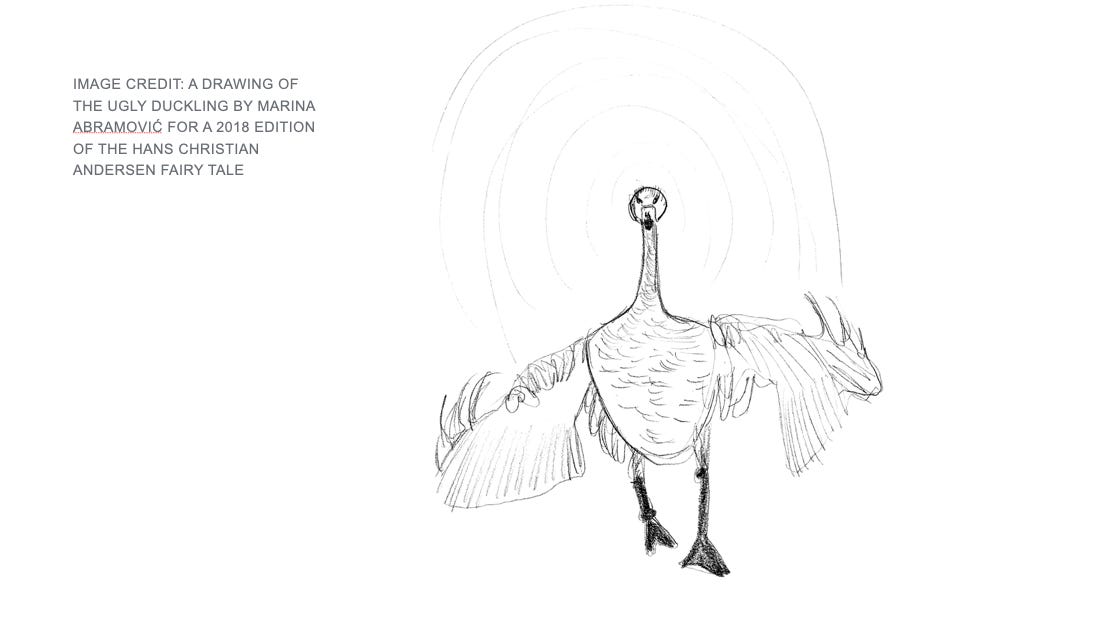
The swan feels a profound sense of happiness that he could never have dreamed of when he thought he was a duckling. Finally, he belongs, having found his true home and his family.
Swan green – the greenest green of all
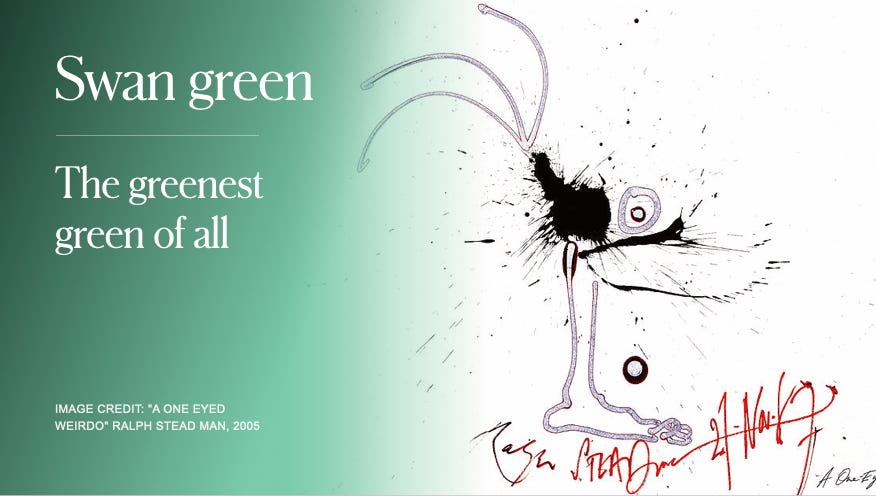
Perhaps the easiest way to know that you’re in a swan-green relationship is the sense that belonging feels effortless – you have nothing to prove.
The swans didn’t need the ugly duckling to achieve or demonstrate anything, they didn’t need him to perform swan-ness convincingly – they just looked at him and knew: “This is one of us.”
Green people recognise you, and are drawn to you – as you are them – without the need for any bending or folding to fit. Because that’s what friendship truly is: acceptance and enjoyment of someone who makes your world better just by being themselves.
Time to leave the duck pond
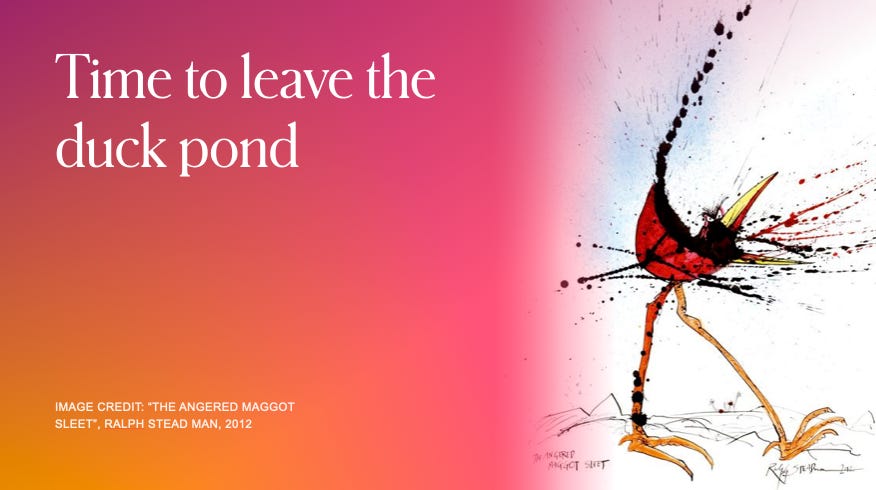
I’m still not in contact with the friend who ghosted me, but I don’t feel loss or regret any more. Rather, I feel relief, because I finally stopped trying (and clearly failing) to be the person I thought she needed me to be.
After that day, I found my swans – not all at once, and not in a big dramatic way. But slowly, surely, the people who actually saw me, who liked what they saw, and who I liked right back, started to appear in my life. Many of them had been there all along. I just hadn’t appreciated how excellent they were yet because I was too busy performing for the ducks.
So this is my invitation to you: risk being Orange to some people, and let your Yellow relationships become what they actually are. Because somewhere out there, there’s a whole flock of swans who are waiting for you, and they’ll never find you if you’re still trying to quack.
REFERENCES:
Hans Christian Andersen, “The Ugly Duckling” (1843)
Rafael Bejarano’s Three Colours framework (passed on by my old therapist, Rachel Moore)
Brené Brown, Braving the Wilderness: The Quest for True Belonging and the Courage to Stand Alone (2017)
Carl Rogers, On Becoming a Person: A Therapist’s View of Psychotherapy (1961)
Mark Manson, The Subtle Art of Not Giving a Fck: A Counterintuitive Approach to Living a Good Life (2016)
Have you heard about our new game Echoes?
Our new game Echoes is available for pre-orders on Kickstarter. It’s a futuristic tale of time travel, magic, myth and tarot, and it’s perhaps our favourite and most awaited project.
There’s a special card deck and other exclusive rewards available only on Kickstarter. Ready to meet the Selves, gather ancient wisdom, and save the future?
Green friends are like green traffic lights. Step on the gas!
I absolutely love this. Admittedly, I felt a panic rise when I read yellow has to go.... some of my yellow are family. The idea of letting me be me is terrifying; and letting the idea of them naturally becoming orange or green feels like relief worthy of the fear. Thank you.