


You can watch this on YouTube or read it below.
***
What if the thing keeping you from the life you most want isn’t something like fear, shame, or bad luck, but a very convincing, very beautiful imitation of happiness?
My name is Hazel Gale. I’m a former therapist, author, and co-creator of the fantasy self-awareness game Betwixt. And this post is for anyone who longs to better understand the messy inner and outer worlds of relationships, growth and change… and particularly for those of you who have enjoyed one of the most popular, and only mildly naughty, faery stories of the 21st century.
A quick note before we begin: this post contains spoilers for books one and two of Sarah J. Maas’ bestselling series A Court of Thorns and Roses, or ACOTAR. If you have no intention of reading these books, you’ll still be able to follow this post. If you haven’t read them and want to go in clean, then you should bookmark this episode and get reading.
Theories abound!
Hello, this is future Hazel here — another note: this post was put together a while ago, before the titles and covers of ACOTAR 6 and 7 were revealed, and before certain fan theories started doing the rounds, which, if true, could mean there’s a whole lot more to some of the characters mentioned here. For the sake of this post, and so I don’t spoil anything more than I need to, we’re staying tightly within the world as seen through Feyre’s eyes in the first two books, reliable narrator or not.
With that said, the map we’re drawing today, courtesy of the Fae realm that is Prythian, is of your interior world — and we’re here to discuss how to navigate some of the tricksiest traps therein.
The Tale of the Tenderfoot
Part of the reason these books have been so popular is that ACOTAR’s main character, Feyre, follows a number of archetypal story arcs over the course of the series. This means that her journey maps, metaphorically but neatly, onto a number of near-universal human experiences, and therefore a set of challenges you’ve probably faced yourself and may well face again in the future.
The first of the six archetypal journeys identified by K.M. Weiland in her brilliant book Writing Archetypal Character Arcs is the Maiden’s journey — which I prefer to call the “tale of the Tenderfoot”, because we all traverse these challenges, not just girls and women. As it is with many long-haul character evolutions, Feyre begins on this particular path; you could argue that she is simultaneously taking a Hero’s Journey, but I’d say that comes a little later for Feyre, especially when we consider the archetypal antagonists she tussles with first.
Examples: Think Neo choosing the red pill in The Matrix, Sarah Connor discovering the truth about Skynet in Terminator, or your very own experience of leaving home, a familiar job or long relationship, and discovering that the rules you’re used to just don’t automatically apply out there in the big, bad real world.
In brief, the Tenderfoot’s narrative arc, which is often presented as a classic coming-of-age story, follows the journey of a character who leaves a small, relatively protected world to venture out into the bigger, riskier, realer one — learning who they actually are along the way. In order to succeed in their evolution, they will need to let go of a limiting archetypal lie in favour of a new, more empowering archetypal truth. And so do we, whenever we leave home, a familiar job or long relationship, and find that the rules we’re used to just don’t apply out there in the big, bad real world.
The Lie sounds something like this: “Submission to authority figures is necessary for survival” — as Tenderfoots, we start in a relatively small, protected world, believing we need to play by the rules in order to be safe.
The truth we need to integrate, then, is this: “Personal sovereignty is necessary for both survival and growth” — to level up from Tenderfoot we must unshackle ourselves from the limiting beliefs, patterns and codes of our former reality in order to survive and thrive in our new life.
The reward, at the end of this journey, is that we get to ascend the ranks, awakening the next archetype in the sequence, which is the Hero or Warrior — someone who’s stronger, more self-possessed and empowered, has more agency, and is clearer about what they truly want and need in life.
Baddies
Of course, this journey isn’t free of its obstacles. On the Tenderfoot’s quest, we will come up against at least one of two archetypal antagonists — the forces that try to prevent our growth and success. These are Authority and the Predator.
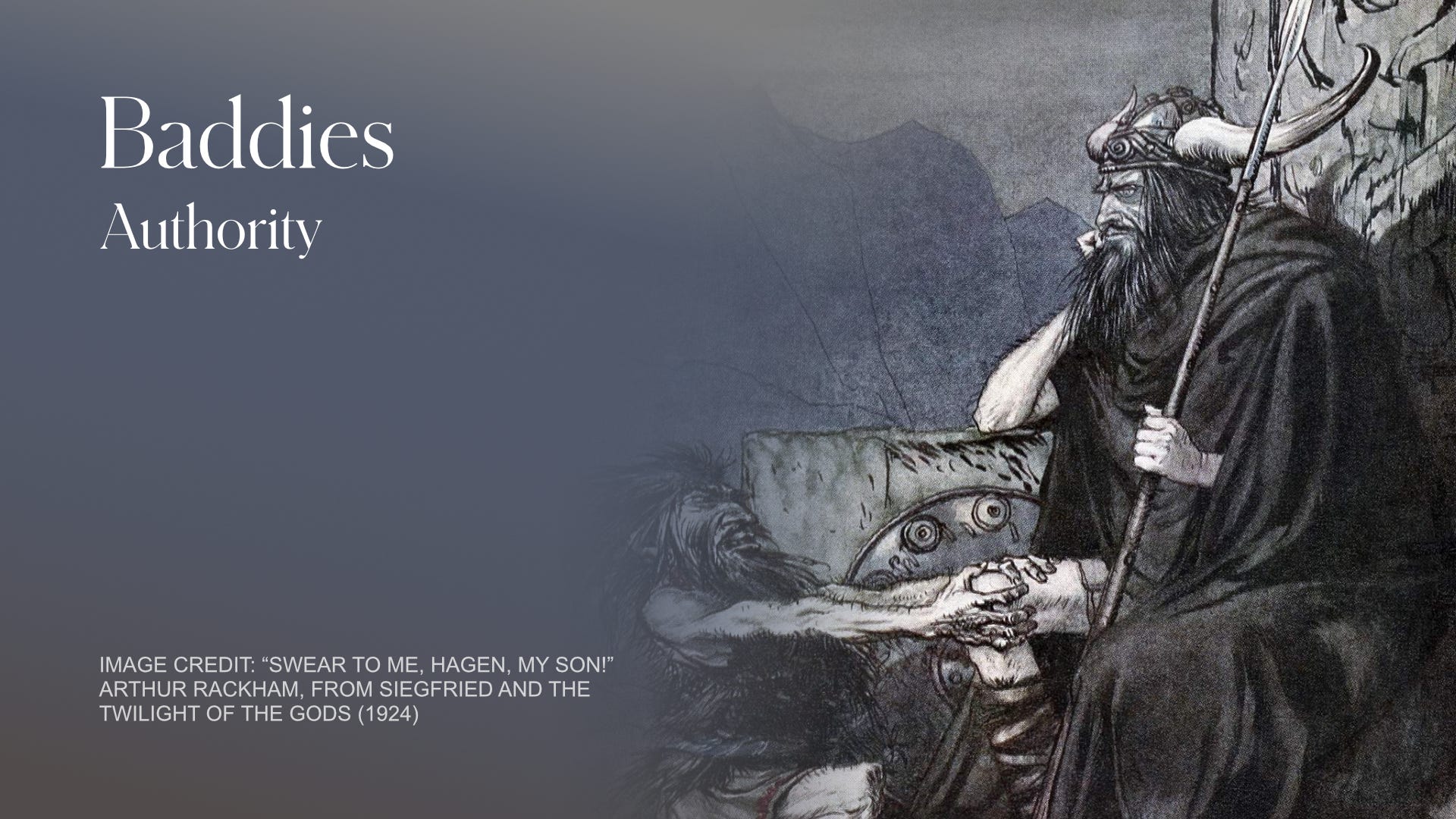
In story, Authority may take the form of a dictatorship or tyrannical king. But in the archetypal sense, these baddies don’t only exist in stories, and you will have come across them too, in one way or another. In the real world, Authority shows up as any of the external structures that try to keep us in line, such as those policed by teachers, parents, unspoken rules within friendship groups, codes of conduct at work, etc. But also as the internalised voice of external expectation and conditioning, such as the feeling we need to conform to gender or beauty standards, or live in line with the old admonishments of our parents. In short, Authority is the accumulated weight of everything we were told we must become in order to be accepted, safe, and loved.
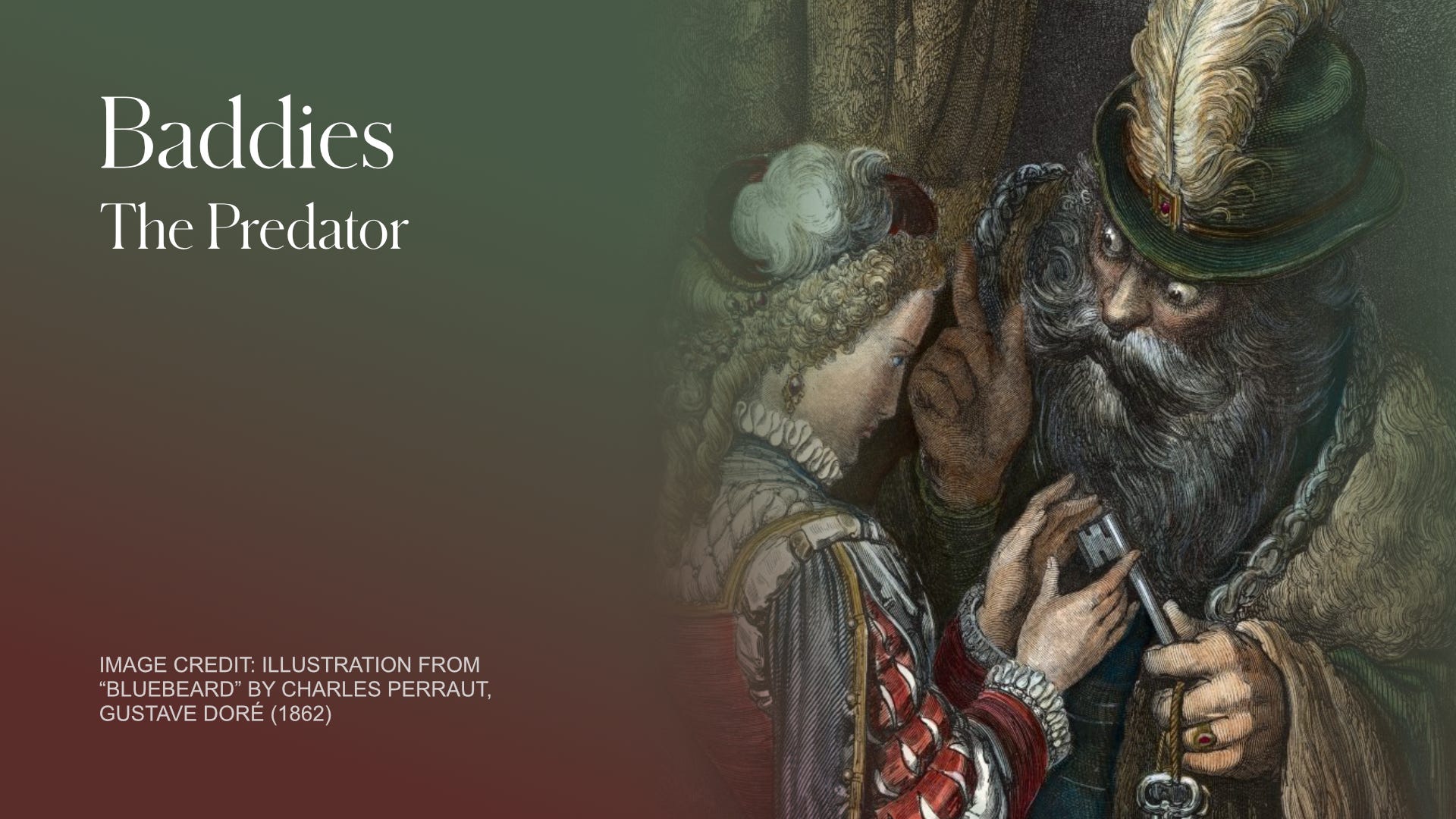
The Tenderfoot’s second archetypal antagonist, the Predator, is the force that seduces us into trading one cage for another. It can be anyone or anything that *appears* to offer freedom or love or whatever it is that our fledgling self wants, but only really delivers another form of captivity. Think, Bluebeard in his fairy tale, Nurse Ratched in One Flew Over the Cuckoo’s Nest, or virtually any dubious older boyfriend or girlfriend who seemed to hypnotise one of your friends (or you) when you were younger.
Internally, the Predator is even slipperier and more pernicious than that dodgy older boyfriend. This is the part of you that knows exactly what you want and uses that knowledge to seduce you into seeking a false means to meet the need. To the safety-seeking system that is the unconscious mind, change is fundamentally scary, no matter how uncomfortable our current situation may be. So, in order to keep us small, unchanged and therefore away from the risk of the unknown, the Inner Predator offers the *feeling* of freedom or empowerment rather than *actual* freedom or empowerment.
You may know it as the urge to reach for a snack, a game or your phone as a distraction from difficult but necessary work, or for the drink that will make tonight manageable but tomorrow considerably harder. The Inner Predator shows up in workaholism, perfectionism, eating disorders, body or fitness obsession, conspiracy theories and political extremism, and even, dare I say it, promises offered by the self-help and personal development industry. Any time we find ourselves trading one set of limiting beliefs, rules and patterns for another shinier, sexier set of limiting beliefs, rules and patterns, we have stumbled into this archetypal trap.
The Predator is the reason the Tenderfoot’s journey is harder than it looks, because the cage this force offers us is usually much more beautiful and exciting than the old one, and much easier to turn to than the path of true growth. And exciting, beautiful cages are the hardest to leave, even when they do us considerable harm.
So, let’s see how this plays out in ACOTAR.
Feyre as Tenderfoot (before the story begins)
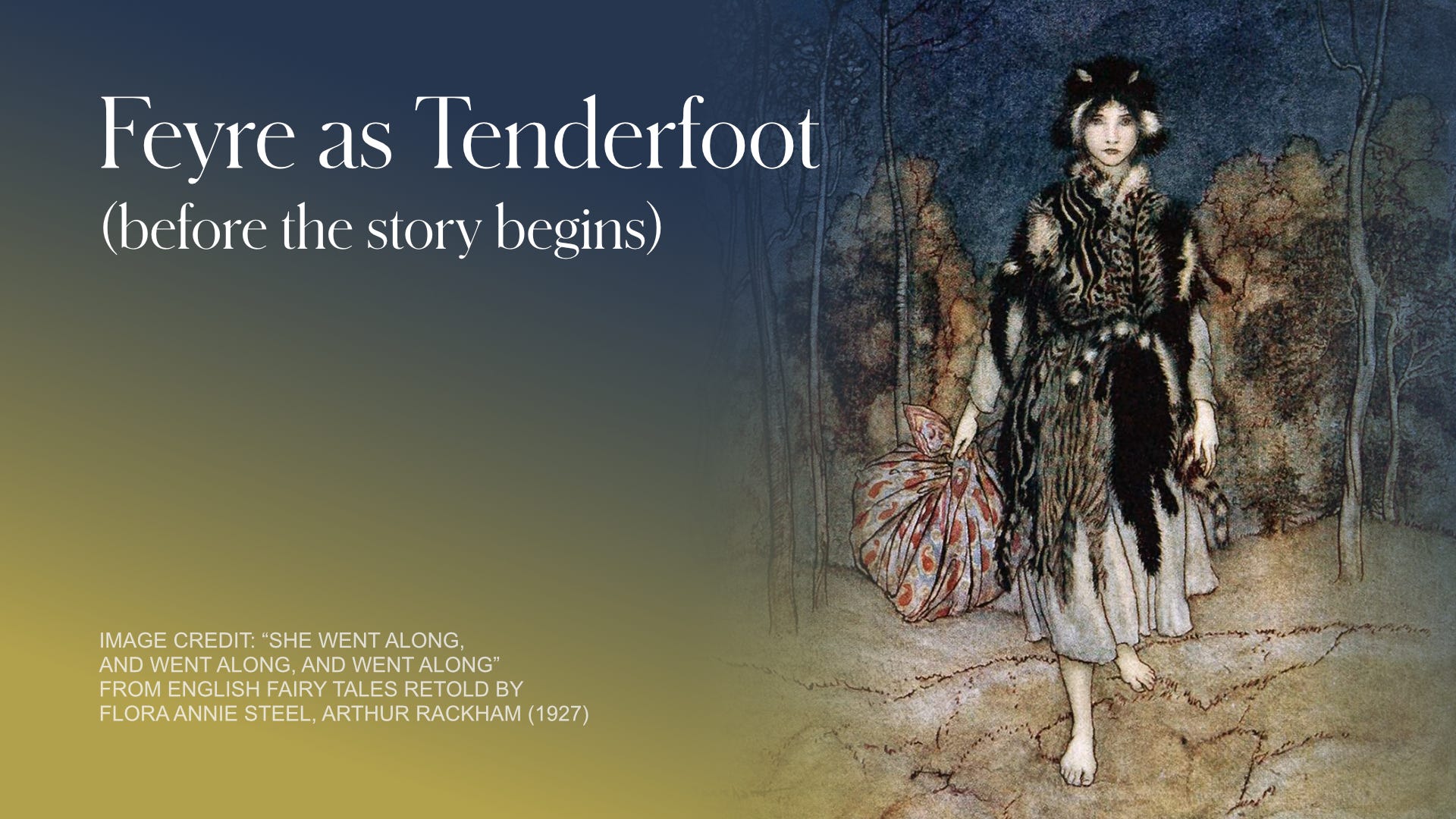
Feyre Archeron is the youngest of three sisters living in poverty in a small, crumbling cottage. Their father is, for want of a better word, broken — financially, physically, and spiritually. He sits by the fire all day long while Feyre hunts and trades to keep everyone alive through sheer grit and determination. While this already sounds fairly Warrior-like, Feyre hasn’t yet claimed that archetypal title because her grafting is done under duress rather than out of choice, and in the service of others’ needs rather than her own.
In order to initiate her Tenderfoot character evolution, Feyre must leave the Ordinary World that is her home and family, and venture into the Real one, thus shedding the skin of her old disempowered self and encountering a bigger, fuller version of who she is. In ACOTAR, this means passing through the Wall that separates the human lands, where Feyre currently lives, from the Fae realm of Prythian.
Prythian as interior
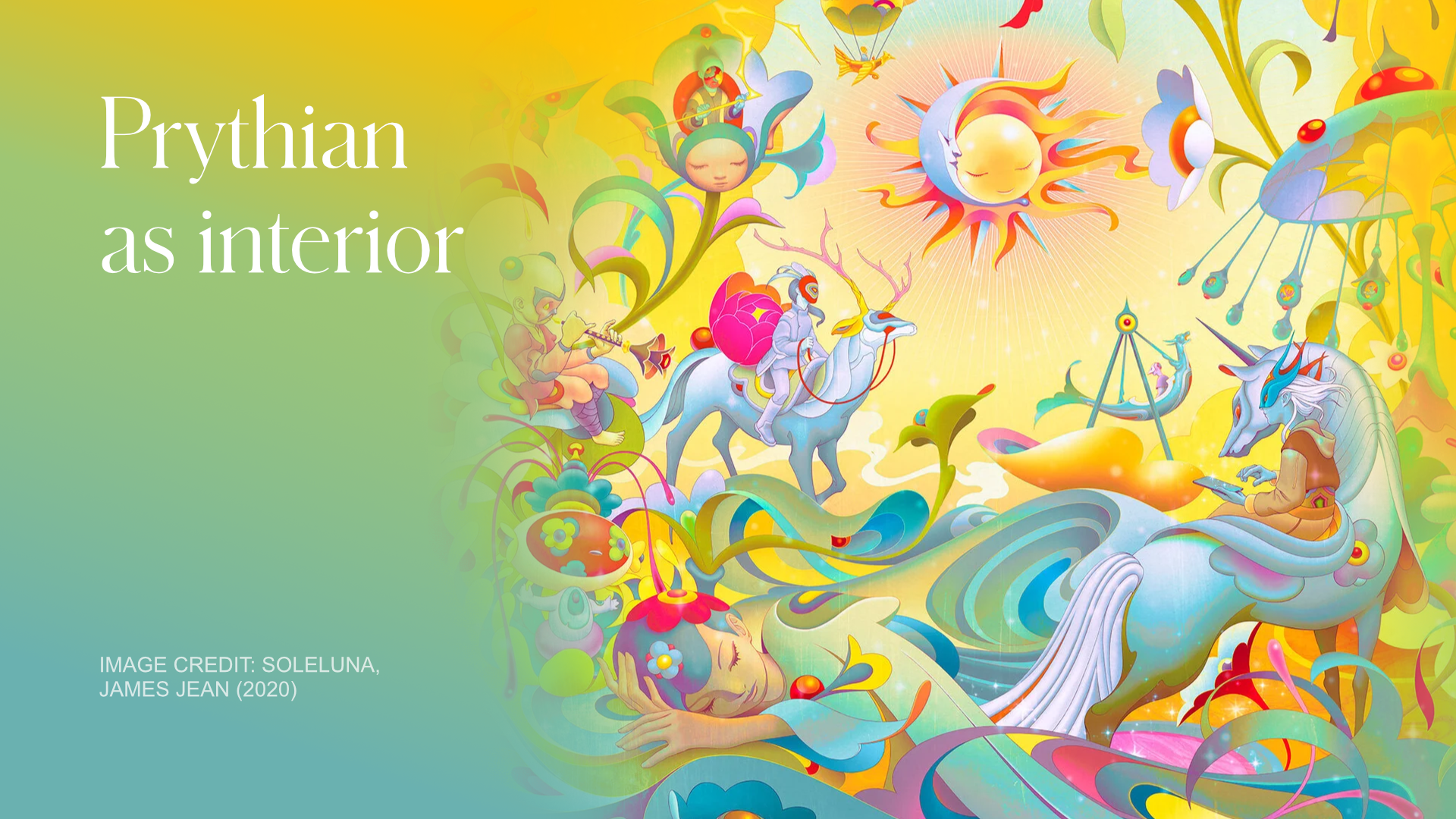
And this is where it gets interesting if you are as geeky as me, and as you’re here, I’m just going to go ahead and assume that’s the case. The various realms and courts in ACOTAR all map perfectly onto different psychological aspects or parts of self. Where Prythian houses the various parts of the interior, mythical, subconscious world, the mortal territories stand for regular, waking consciousness — a place where external authority is sovereign, and the deep interior, hidden. When Feyre crosses the Wall, she isn’t only entering a new external reality, but also beginning her adventure into the Self.
Tamlin as Predator
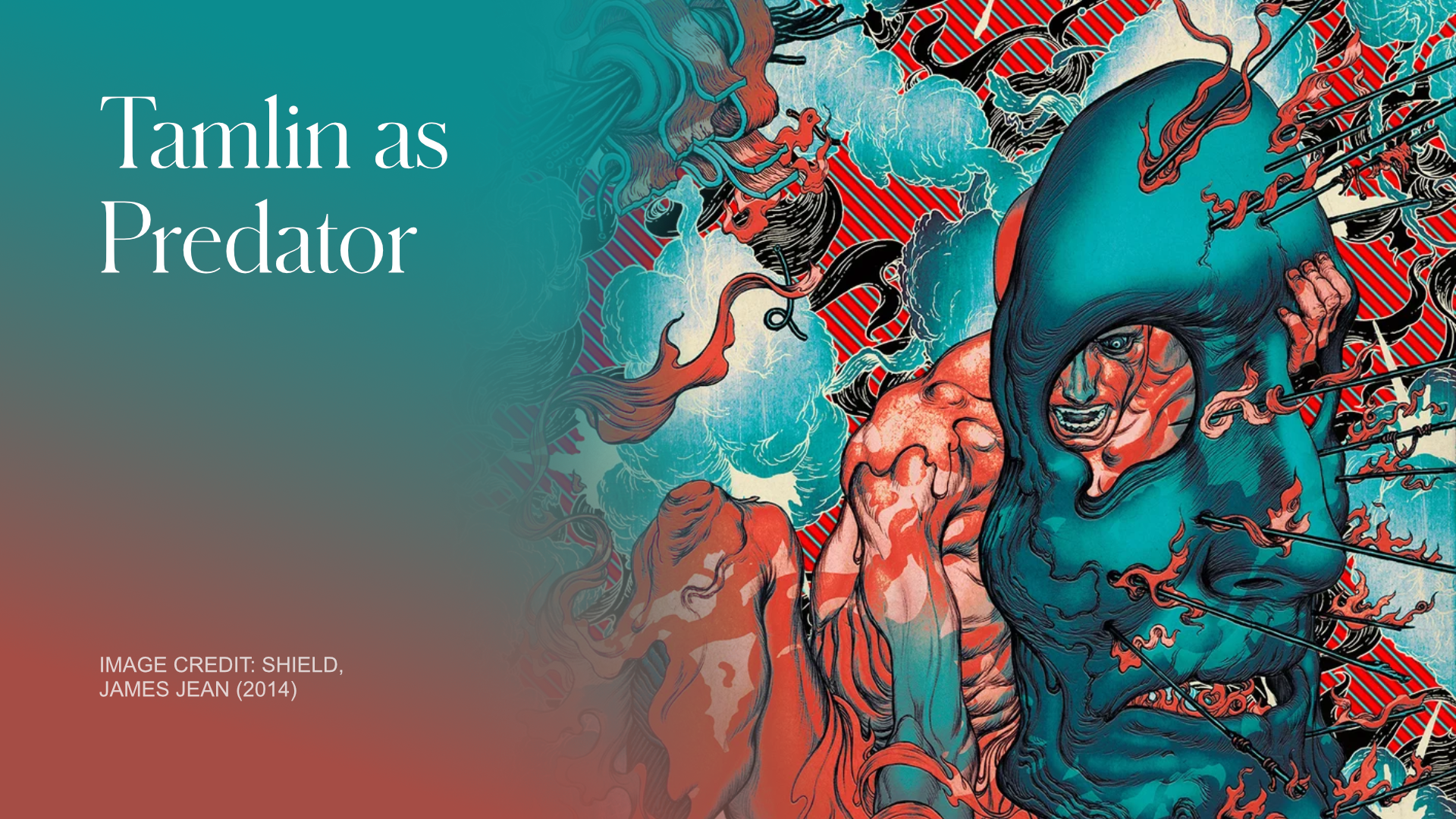
She makes this transition after being given an ultimatum by a Fae High Lord — Come and live with me in the Spring Court, he says, and your life will be spared. Of course, she falls for this High Lord, whose name is Tamlin, and he for her. And once ensconced in his castle surrounded by beautiful meadows, flouncing around in pretty dresses and eating amazing food, it seems as though she has landed on her feet. But true growth is never that easy, is it? Tamlin is not all that he seems. Later — quite a lot later, actually — we’ll realise that he is the Predator, not the Prince.
Anyone who has read the first two ACOTAR books has likely marvelled at the courage and, honestly, audacity of Sarah J. Maas to publish a love story about a relationship that only shows itself to be false and abusive in the following book. There is at least one woman in the world who has Tamlin tattooed on her body (her thigh, apparently), which is horrifying but understandable because even though it’s obvious, looking back, that the High Lord of the Spring Court was never in fact Feyre’s true love, it *was* believable (if mildly uncomfortable) at the time. And this is exactly how relationships with our various real-world Predators feel until we’ve grown enough to be able to see past the shimmering facade of false promises.
The Spring Court as Persona
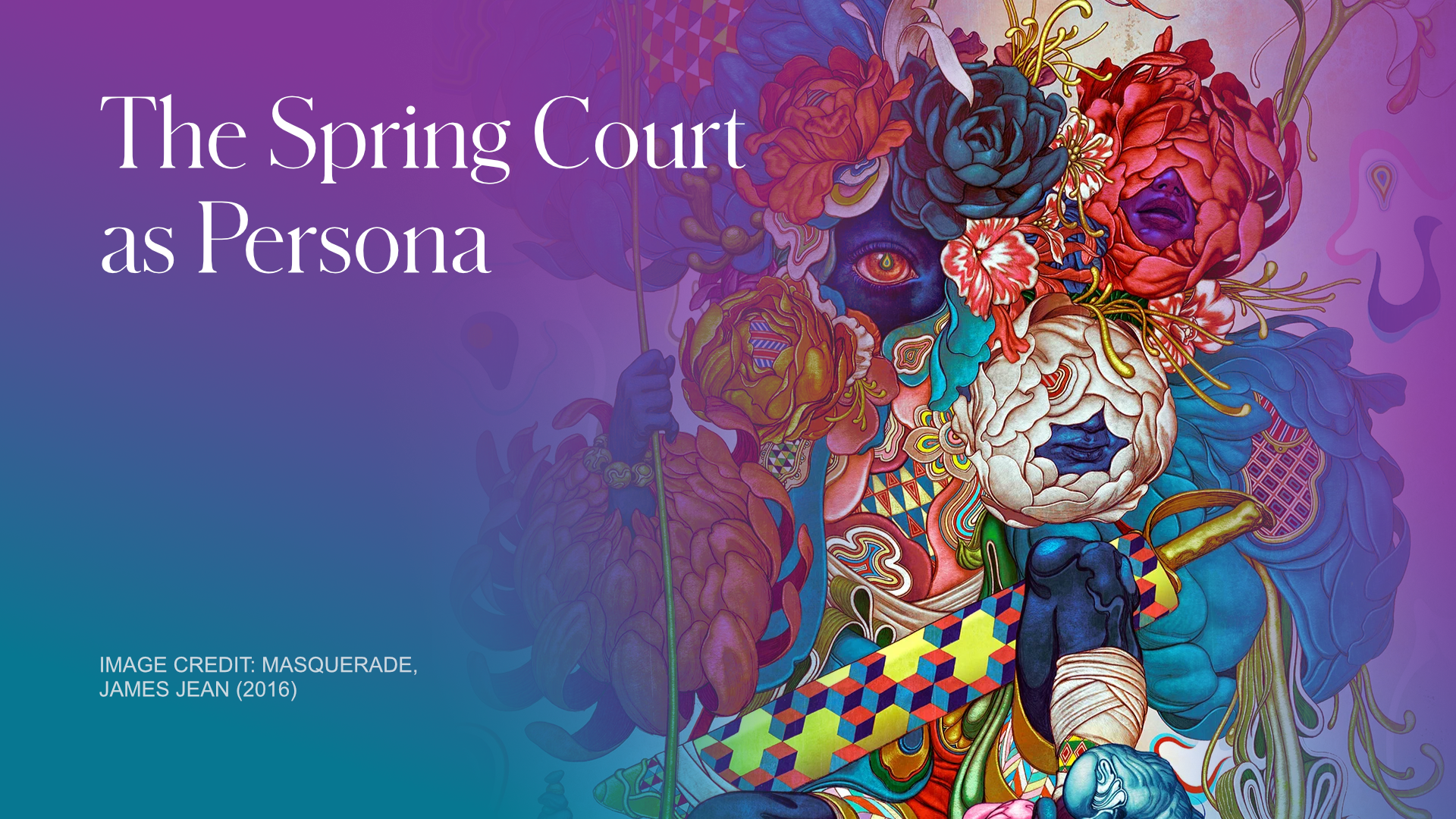
Because that’s exactly what Tamlin and his court are all about — fronts and appearances.
Psychologically, the Spring Court maps onto the realm of the Persona — the version of self constructed by the ego in order to present something acceptable or respectable to the world. Tamlin’s court *looks* idyllic, but monsters lurk in the picturesque woodlands, just as a monster lurks beneath the pretence of strength, love and protection that he projects.
We first meet Tamlin’s Fae form as something akin to the “perfect” masculine expression: powerful, handsome, charming, devoted. Golden. But as the story goes on, his ability to sustain this performance wavers. We learn that beneath his good looks and seemingly good intentions, he’s coercive, controlling and abusive — a far cry from the lover Feyre hopes he’ll be.
Tamlin as the unintegrated animus
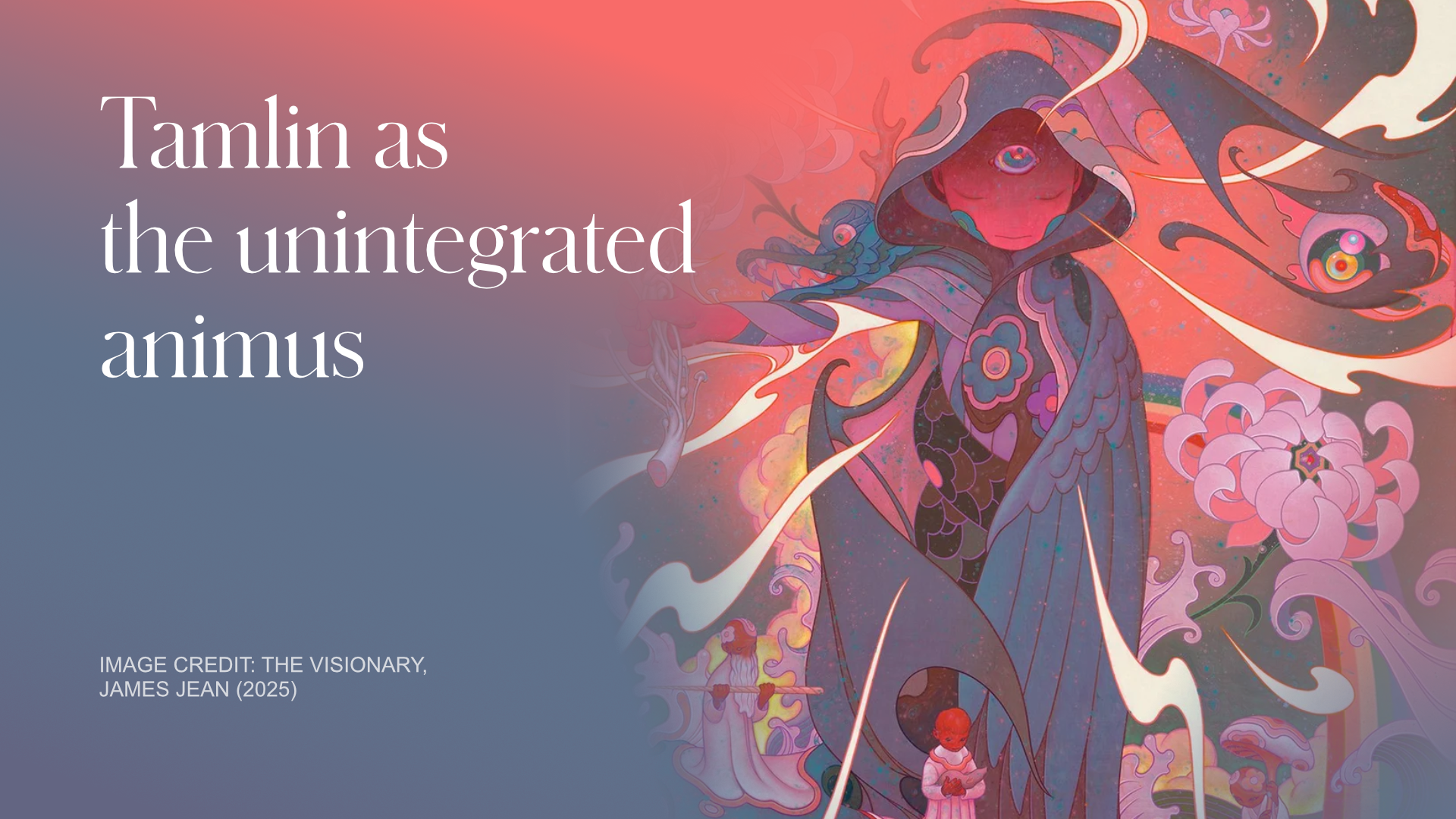
Read internally, Tamlin represents the animus or masculine principle in its unintegrated form. In Jungian depth psychology, the masculine principle is the inner force that provides direction, will, courage, and the capacity to act in the world. We all have this aspect of self, and we all need it, too, but like every other part, it can be dangerous before it has been integrated or owned, and even more so when it’s wounded.
As far as Tamlin is concerned, his love for Feyre is real. But that doesn’t mean it’s healthy. As a character bound to the realm of the Persona, he has not been able to access the depths required to be in a genuine relationship with someone else, so he loves from a distance in a high-handed way and calls it devotion. This is the ego’s compulsion to keep everything under control, and not let anything threatening in… including Feyre’s own pain, darkness, power, and developing sense of herself.
Ultimately, Tamlin gives Feyre everything except the one thing true love requires, which is the willingness to be changed by the other person without feeling threatened. The undeveloped animus cannot allow genuine complexity, because complexity requires vulnerability, and vulnerability is intolerable to anything this armoured.
But it’s not just bad luck that Feyre finds herself tangled up with Tamlin at the beginning of her journey, because she is also at an early stage of development — she’s on this path to integrate the animus precisely because she hasn’t done it yet. Tamlin is the only version of the animus that Feyre is ready to encounter at this point. She’s simply not ready to meet and realise Rhysand, her true love, so what she gets is a domineering force that says, I will protect you from everything, including yourself. You don’t need strength. You don’t need to grow. You don’t need to train. Just stay within the perimeter that I control, and everything will be beautiful.
Ultimately, the unintegrated animus acts as the Predator does. In ACOTAR, Tamlin’s true goal isn’t to empower Feyre. He wants to domesticate her.
The wedding that couldn’t happen
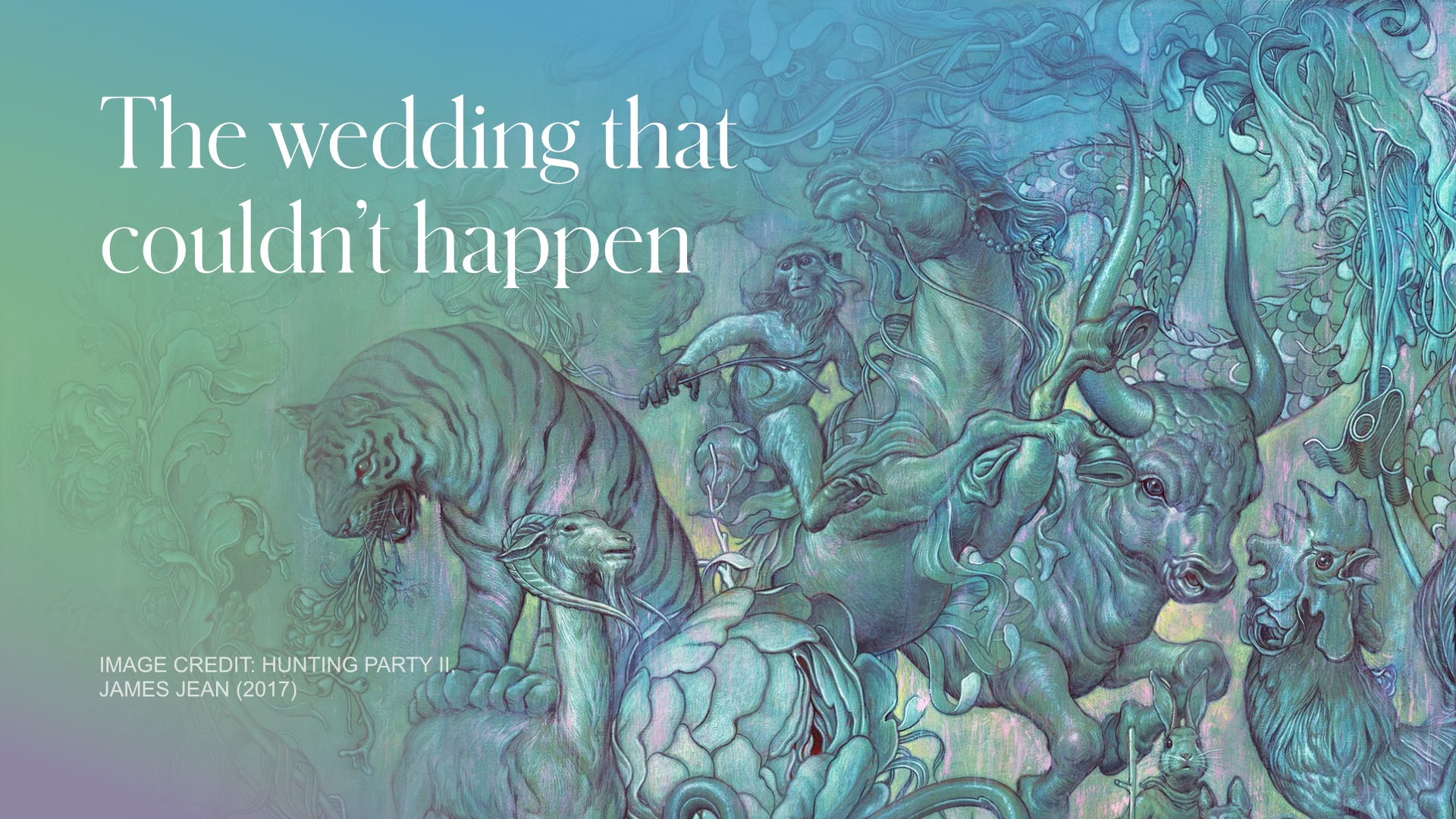
Thankfully, when it comes to Feyre’s wedding day towards the beginning of book two, she can’t go through with it. “Save me,” she cries, to herself, in her mind, “Get me out.”
Feyre has been through a lot to get to the point where she can admit that something’s not right in her new relationship. At the end of book one, she went underground (literally) into the terrifying realm of Under the Mountain, where she had to survive a series of impossible ordeals. She killed, she watched someone innocent die because of choices she was forced to make, and then she died herself and was brought back as something new — as High Fae, no longer human, and now in possession of the magic of all seven courts.
When she returned to the Spring Court after this, she was both transformed and traumatised. Tamlin’s world had no space for what she’d become, and no way of helping her process the torment she’d experienced either, because that kind of darkness just isn’t tolerable to the realm of the persona. The threat of the wedding finally brings all of this into screaming focus and she can do nothing but face the reality that she wants and needs to get out.
The silent plea Feyre makes at the altar marks the moment when she tells the truth about what she needs for the first time in her life. This is when she sees through the Tenderfoot’s lie that submission is the only way to survive, and chooses sovereignty instead — she will be her own authority, thank you very much. She will make her own rules, meet her own needs, live her own life.
And with that, our protagonist is finally ready to transcend the skin-deep, defended world of Tamlin and the Spring Court *and* to encounter a more developed, powerful and empowering masculine force within, too (waggles eyebrows).
“Hello, Feyre darling.”
Rhysand, the High Lord of the Night Court and hitherto assumed to be a terrible predator, arrives in a plume of midnight power. The Spring Court empties because the performance of the Persona can’t survive what Rhysand represents, which is the deepest, truest self that resides in the shadow.
Thanks to a bargain struck at Under the Mountain, Feyre (in a nod to Persephone’s repeated stays in Hades) must now spend one week of every month in the Night Court with Rhys.
Rhysand as the integrated animus
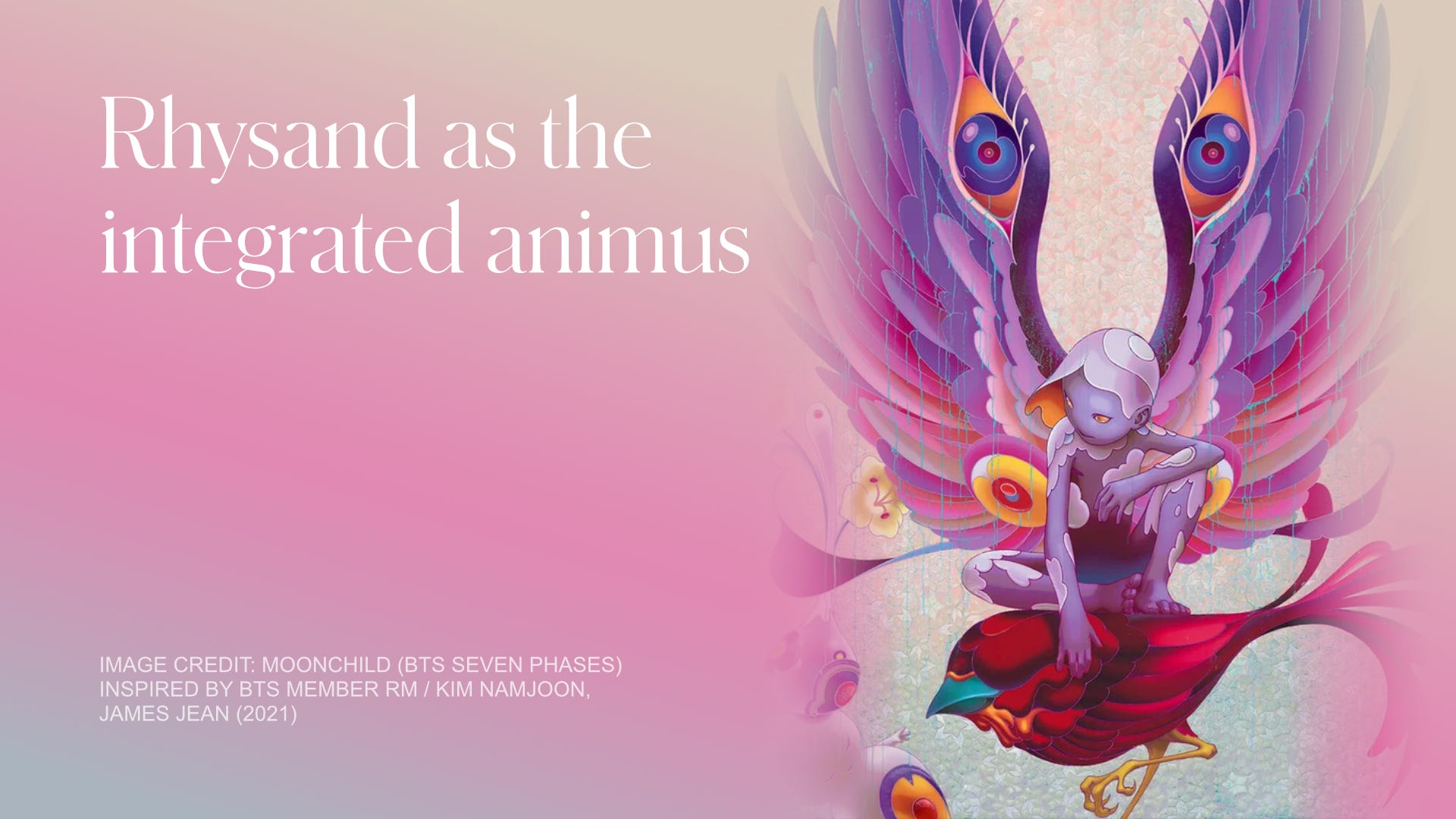
If Tamlin is the unintegrated animus, Rhysand is the freer, truer animus, in the process of integration. As a character, he’s actually strong, actually awake, aware and accountable, and actually capable of love.
When Feyre spends her first week with Rhysand in his Night Court, the first thing he does is tell her to take off the pretty dress Tamlin made her wear. “You look exactly like what they wanted you to be,” he says. His second act is to teach her to read — something that is vital for her emancipation and empowerment. And his third is to train her to shield her own mind — to keep others (including him) out.
In sum, Rhys’ integrated strength doesn’t seek to protect Feyre by making her smaller; it wants to develop her capacity to own her power and inhabit her complexity. Everything is done with the express intention of freeing Feyre from the shackles of her impoverished, loveless childhood, and her coercive relationship with Tamlin, too, and the longer Feyre spends in Rhysand’s presence, the more she feels the stifling discomfort of the Spring Court whenever she has to go back.
Now, I think we all know what this is like. Ultimately, we can only live a lie for so long, and the moment we catch a glimpse of the truth, the light that filters through the cracks starts to shine on all the things that aren’t right, forcing us to acknowledge the cage we’ve been calling freedom… until we can bear it no longer.
Inevitably, Feyre is at last magicked away from the Spring Court for good, and as she lands in the hidden Night Court city of Velaris, she finds her feet as a Warrior, ready for her true call to adventure.
The inversion
One of the things I love most about this story is the deliberate inversion of the classic damsel-in-distress storyline. In the traditional quest, the masculine hero slays the dragon, rescues the imprisoned feminine, and therefore retrieves the holy grail. In ACOTAR, the feminine hero slays the dragon that is Amarantha at Under the Mountain and, in the process, she rescues the imprisoned masculine that is Rhys, who was in fact held by Amarantha against his will. He is only able to come to her rescue on the day of the wedding because of what she did to free him at the end of the first book.
Now, this fascinates me, because the traditional damsel-in-distress story mirrored the lost (that is, repressed) feminine in a patriarchal world. But have we not also lost true, integrated, unthreatened masculinity? In this world of manosphere podcasters and other anti-feminists, the Rhyses seem few and far between, while there’s a Tamlin around every damn corner. So, we really do need our questing heroines to seek the true animus and bring him back from the brink, do we not?
The Warrior that was always there
But I think we recognise early that Feyre is no damsel in distress. The Warrior that Feyre becomes was there from the very start. Beneath all the hunting and provision she had to do back in the Ordinary World, Feyre’s powerful, world-changing self was just waiting for her to recognise and meet it. And that’s true of you and me too. These archetypal versions of self are not *created* through challenge, but unlocked as we dare to go deeper.
For Feyre, the Night Court — specifically the veiled city of Velaris — which represents the deeper, unconscious part of her inner world, becomes visible to her when she has done the work required to access such depths of self. And once she can perceive it and go there, it gives her the mirror in which to see who she actually is: a warrior with agency and power, who is deserving of love rather than control, and who has the potential to change the world.
Which brings me to you…
Your animus
Have you made a home in your inner Velaris, or are you still on hold at the Spring Court? To explore the animus is, among other things, to address your own inner sense of authority and the voice that tells you what you’re capable of, what you’re worth, what you’re allowed to want, and what you should do when the going gets tough.
The problem, when it comes to wondering whether we’re listening to an inner Tamlin or inner Rhysand is that these two voices can sound indistinguishable much of the time. The Inner Predator can absolutely feel like a responsible, realistic and protective aspect of self — a part that has been hurt before and is simply trying to make sure that doesn’t happen again. So it’s only natural to find ourselves paying attention, but if we do, then we are saying “no” to growth, change, strength and the beautiful depth of self to be found in the unconscious world that is the Night Court.
Thankfully, there are some ways to tell the difference between these two voices, but only after we’ve been courageous enough to do one important thing. Feyre couldn’t see Rhysand for what he was until the day of her false wedding and the moment she made her silent plea. What she did in that moment, which opened the door to her Warrior self and her encounter with Rhysand — because those two things are, in fact, one and the same — was tell the truth about what she, herself, wanted.
And we all need to do the same, because from that honesty, everything else follows: the boundaries that need to be set; the things that need to be said; the actions to be taken; and the version of self that will eventually come to light. The animus doesn’t arrive before the courage — it arrives *as* the courage.
So, you don’t need to awaken your Inner Rhysand in order to be brave and powerful. It’s the other way around. Your Inner Rhysand needs you to be brave enough to simply want what you want before he’ll be able to show his true face.
Let yourself want what you want
To finish here, I’d like you to imagine, for a moment, that you’re standing in the Spring Court. The golden light of the sun shimmers on the leaves of the trees, flowers bloom in carefully managed gardens, birds chorus in perfect harmony, and everything seems fine. Except… except for that nagging sense that something’s missing.
There could be something you’ve known you’ve wanted for the longest of times, or you could find yourself imagining something you’ve never quite dared to admit that you want, and struggle to do so even now.
The truth is that it doesn’t really matter what comes to mind when you ask yourself this question, because the object of your desire may or may not be viable. What matters is what it represents. We can find ourselves wanting all sorts of things that we’ll never actually have, and while that can seem negative, it doesn’t need to be, so long as we consider why we want them. Do we actually want that particular job or achievement, or do we want it because it seems like the route to a feeling of significance? Do we actually want that particular relationship, or to look or sound a certain way, or do we feel drawn to these things because we see them as a way to be loved or loveable?
Your inner Rhysand doesn’t care about your specific goals. He cares about the truer wants — the deeper, realer needs and desires that inspire the courage and drive to action that he represents.
So, whatever it is you find yourself wanting right now, call it to mind and let yourself see beyond its surface-level appearance. Give yourself permission to identify the true need beneath the want: the yearning for a sense of self-worth, perhaps; for a feeling of connection, freedom, excitement, belonging. You might realise that what you want is the sense of safety that comes from the ability to protect yourself. Or you might want love, meaning, direction or simply to be seen.
Whatever this want may be for you, I invite you to let it rise up and out of the depths. Let it carry you, like one of Rhysand’s living shadows, out of the Spring Court and into the hidden city of Velaris — a darker place, yes, but a realer one, too. Let yourself walk through the cobbled streets of the Rainbow Quarter, filled with galleries, stalls, bustling restaurants and taverns.
And then take a moment to look at yourself in the reflection of one of the windows so you can see the version of self that exists beneath the Spring Court’s golden expectations, beneath the rules and values you were taught to follow as a child. Beneath the archetypal lie that submission to Authority is the only way to survive. Because the you that you can meet in Velaris, if you’re brave enough to do so, is bigger than those things, and it’s the only version of you that can actually bring you whatever it is that you want.
So, what is it that you see in that reflection? Do you see a human gazing back at you — frightened, meek or out of place? Or do you see, if you just look a little closer, pointed ears, strength and untapped power?
The Warrior in you isn’t created by pain or ordeal, but summoned by those things. Your strongest self has always existed. The only question is how you’re going to use it.
I’d love to know what came up for you during this visualisation. Tell me in the comments. Or don’t, if it’s too private. Either way, I hope this helped.
References
Weiland, K.M. Writing Archetypal Character Arcs. PenForASword Publishing, 2023.
Maas, Sarah J. A Court of Thorns and Roses. Bloomsbury, 2015.
Maas, Sarah J. A Court of Mist and Fury. Bloomsbury, 2016.
Jung, C.G. The Archetypes and the Collective Unconscious. Collected Works Vol. 9i. Princeton University Press, 1969.
Von Franz, Marie-Louise. The Feminine in Fairy Tales. Shambhala, 1993.
Von Franz, Marie-Louise. Shadow and Evil in Fairy Tales. Shambhala, 1995.
Pinkola Estés, Clarissa. Women Who Run With the Wolves. Ballantine Books, 1992.
Murdock, Maureen. The Heroine’s Journey. Shambhala, 1990.
Blackie, Sharon. If Women Rose Rooted: The Journey to Authenticity and Belonging. September Publishing, 2016.
Campbell, Joseph. The Hero with a Thousand Faces. Princeton University Press, 1949.
The Matrix. Dir. Lilly and Lana Wachowski. Warner Bros., 1999.
The Terminator. Dir. James Cameron. Orion Pictures, 1984.
Kesey, Ken. One Flew Over the Cuckoo’s Nest. Viking Press, 1962.
Perrault, Charles. The Complete Fairy Tales. Trans. Christopher Betts. Oxford World’s Classics, 2009.
wow
What an incredible deep dive into this world. Never in a million years while reading it would I have been able to draw the parallels you've drawn here, yet now that it's laid out so clearly, it makes so much sense. It's almost frightening how easy it is to compare moments in the archetype's journey to moments experienced in real life, and thus understand why this series has such a draw as it does. I'm very much looking forward now to re-reading the series again before the new books come out and keeping all of this in mind.